

Got a tiny backyard that feels more like a wasted space than a retreat?
Or even worse — have you ever stepped outside and thought, “I wish my backyard felt like somewhere I actually wanted to be?”
Well, look no further! You can still create a backyard you’ll love spending time in.
Whether you live in a townhouse in Silver Spring, a bungalow in Bethesda, or a narrow-lot home in Annapolis, these small patio ideas will help you turn your limited square footage into a space that’s beautiful, functional, and relaxing.
Here’s the deal:
Maybe you’ve been avoiding the project because you think your yard’s too small.
Or maybe you’ve seen your neighbor’s patio and wondered, “How did they make that work?”
Here’s the truth: You don’t need a massive yard to have an amazing outdoor space. You need a smart design plan.
In this guide, I will break down seven DMV-tested small patio ideas that homeowners ask about the most. Each one comes with real-world design tips, durable materials that stand up to our weather, and smart cost-saving tricks to make even the smallest backyard feel like your personal getaway.
Why Small Patios Are Perfect
Here’s the thing:
Most DMV homes don’t have a sprawling backyard. From rowhouses in DC to Arlington duplexes and Montgomery County colonials, outdoor space is often limited.
Here’s an interesting fact: according to a study on housing density in the Washington, D.C. region, the median lot size for single-family homes is only around 5,460 square feet. This amount is far lower than that for homes in suburban or rural areas.
That limited land means developers often prioritize larger homes on smaller lots to meet demand for more indoor living space. And let’s be honest, many modern homeowners prefer less yard work and more usable outdoor comfort anyway.
That’s exactly why small backyard patio ideas are such a perfect fit for Maryland, DC, and Virginia homes. They let you make the most of every square foot without sacrificing beauty, function, or relaxation.
Ask yourself: Would you rather maintain a big yard you rarely use, or enjoy a small, well-designed patio that feels like an outdoor living room?
Now, let’s dive into the seven proven designs that work beautifully in tight DMV backyards.
1. Step-Down Patio
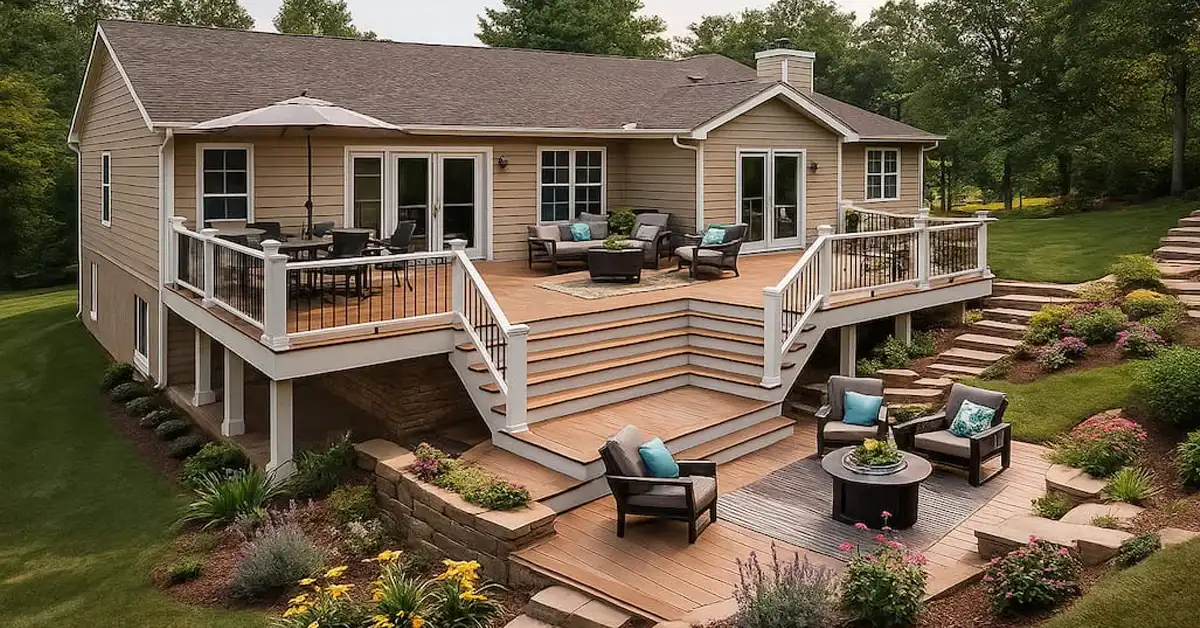
A step-down patio is a multi-level outdoor space where one section sits slightly lower than the other, usually by a single step or two. This design naturally separates zones—like a cooking area from a lounge—without the need for walls or railings.
It’s ideal for sloped yards in Arlington, Silver Spring, and Alexandria, where a gentle grade already exists. The lower section also helps with drainage, which is crucial for our clay-heavy Mid-Atlantic soil.
Unlike a flat patio, the step-down style adds architectural depth and visual interest. It feels like two outdoor rooms instead of one, giving a small yard the feel of a larger, layered retreat. The elevation change doubles as both design and function, managing water while creating a cozy, split-level experience.
2. Built-In Seating Patio
A built-in seating patio integrates permanent benches or retaining walls that serve as both seating and structure. These seat walls are usually 18–20 inches tall and are capped with flagstone, wood, or concrete for comfort.
Homeowners love this layout for compact spaces where furniture would crowd the area. It’s perfect for DC rowhomes or suburban yards that benefit from an organized, low-clutter aesthetic.
Most patios rely on removable chairs and tables that take up space and need storage. A built-in seating design keeps your patio clean, ready for guests, and free from visual clutter. It creates a polished, modern look that maximizes space without losing comfort.
3. Nature-Blend Patio
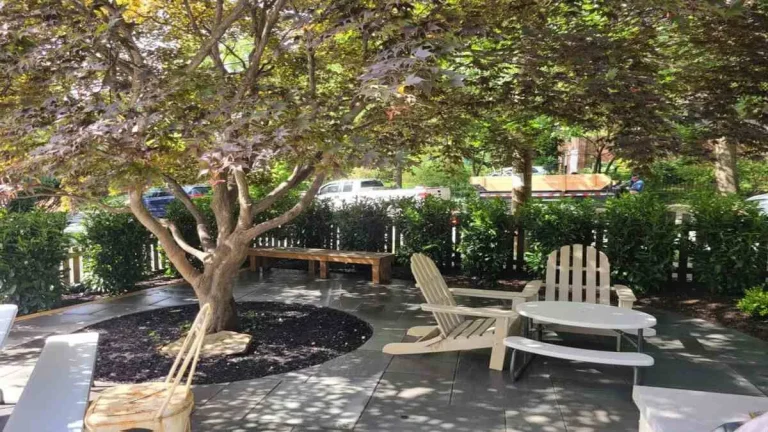
A nature-blend patio combines stonework and plant life so the patio feels organically part of the landscape. Instead of clearing out your greenery, this design weaves it in—curving the patio around trees, edging it with shrubs, or adding planter strips between pavers.
It’s a beautiful option for shady yards in Bethesda, Northern Virginia courtyards, or Maryland homes with mature trees. Materials like flagstone or bluestone pair perfectly with native oaks, maples, and dogwoods.
While typical patios set clear boundaries between stone and soil, a nature-blend patio intentionally blurs that line. The result is softer, calmer, and more immersive. It feels like you built the patio into nature rather than on top of it.
4. Curved Edge Patio
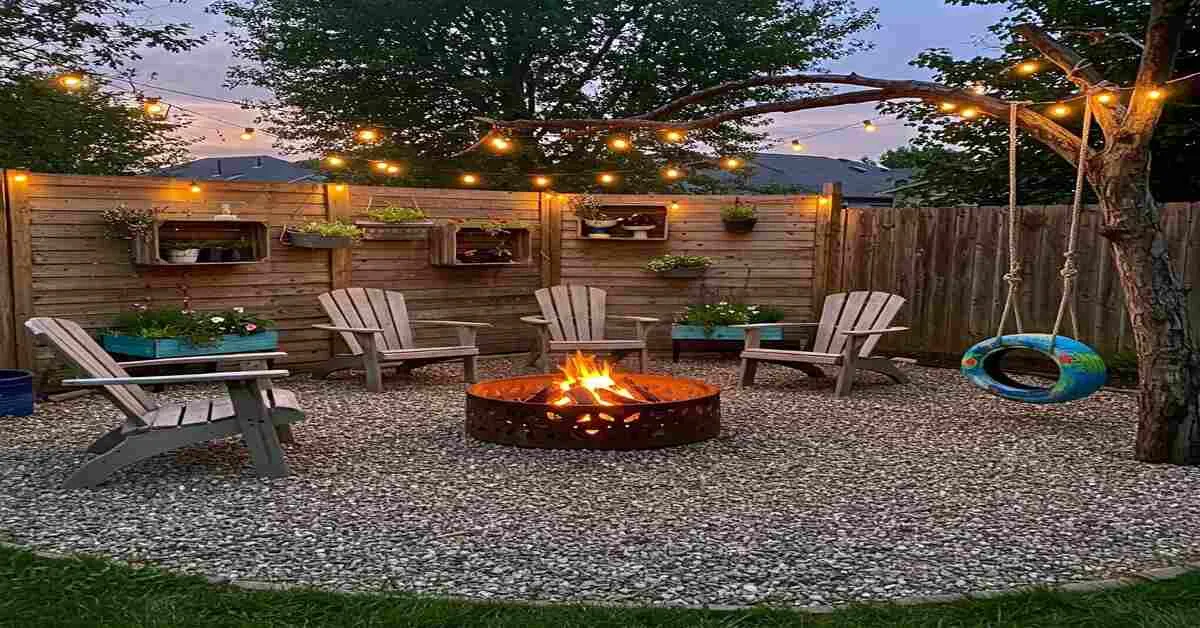
A curved-edge patio replaces rigid corners with smooth, flowing lines for a more organic shape. This design softens the look of compact backyards, helping the patio flow naturally into garden beds or fencing.
It’s particularly effective for irregular or narrow DMV lots where hard angles can make the yard feel smaller. The curved layout encourages movement and openness while maintaining a cohesive look.
Straight-edged patios can make tight yards feel boxed in. Curved patios, on the other hand, draw your eye along graceful arcs that suggest spaciousness. The subtle shape shift makes a small space feel larger and more inviting.
5. Diagonal Pattern Patio
A diagonal-pattern patio arranges pavers or stones at a 45-degree angle instead of in a grid. This layout uses a simple optical trick: the diagonal lines make the patio appear wider and longer than it really is.
It’s great for long, narrow backyards in DC, Rockville, or Fairfax, where every inch counts. Plus, it gives a modern, dynamic look without increasing your material costs.
Most patios use straight patterns that emphasize boundaries and size. By contrast, a diagonal layout draws the eye outward, creating a sense of motion and openness. You’ll swear your yard grew overnight—without touching your property line.
6. L-Shape Patio
An L-shape patio wraps around two sides of your home or fence line to create multiple outdoor zones. This layout is incredibly versatile for DMV homeowners. It divides your space naturally—one side for dining, the other for lounging or cooking.
Perfect for corner lots or irregular backyards, it maximizes both usability and flow. Adding a fire pit or small fountain at the inner corner adds balance and warmth.
A rectangular patio keeps all activity in one open area, but an L-shape design gives you distinct, private corners. It feels like two mini patios connected by one continuous floor plan, ideal for entertaining or relaxing without crowding the space.
7. Garden Courtyard Patio
A garden courtyard patio centers around a focal point—like a planter, small tree, or fountain—framed by stone seating, greenery, and lighting. This European-inspired design brings intimacy to even the smallest urban yards.
Homeowners in DC or Alexandria love how it creates a peaceful pocket of calm right outside the back door. Natural stone, brick, and dense planting add timeless charm and privacy.
Most patios open outward toward the yard, but a courtyard patio turns inward to form a cozy, enclosed “room.” It’s designed for serenity and connection rather than large gatherings. You’ll step outside and feel like you’ve discovered your own hidden garden retreat.
Tips for Small Patio Ideas
Now that you’ve seen the most popular small patio layouts across Maryland, DC, and Virginia, here are a few pro tips that can make any of them work even better in your yard.
-
Build in Spring or Early Fall
The ground is stable, temperatures are mild, and contractors aren’t fully booked yet.
-
Slope Away from Your Home
Maintain a gentle slope (¼ inch per foot) to prevent water from pooling near your foundation.
-
Pick Weather-Smart Materials
Pavers or flagstone handle DMV freeze-thaw cycles better than poured concrete.
-
Combine Seating and Storage
Add benches or short retaining walls that double as storage for cushions or tools.
-
Check Local Permits
Most patios under 500 sq. ft. don’t need a permit, but check local or HOA rules in DC, Arlington, and Fairfax.
-
Use Vertical Space
Hang planters, trellises, or lights to make your small patio feel taller and more private.
-
Layer Your Lighting
Mix string lights, step lights, and uplighting on trees or walls for depth and nighttime comfort.
-
Plan for Shade and Comfort
Add a pergola, umbrella, or shade sail to make the patio usable on hot summer days.
Skip the guesswork, our local team knows every county’s code and soil challenge.
How to Make a Small Patio Feel Bigger
Here’s how to make a small yard feel spacious.
- Combine functions, like bench plus planter plus storage.
- Create mini zones for dining, lounging, and greenery.
- Add vertical shade structures.
- Layer lighting to create depth.
- Use plants to frame, not fill, the space.
It’s not about square footage, it’s about flow, proportion, and smart placement.
Let’s Not Waste That Yard
Spring and summer fill up fast across Maryland, DC, and Virginia — and every year, homeowners who wait until April end up stuck on the waitlist.
Here’s the truth: Book early with Blue Collar Scholars to:
- ✅ Lock in your project date before the rush
- ✅ Secure today’s pricing before seasonal spikes
- ✅ Get text updates and reminders as your build approaches
Imagine stepping outside next spring to a finished patio — grill fired up, friends over, and not a single delay.
That starts with one simple step.
Lock In Your Patio Build Today!
FAQs
What’s the cheapest way to build a small patio?
The most affordable options are crushed gravel, pea stone, or stamped concrete. Gravel patios can start under $5 per square foot and look great with paver or timber borders. For a tighter, more finished look, stamped concrete gives you a custom pattern at a lower price than pavers.
How can I make a small patio look bigger?
Stick to lighter-colored materials (like tan pavers or gray stone) and simple geometric layouts. Use diagonal patterns, built-in benches, or vertical planters to open up the space visually. Even a few feet of greenery around the edge makes the area feel more spacious.
Can I build a small patio myself?
Absolutely — smaller patios are great DIY projects if you’re comfortable with digging, leveling, and compacting a base. You’ll save on labor costs, but make sure you slope the surface away from your home for proper drainage. Most homeowners can finish a 10×10 patio in a weekend. Just make sure to check your local regulations and permit requirements.
How can I decorate a small patio on a budget?
Think multipurpose and compact. Add string lights, a small bistro set, or a built-in bench instead of bulky chairs. Container gardens and outdoor rugs can soften the space without adding clutter. Even DIY fire bowls or planter boxes can transform a small patio affordably.
How can I plan a small patio that adds value to my home?
Even a modest patio can increase value if it’s well-designed, low-maintenance, and fits your yard layout. Keep it proportional to your home, use neutral colors, and add lighting for year-round use. Buyers love functional outdoor spaces, even small ones.