

You need to assess the root cause before fixing a leaning retaining wall (typically poor drainage, soil erosion, or structural failure), then apply the appropriate reinforcement technique. Most homeowners can handle minor repairs themselves, while major structural issues require professional intervention.
Here’s what we’ve learned after helping thousands of homeowners with this exact problem: leaning retaining walls never improve on their own. Never. Left untreated, these structural problems worsen over time and can lead to complete wall failure. The good news? Early intervention with proven repair techniques can restore both safety and property value at a fraction of that cost.
This guide covers years of field experience that will let you know the methods our team uses to fix a leaning retaining wall (not theoretical advice from someone who’s never actually fixed one). Understanding proper retaining wall construction principles helps you identify what went wrong and how to address it effectively. You’ll learn to identify the underlying causes, select appropriate materials, and determine when DIY repairs make sense versus when you need professional help.
Key Takeaways
- Most retaining walls lean due to drainage issues
- Walls leaning more than 2 inches typically require professional assessment
- DIY repairs work for minor leaning using anchors, braces, or drainage solutions
- Address leaning walls quickly as they worsen by 15-20% annually if left untreated
How to Fix a Retaining Wall That Is Leaning
To fix a retaining wall that is leaning, assess the severity of the lean and determine if it’s safe to attempt a DIY repair. A bowing retaining wall or one that’s falling over typically indicates poor drainage, soil pressure, or foundation problems. If the wall is leaning more than 2 inches, professional assessment is recommended.
Step-by-Step Repair Process:
- Remove any loose or damaged blocks from the affected area
- Use a level to determine the proper angle and measure the lean
- Improve drainage behind the wall with gravel or drainage pipe
- Install temporary bracing to prevent further movement
- Replace damaged blocks with sturdy adhesive or mortar
- Backfill with compacted soil for additional support
- Test stability before removing temporary supports
The key to successful leaning retaining wall repair is addressing the root cause, not just the visible symptoms.
Why Is My Retaining Wall Leaning?
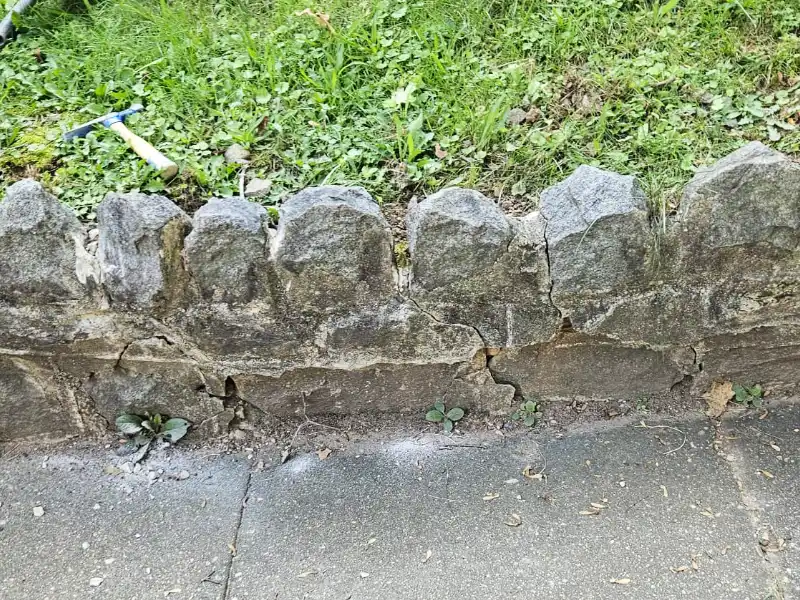
When you’re dealing with a leaning retaining wall, here’s the thing: there’s always a reason. Walls don’t just decide to lean one day (though it might feel that way). The key to learning how to fix a leaning retaining wall permanently is identifying what’s actually causing the problem.
Poor Drainage Issues
Look, we’ll be straight with you. Inadequate drainage causes about 60% of the leaning retaining wall problems we see. When water builds up behind your wall without anywhere to go, it creates massive pressure that pushes against the structure. Think of it like a dam that’s about to burst.
Here’s what to watch for:
- Water pooling behind or around the wall after rain
- Wet or soggy soil that never seems to dry out near the wall base
- White chalky deposits on the wall surface (that’s mineral buildup from water)
- Cracks that get worse every time it rains
Soil Erosion and Settlement
This one’s sneaky. Soil erosion underneath your wall’s foundation can turn a perfectly good wall into a bowing retaining wall or cause complete failure. It often happens because the original builder didn’t compact the soil properly (more common than you’d think) or natural settling occurs over years.
Structural and Construction Problems
Honestly, poor construction is behind many retaining wall disasters. We’ve seen walls falling over because someone cut corners on the foundation depth, skipped proper reinforcement, or used materials that simply weren’t right for the job. Understanding proper retaining wall installation techniques helps you identify what went wrong during the original build. It’s frustrating because these problems were completely preventable.
Water Pressure Buildup
Water pressure (engineers call it hydrostatic pressure) creates incredible force against retaining walls. Without proper drainage systems, this pressure can push even well-built walls out of place. We’re talking thousands of pounds of force here.
Warning signs that should concern you:
- Cracks along the wall surface, especially horizontal ones
- Soil piling up at the base (the wall is actually pushing dirt as it moves)
- Wall leaning more than 1-2 degrees from straight up
- Sections that bulge or bow outward
Bottom line: if you notice any of these signs, don’t wait. Understanding why your wall is leaning is the first step in how to fix a leaning retaining wall effectively. Consulting with a professional can save you thousands compared to letting the problem get worse.
What Materials Do I Need to Fix a Leaning Retaining Wall?
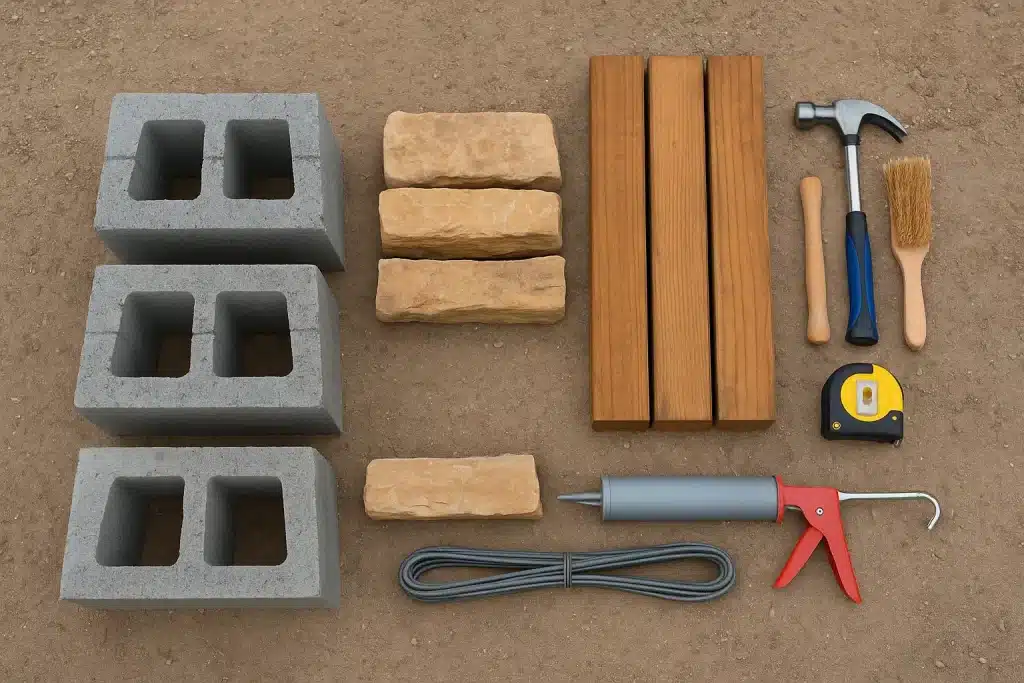
The choice of materials for repairing a leaning retaining wall is crucial for ensuring structural integrity and durability. Here’s the thing: the right materials can make or break your repair job, and we’ve seen homeowners waste money on options that simply weren’t suited for their situation.
Concrete blocks are the most popular choice for retaining wall repairs due to their strength and versatility. They work well for most DIY projects when you need to fix a leaning retaining wall, especially for walls under 4 feet high.
Timber and natural stone provide alternative options depending on your aesthetic preferences and budget. Timber works well for garden walls and shorter structures, while natural stone offers incredible durability but requires more skill to install properly.
Essential materials for most repairs include:
- Replacement blocks (concrete, stone, or timber)
- Quality mortar or masonry adhesive
- Steel reinforcement bars for added strength
- Gravel and drainage pipe for backfill
- Waterproof sealant for joints
When selecting materials, consider factors such as weather resistance, load-bearing capacity, and ease of installation. Investing in premium materials may cost more upfront but results in long-term savings by reducing the need for frequent repairs or replacements.
How Do I Reinforce a Leaning Retaining Wall?
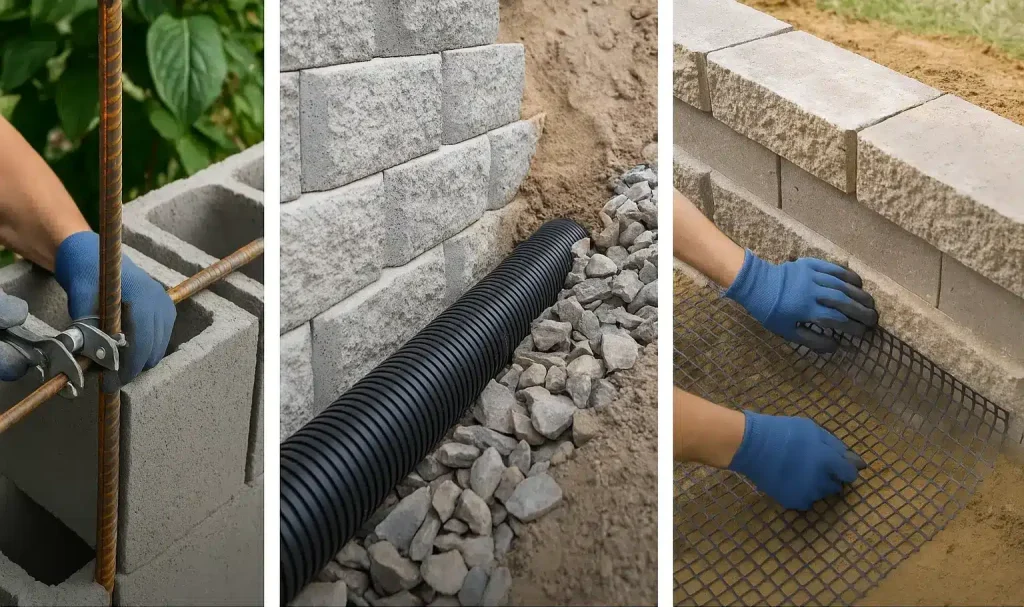
Reinforcement techniques are essential for learning how to fix a leaning retaining wall permanently and preventing future stability issues. We’ve learned after reinforcing hundreds of walls that the key is addressing both the immediate structural problem and the underlying cause that made it lean in the first place.
Steel Reinforcement Options
Steel reinforcements are your strongest option for serious repairs and the most effective way to brace a retaining wall that’s showing structural damage. Steel anchors, rebars, and tie-back systems can be strategically placed within the wall structure to enhance strength and resistance to external forces. These work especially well when you need to shore up a retaining wall that’s bowing outward or when you need to straighten a leaning retaining wall with significant structural stress. The upfront cost might seem high, but it’s nothing compared to a complete wall rebuild.
Drainage System Installation
Proper drainage systems are absolutely critical when figuring out how to fix a leaning retaining wall (we can’t stress this enough). Installing French drains, weep holes, or perforated drainage pipes redirects excess water away from the wall, relieving hydrostatic pressure that causes most leaning problems. Professional yard drainage solutions can make the difference between a repair that lasts decades versus one that fails again in a few years.
If you’re dealing with persistent water issues, connecting with experienced yard drainage contractors ensures the job gets done right the first time. Trust us – drainage problems that aren’t fixed properly will come back to haunt you.
Soil and Geogrid Reinforcement
Geogrids might sound fancy, but they’re actually straightforward synthetic materials that provide incredible stability for any bowing retaining wall repair. They’re placed horizontally within the soil backfill to create a reinforced mass that works with your wall rather than against it. Think of them as the foundation’s best friend.
Key reinforcement steps:
- Install temporary bracing before beginning permanent repairs
- Add steel anchors or tie-backs for walls leaning over 2 inches
- Improve drainage with gravel backfill and drainage pipe
- Use geogrid reinforcement during backfill process
- Compact soil in layers to prevent future settlement
The most effective approach combines multiple reinforcement methods rather than relying on just one technique. Most importantly, don’t skip the drainage improvements – they prevent the problem from recurring and save you thousands down the road.
How Do I Maintain My Retaining Wall?
Maintaining your retaining wall is essential for preserving its structural integrity and preventing future leaning issues. Regular maintenance is much cheaper than having to fix a leaning retaining wall later, and we’ve seen homeowners save thousands by staying on top of basic upkeep.
Regular inspections should be conducted to check for signs of deterioration, such as cracks, bulging, or new leaning. Addressing these issues promptly can prevent further damage and maintain the stability of the wall.
Clearing debris, such as leaves, dirt, or vegetation, from the wall surface and drainage systems is crucial in preventing blockages and ensuring proper water flow. Adequate drainage prevents water buildup behind the wall, which can lead to hydrostatic pressure and compromise the wall’s stability.
Essential maintenance tasks include:
- Inspecting for cracks, bulging, or increased leaning twice yearly
- Clearing debris from drainage systems and weep holes
- Repointing joints and repairing minor cracks promptly
- Replenishing soil backfill where settling has occurred
- Removing vegetation growing in wall joints
Routine maintenance costs annually but prevents major repair expenses. Remember, it’s easier to maintain a straight wall than to learn how to straighten a leaning retaining wall later.
When Should I Call a Professional?
While DIY solutions may work for minor repairs, knowing when to call a professional can save you thousands in the long run. We’ve seen homeowners attempt to fix a leaning retaining wall themselves only to make the problem worse.
Signs You Need Professional Help
Here’s the truth: if your wall is leaning more than 2 inches or shows signs of structural failure, it’s time to bring in the experts. Don’t try to figure out how to fix a leaning retaining wall on your own when you’re dealing with serious structural issues.
Clear indicators you need professional intervention:
- Wall leaning more than 2 inches from vertical
- Horizontal cracks longer than 2 feet
- Signs of foundation movement or settling
- Walls over 4 feet tall showing any structural issues
- Previous DIY repairs that have failed
- Bowing retaining wall with visible bulging sections
What to Expect from Professional Services
Experienced contractors have the expertise, equipment, and resources to assess your wall’s condition accurately and recommend the right repair approach. More importantly, licensed retaining wall contractors know local building codes and safety standards, ensuring repairs meet legal requirements.
Professional evaluation includes structural integrity assessment, soil analysis, and determining whether you need to repair or completely rebuild sections. They can also identify underlying issues that DIY repairs often miss.
Cost Considerations
Professional repair costs typically depend on the extent of damage vs. a complete wall replacement. The investment in professional assessment often pays for itself by identifying the most cost-effective solution.
Don’t let the upfront cost scare you away from getting proper help. We’ve watched homeowners spend on DIY materials only to call professionals later anyway. Sometimes it’s better to do it right the first time rather than learn how to straighten a leaning retaining wall the hard way.
Fixing Your Leaning Retaining Wall – Next Steps
A leaning retaining wall can be a serious issue for homeowners, but it doesn’t have to become a disaster. By following the methods outlined in this guide, you can effectively address the problem and prevent further damage to your property.
Here’s what we’ve covered on how to fix a leaning retaining wall:
- Identifying the root causes (drainage issues, soil erosion, poor construction)
- Selecting the right materials for your specific repair needs
- Implementing proper reinforcement techniques to prevent future problems
- Maintaining your wall to avoid costly repairs down the road
- Knowing when to call professionals versus handling repairs yourself
The key takeaway? Don’t wait until it’s too late. Leaning retaining walls worsen over time, and what might be an easy fix today could become a complete rebuild if you ignore the warning signs.
Whether you’re dealing with a minor lean that you can tackle yourself or a bowing retaining wall that needs professional attention, taking action now protects both your property’s safety and value. Regular inspection and maintenance ensures your retaining wall’s stability for years to come.
Enhance Your Outdoor Space
Ready to fix your leaning retaining wall? Don’t let a structural problem compromise your property’s safety and value. Get your free quote today and let our experienced team assess your retaining wall situation professionally.