

Two neighbors in Gaithersburg decided to upgrade their outdoor spaces after the same summer storm.
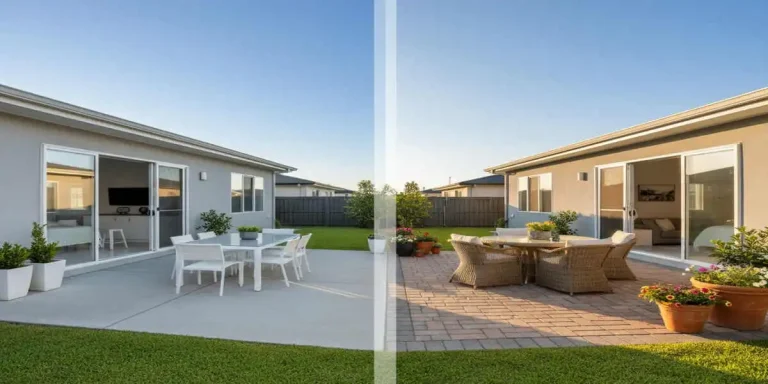
One poured a sleek concrete patio: smooth, modern, and low-maintenance.
The other chose interlocking pavers with a timeless, brick-style pattern.
A year later, one patio stayed perfectly level, while the other showed minor shifting after weeks of heavy rain.
That sparked the question we hear all the time:
Concrete vs paver patio — which one’s better for DMV’s climate, soil, and long-term value?
Here’s what you will learn: This guide will help you make that call with confidence. We’ll compare cost, durability, maintenance, and style so you can choose the option that best fits your home and budget.
What’s the Difference Between Concrete and Paver Patios?
At first glance, both patios might seem similar — smooth, solid, and built to last. But the way they’re constructed makes a big difference in how they perform over time.
A concrete patio is a single poured slab. It’s quick to install and provides a clean, modern look. When properly reinforced and sealed, it can handle years of use with minimal upkeep.
A paver patio, by contrast, is made from individual interlocking bricks or stones. Each piece is set on a compacted gravel and sand base, allowing for slight movement without cracking.
When comparing a concrete patio to a paver patio, the main difference lies in flexibility and maintenance. If your soil shifts — which is common in clay-heavy ground in Maryland, DC, and Virginia — a concrete slab may crack. Pavers can move slightly and be repaired piece by piece.
Concrete vs Paver Patio: Pros and Cons
Let’s break down how each option performs in key areas:
| Feature | Concrete Patio | Paver Patio |
|---|---|---|
| Lifespan | 25–30 years | 40–50+ years |
| Repair | Cracks are hard to fix | Replace individual pavers easily |
| Drainage | Needs proper slope | Natural gaps improve drainage |
| Style Options | Smooth or stamped | Endless patterns & colors |
| Maintenance | Reseal every 2–3 years | Sweep & refill sand as needed |
| Curb Appeal | Clean, modern | Textured, upscale look |
- Lower upfront cost and faster installation
- Works well for simple designs
- Can be stamped or stained for added texture
- Can crack or discolor over time
- Repairs are costly and noticeable
- Limited design flexibility once poured
- Exceptional durability and easy repairs
- Superior drainage on clay soils
- Wide variety of materials: concrete, clay brick, or natural stone
- Higher upfront cost
- More complex installation process
- Weeds can appear between joints without proper sealing
Think about it this way:
Comparing a paver patio vs a concrete slab is like choosing between an off-the-rack suit and a custom one — both protect you, but one fits better and lasts longer.
Cost of Concrete vs Paver Patio
Here’s why it matters:
Cost is often the first factor homeowners consider and it’s also the most misunderstood.
At first glance, concrete wins the affordability battle. But over 20 to 30 years, the math can shift. Concrete often requires patching, resurfacing, or complete replacement once cracks appear.
Bottom line: When evaluating total lifetime cost, a concrete vs paver patio might end up surprisingly close in price. Pavers have higher initial costs, but lower long-term maintenance and higher resale value.
According to HomeLight’s patio ROI study, professionally built patios can return 60–90% ROI, particularly when they complement the home’s architecture and landscape design.
Which Patio Lasts Longer?
Quick reality check:
The climates of Maryland, DC, and Virginia are harsh on outdoor surfaces — wet springs, humid summers, and freezing winters can stress any hardscape.
When comparing a concrete vs paver patio, durability comes down to movement. Concrete slabs are rigid; when the clay soil beneath expands or contracts, cracks can form. Pavers, by design, allow for flexibility.
Maintenance requirements differ, too:
- Concrete patios should be sealed every few years to prevent moisture intrusion.
Once cracked, repairs are visible and often require resurfacing. - Paver patios need joint sand refills every few seasons and occasional pressure washing.
Individual stones can be lifted and replaced if one cracks or settles.
Result: pavers win for flexibility and longevity, especially in areas like Montgomery County and Northern Virginia.
Patio Design Ideas
Aesthetics often drive the final decision. After all, your patio isn’t just a place to relax — it’s a major part of your home’s first impression.
Don’t believe me? You wouldn’t want something that clashes with your home’s style or looks out of place in your yard. A poorly designed patio can give your yard a run-down, abandoned vibe — the kind that makes potential buyers think twice. No one wants their home to look like a DIY project gone wrong or a forgotten property.
Here’s where design makes the difference:
A paver patio offers nearly unlimited customization — from classic brick patterns to natural-stone textures like flagstone or travertine. You can mix materials to add contrast or border details, creating a truly custom look.
A concrete patio, while simpler, can still be elevated with stamping, scoring, or staining techniques. It’s clean and modern, making it a popular choice for minimalist designs or small spaces.
In terms of curb appeal, the concrete vs paver patio comparison often favors pavers. They add warmth, texture, and visual depth that modern concrete patios can’t always replicate.
Now that we’ve paved the way, let’s get concrete about which one you should choose.
Which Patio Should You Choose?
Let’s be honest — choosing between a concrete vs paver patio isn’t an easy call.
The choice might feel set in stone… or is it?
Here’s how to decide:
- Choose concrete if you want a cost-effective, low-design, quick-install patio that fits a tighter budget.
- Choose pavers if you want a long-lasting, elegant design that can handle shifting soil and boost resale value.
Think of your outdoor space as an investment, not just a project.
Want more help deciding?
Explore these options in more detail:
- Concrete Patio Guide: Costs, Pros, and Maintenance for Maryland Homes
- Paver Patio Guide: Styles, Durability, and Design Options
Why Local Experience Matters
Local experts understand how the DMV’s weather impacts concrete vs paver patios differently.
A paver patio naturally handles drainage better, especially when built with a gravel base and polymeric sand joints. Meanwhile, a concrete patio relies entirely on slope for runoff, so proper grading is crucial.
Quick tip:
Building permits may also apply, depending on the size and location. For instance, in Montgomery County, patios exceeding 500 sq. ft. or those altering stormwater flow often require approval.
Patio Mistakes to Avoid
Thinking about installing your own patio or checking your contractor’s work? Brush up on these common mistakes.
Without a stable gravel foundation, both concrete and paver patios will settle unevenly.
Even a minor slope mistake can lead to puddling, erosion, or foundation issues.
A cheap patio that cracks within five years costs more in the long run.
Polymer sand and breathable sealers help prevent weeds, staining, and moisture buildup.
Installing during rain, extreme heat, or freezing temperatures can ruin curing and lead to cracks.
Without proper edging, pavers can shift and spread over time.
These small gaps help prevent random cracking from temperature changes.
Each layer—from sub-base to sand—needs compaction for a stable, level surface.
Without cleaning and resealing, materials can stain, fade, or weaken over time.
Skipping layout planning can cause spacing issues for fire pits, pergolas, or outdoor kitchens.
Here’s the deal: A little extra prep goes a long way.
The right base, drainage, and materials will help your patio look great and stay safe for decades.
Avoiding these common mistakes can save your concrete or paver patio from cracks, drainage issues, or early wear.
When to Hire a Patio Pro
Here’s the truth:
Patio installation is one of those projects that looks simple until you try it. Proper grading, compaction, and leveling are technical skills that require experience.
If you’re still debating between a concrete vs paver patio, schedule a consultation with Blue Collar Scholars. We’ll walk your property, discuss your vision, and recommend the best materials for your specific yard and soil type.
No pressure at all — just clear answers from professionals who improve homes every day across Maryland, DC, and Northern Virginia.
Get Expert Patio Advice
Still unsure which patio is right for your home?
At Blue Collar Scholars, we’ll walk you through real-world examples, honest pricing, and long-term maintenance insights so you can make the right choice with confidence.
Schedule your free on-site consultation today.
Let’s cement your decision with a patio that’s durable, beautiful, and built to impress, whether it’s poured concrete or custom pavers.
FAQs
Which lasts longer — concrete or pavers?
Paver patios can last 40–50+ years with proper care. Concrete usually lasts 25–30 years before cracking or discoloration.
Are pavers more expensive than concrete?
Yes, but they often offer better ROI and more straightforward repairs. You can replace individual pavers instead of repouring the entire surface.
Can I install a paver patio over existing concrete?
In some cases, yes — but it depends on the slab’s condition and drainage. It’s best to have a professional assess it first.
What’s better for land with clay soil?
Pavers perform better long-term since they can move slightly with soil expansion and contraction.
Do both patios require permits?
Small patios usually don’t require county approval, but larger ones that affect grading or drainage may need it. Always check local regulations.