

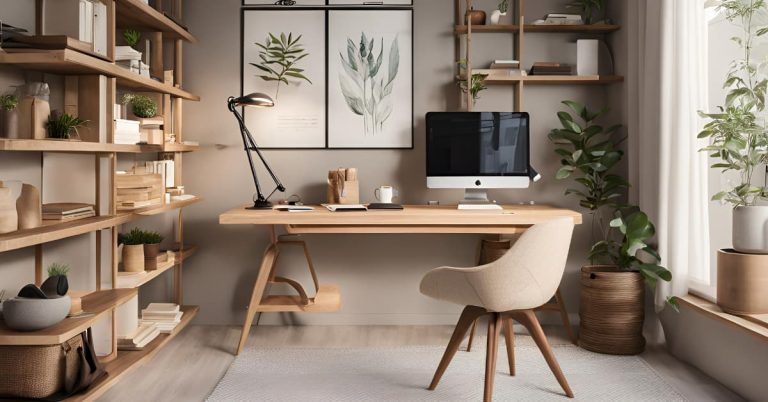
Home office additions solve the workspace crisis that’s been building in homes across Maryland, Virginia, and DC for years. I watched a client in Bethesda try to take a video call from her dining room table while her teenager practiced violin upstairs and the neighbor’s landscaping crew fired up their leaf blowers. By the third interruption, she looked at me and said, “This has to change. I need a real office.” That conversation happened in 2019. Three years later, after working from home became the norm rather than the exception, that same sentiment echoes through nearly every consultation we have. Remote work isn’t going anywhere, but most homes weren’t designed for it.
But here’s what I keep wondering: How many more years will smart, successful professionals continue trying to run their careers from kitchen counters and bedroom corners? Could this really be the best we can do? A dedicated home office addition creates the professional space you actually need – not a corner of your bedroom or a shared dining room table, but a purpose-built workspace that supports your career and productivity. The question isn’t whether you need one. The question is how to build it right.
Why Most Home Office Solutions Fall Short
Here’s what I see in most homes: people trying to make temporary solutions permanent. They set up a desk in the guest bedroom, thinking they’ll “make it work.” They convert a basement corner and wonder why they feel disconnected from the rest of the house. They carve out space in the master bedroom and discover that work-life balance becomes impossible when your office and bedroom occupy the same four walls.
Quality workspace shapes quality work – this truth becomes obvious once you stop fighting your environment and start designing it. The problem with these makeshift arrangements runs deeper than just space. Poor acoustics mean every household noise disrupts your calls. Insufficient lighting causes eye strain and headaches. Lack of proper storage means important documents get lost in household clutter. Without dedicated electrical circuits, you’re competing with the coffee maker and microwave for power.
I’ve seen too many homeowners spend thousands on expensive desks and ergonomic chairs, thinking furniture will solve a structural problem. It doesn’t. You can’t fix a space problem with stuff. You need a dedicated space designed specifically for professional work.
The Right Way to Add Home Office Space
A proper home office addition addresses every aspect of productive workspace design. We’re not just building a room – we’re creating an environment that supports focused work while connecting naturally to your home’s existing flow and design.
Location Matters More Than You Think
The best home office additions balance accessibility with privacy. But how do you find that sweet spot? First-floor locations work well for client meetings and daily workflow, but they require careful planning to minimize household interruptions. Second-floor additions provide natural quiet but might feel isolated during long work sessions. Which approach serves your specific work style better?
We recently completed a home office addition for a family in McLean, where we extended their main level by 200 square feet. The new space connects to their existing hallway but sits far enough from the kitchen and family room to maintain professional quiet during calls. Natural light comes from two sides, and the entrance allows the homeowner to meet clients without bringing them through personal living areas.
Above-garage additions offer another smart solution. We built a 300-square-foot office suite above a client’s garage in Potomac, accessible through their main house but acoustically separated from daily household activity. The elevated position provides excellent natural light and views, while the separation helps maintain clear work-life boundaries.
Infrastructure Requirements
Professional work demands professional infrastructure. Your home office addition needs energy-efficient home integrations like dedicated electrical circuits to handle computer equipment, printers, and lighting without overloading existing systems. We typically install at least four dedicated outlets plus USB charging stations built into the workspace.
Ethernet wiring provides reliable internet connectivity that won’t compete with household streaming and gaming. While Wi-Fi works for basic tasks, hardwired internet connections deliver the stability and speed that video conferencing and large file transfers require.
Climate control deserves special attention. Your office needs consistent temperature and humidity control, independent of the rest of the house. This protects equipment and maintains comfort during long work sessions. We design HVAC zones specifically for office additions, allowing precise control without affecting other areas of your home.
Sound Control and Privacy
Acoustic design separates professional home offices from casual workspace setups. Proper insulation in walls, floors, and ceilings prevents household noise from disrupting calls and meetings. We use acoustic-rated drywall and careful attention to door and window sealing.
Sound travels both ways. Your office addition should contain your work conversations, protecting your family’s privacy while maintaining your professional confidentiality. Strategic placement of the office entrance, along with solid-core doors and proper weather stripping, creates the sound barrier you need.
Lighting That Works
Natural light reduces eye strain and improves mood, but it requires careful planning. We position windows to provide steady illumination without creating screen glare. North-facing windows offer consistent light throughout the day, while skylights can add brightness without compromising wall space for furniture and storage.
Artificial lighting should layer ambient, task, and accent illumination. Overhead fixtures provide general lighting, while desk lamps handle detailed work. Under-cabinet lighting illuminates storage areas and reduces shadows. Dimmer controls allow you to adjust lighting throughout the day as natural light changes.
Home Office Design Options That Match Your Needs
Your home office addition should reflect how you actually work, not how you think you should work. We design spaces around real workflow requirements and daily habits.
Traditional Office Layout
A dedicated room addition works best for homeowners who need complete separation between work and personal life. This approach typically adds 150-300 square feet, providing space for a substantial desk, meeting area, and storage. The room connects to your home through a single entrance, creating clear physical and psychological boundaries.
We completed a traditional office addition for a client in Chevy Chase who runs a consulting practice from home. The 250-square-foot space includes built-in bookshelves, a meeting area with seating for four, and a separate entrance for client visits. Custom millwork matches the home’s existing trim and cabinetry, making the addition feel like it was always part of the original design.
Office Suite Addition
Larger additions can include multiple workspace areas, storage rooms, and even private restrooms. This option works well for homeowners who run businesses from home or need space for multiple workers.
A recent project in Great Falls included a 400-square-foot office suite with two separate work areas, a conference space, and a half-bath. The addition includes its own entrance, allowing business operations without disrupting family life. Built-in storage keeps business materials organized and out of household areas.
Flex Space Design
Some homeowners need a workspace that can adapt to changing needs. A flex space addition might serve as a home office during the day and convert to a craft room, homework area, or guest space when needed.
We designed a flex addition for a family in Arlington where the space functions as a home office during business hours but transforms into a study area for their teenagers in the evenings. Built-in storage holds both work materials and school supplies, while the layout accommodates different furniture arrangements.
Planning Your Home Office Addition
Successful office additions start with an honest assessment of your work requirements. Consider how you actually spend your workday, not how you think you should work. What does your typical Tuesday look like? How many video calls do you take? Do clients visit your office, or do you work primarily alone?
Do you take frequent video calls requiring professional backgrounds? You need a dedicated space with controlled lighting and minimal household interruption. Do you meet clients in your office? The space needs its own entrance and appropriate seating area. Do you handle confidential information? Privacy and security become primary design considerations.
Storage requirements vary dramatically between different types of work. Legal professionals need secure filing systems. Creative professionals need space for supplies and equipment. Technology workers need server areas and cable management. We design storage solutions around your specific professional requirements.
Future needs matter as much as current requirements. Will your business grow? Will you hire employees who might work from your home office? Will your work style change as your career progresses? Smart design accommodates these possibilities without overbuilding for unlikely scenarios.
The Investment That Pays Multiple Dividends
A well-designed home office addition delivers returns that extend far beyond the initial investment. Professional productivity increases when you have a proper workspace designed around your specific needs. Time savings add up quickly when you’re not fighting household distractions or searching for documents buried under family materials.
The real estate value of home office additions has increased significantly since remote work became mainstream. Buyers actively seek properties with dedicated office space, and they’re willing to pay premium prices for professionally designed workspace. Our office additions typically return 70-80% of their cost in immediate home value, with the remaining investment paying dividends through improved productivity and lifestyle.
But the most significant return comes from daily quality of life improvements. Clients tell us their home office addition changed how they feel about working from home. Instead of fighting for space and quiet, they have a professional environment that supports their best work. Instead of spreading work materials throughout the house, everything has its proper place. Instead of apologizing for household noise during calls, they present professionally from their dedicated workspace. Instead of dreading long work days in makeshift spaces, they look forward to time in their thoughtfully designed office.
Your Home Office Addition: The Professional Space You Deserve
Your career deserves better than a makeshift workspace squeezed into leftover household areas. Your family deserves a home where work has its proper place. Your investment deserves a solution that pays dividends for decades. A purpose-built home office addition provides the professional environment that supports your success while adding lasting value to your home.
Ready to create a workspace that actually works? Ready to stop apologizing for your home office setup? Ready to invest in your professional future? Blue Collar Scholars designs and builds home office additions throughout Maryland, Northern Virginia, and Washington, DC. We’ll help you plan an addition that matches your work requirements, connects naturally with your home’s existing design, and provides the professional environment your career deserves.
Contact Blue Collar Scholars today to schedule a consultation to discuss your home office addition. We’ll assess your property, understand your workflow requirements, and design a solution that transforms how you work from home.