

“How to get rid of bamboo” is one of the most common questions homeowners ask once they see how fast this plant takes over their yard. Bamboo may look harmless at first, but it spreads aggressively, and once the rhizomes start moving underground, bamboo removal becomes much harder. One homeowner we helped watched a small cluster along their fence line creep into their lawn, garden, and eventually toward their patio. By the time shoots were popping up more than 10 feet away from the original cluster, they realized they needed to stop the bamboo from spreading before it caused serious damage.
If left alone, bamboo becomes harder to control and can even damage hardscaping and weak concrete. This rapid spread is exactly why so many people search for how to get rid of bamboo before it gets worse.
The good news is that bamboo removal is absolutely possible with the right strategy. This guide explains how bamboo grows, why it becomes a problem, and the most reliable ways to eliminate or contain it. And if you want professional help, Blue Collar Scholars can remove it safely and prevent it from returning.
What is Bamboo?
Bamboo is a fast growing perennial grass that spreads through an underground system of stems called rhizomes. Some species grow in tight clumps, while running varieties spread aggressively as their rhizomes store energy and send out new shoots, allowing the bamboo to expand rapidly across a yard. This underground structure is what makes bamboo resilient, invasive, and difficult to remove once it becomes established.
How Does Bamboo Grow
Bamboo grows by using its rhizomes to push up new shoots that quickly develop into tall, woody culms. These culms reach their full height within a single growing season and then spend the following years hardening and branching. As this cycle repeats, the plant becomes denser and produces more above ground growth each year.
How Does Bamboo Spread
Bamboo spreads when its rhizomes travel outward through the soil in search of better light, moisture, and space. These rhizomes can move many feet from the original plant, creating new growth points far beyond where bamboo was first placed. This lateral movement happens every season, which is why bamboo often spreads into lawns, gardens, and nearby properties if it is not contained.
Why Removing Bamboo Matters
Bamboo becomes more than a landscaping issue once its rhizomes start spreading into places you never intended, and the longer it grows, the harder it is to control. Its underground network can be strong enough to pierce weak concrete, damage hardscaping, and put pressure on home foundations or outdoor living structures. Because bamboo regrows from even small pieces of rhizome, it can quickly take over lawns, gardens, and nearby property lines. Removing it early protects your landscape before these issues escalate.
The main concern is the damage its roots can cause. Bamboo has penetrated foundations, disrupted paving, damaged underground pipes, and even crept into neighboring properties before homeowners realize what’s happening. These problems can lead to costly repairs or, in some cases, legal disputes. On top of that, bamboo outcompetes native plants and disrupts local biodiversity.
According to the Maryland legislation, property owners are prohibited from selling, planting, or allowing bamboo to spread without proper upkeep and containment measures. This underscores how destructive and difficult to control bamboo can be, and why early removal is essential for protecting your property and surrounding landscapes.
How to Contain Bamboo
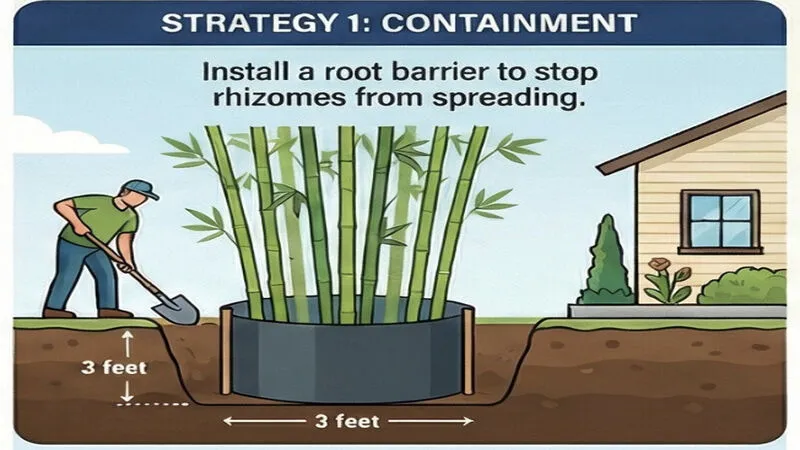
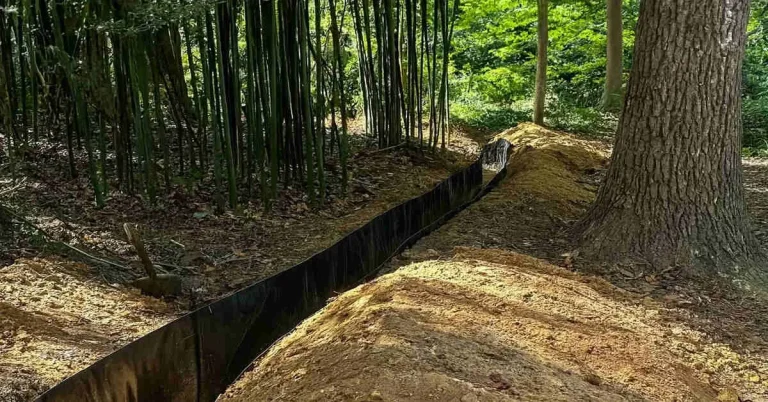
Containing bamboo is absolutely possible, but homeowners should know up front that it is a lot of work and requires the right materials. The goal is to install a root barrier that stops rhizomes from spreading into other parts of the yard, and this system relies on a deep trench and a barrier strong enough to withstand the pressure of bamboo growth.
At Blue Collar Scholars, we recommend using high density polyethylene (HDPE) root barriers that are 60 to 80 mil or thicker, since weaker materials can be pierced by bamboo over time.
Steps to contain bamboo correctly:
- Dig a trench about three feet deep around the bamboo.
- Install the HDPE barrier in the trench and angle it slightly outward.
- Leave a few inches of the barrier exposed above the soil so rhizomes cannot climb over it.
- Backfill the trench securely and inspect the barrier line each season for any exposed or redirected rhizomes.
A properly installed barrier forces rhizomes upward, making bamboo removal easier and helping you stop bamboo from spreading into areas you want to protect.
How to Get Rid of Bamboo
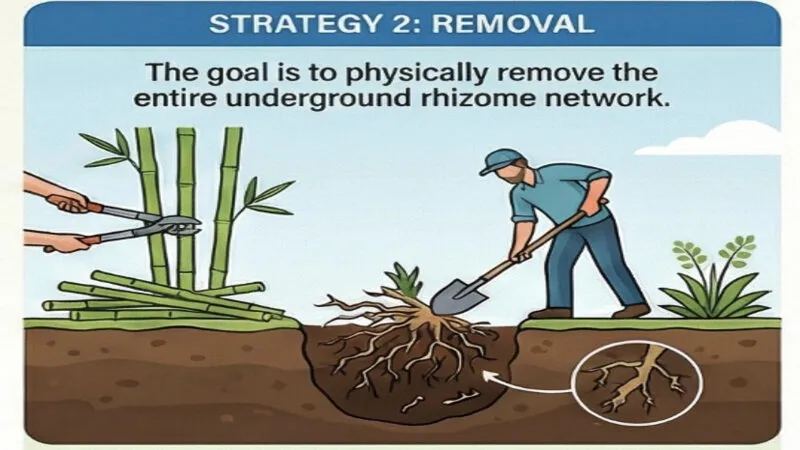
Getting rid of bamboo takes a lot of manual work. If you decide to tackle it yourself, then your goal is to remove the underground rhizome network that keeps the plant alive. Cutting the stalks helps clear the area, but it does not stop the bamboo from returning since the rhizomes will continue pushing up new shoots. As the plant becomes older and more established, this network grows deeper and more tangled, which makes full removal more difficult without persistence and the right tools.
Tools That Make Bamboo Removal Easier
Using proper tools can make a big difference in how quickly and effectively you can remove bamboo.
- A pruning saw helps you clear the stalks efficiently.
- A pickaxe helps break through compacted soil and expose rhizomes.
- A spade shovel allows you to lift long sections of root from the ground.
- For larger bamboo patches, a mini-excavator can dig out the rhizome system much faster.
Steps to Remove Bamboo Effectively
- Cut the bamboo stalks down to ground level to clear the working area.
- Dig around the base of the plant and begin exposing the rhizomes.
- Follow each rhizome outward and pry up every section you can find since even small pieces can regrow.
- Continue checking the area weekly and remove any new shoots while they are still soft and easy to pull.
Can Chemicals Help?
Yes, chemicals can help weaken bamboo, but they need to be used correctly. Systemic herbicides only work when applied to leafy regrowth because bamboo absorbs the chemical through its leaves.
- Cut the bamboo low.
- Wait two to three weeks until new leafy shoots appear.
- Apply a glyphosate based herbicide directly to the young leaves on a dry, calm day.
This method weakens the rhizomes over time and can make physical removal easier. Chemicals alone rarely eliminate bamboo, but they are useful when combined with digging and consistent shoot removal.
What Makes the Process Faster and More Effective
- Removing bamboo early before the rhizomes thicken.
- Staying consistent with weekly checks for new shoots.
- Combining manual removal with chemical treatment for stubborn sections.
- Avoiding tilling, which can spread rhizome fragments farther into the yard.
For large infestations or bamboo growing under patios, foundations, or across property lines, professional removal is usually the fastest and most effective option. A trained team with the right equipment can remove the rhizome system more completely and prevent it from coming back. And if you don’t want to handle all the digging and monitoring yourself, at Blue Collar Scholars we have the tools and experience to remove bamboo safely and keep it contained.
Long-Term Prevention After Bamboo Removal
Long-term success is possible using this “how to get rid of bamboo” guide, but it relies on stopping any hidden rhizomes from reestablishing themselves after bamboo removal. Even the best digging job can leave behind small fragments, so plan to monitor the area every few weeks during the growing season. If new shoots appear, remove them while they’re young and soft, which prevents the rhizome system from rebuilding its strength.
Once the area is cleared, improving soil health and drainage can slow future spread, especially if the bamboo was growing in compacted or poorly draining soil. Planting deep rooted shrubs or dense groundcovers can also help occupy the space and reduce the chance of regrowth. With ongoing monitoring and quick action on any new shoots, you can stop bamboo from spreading back into your yard.
When to Call a Professional
DIY bamboo removal is possible, but many homeowners run into issues that allow the plant to grow back. One of the biggest mistakes is installing a barrier too low, which lets rhizomes climb over it. It is important to leave a few inches of the barrier exposed above ground to prevent this. Furthermore, Spring is the best time to call a professional, since new shoots are soft, easy to spot, and allow for a full season of follow-up monitoring.
If bamboo has already spread under patios, decks, fences, or toward your home’s foundation, professional help becomes essential. Deep, established rhizomes require specialized tools and experience to remove without causing more damage. Calling in a trained team early prevents regrowth and protects the structures around your property.
Don’t Let Bamboo Make a Fool of You
If you’re feeling bamboozled and ready to take your yard back, we can help.
At Blue Collar Scholars, we bring over 15 years of experience in landscaping and construction, including extensive work in bamboo removal, hardscaping, and property restoration. If the bamboo has already gone too far, breaking through patios, lifting pavers, creeping under decks, or putting pressure against your foundation, you don’t need multiple contractors. We are a one stop shop that can eliminate the bamboo, repair any damage, and restore your yard for the long term.
If you are ready for a safe, permanent solution, our team can assess the situation and handle everything from start to finish. Schedule your free estimate today and say bye to bamboo!
Frequently Asked Questions About Bamboo Removal
Why should I hire Blue Collar Scholars for bamboo removal?
Blue Collar Scholars brings over 15 years of experience in landscaping, construction, and complex bamboo removal projects. Our team understands how rhizomes spread, how to extract them safely, and how to prevent bamboo from returning. We also repair any hardscaping or yard damage caused by the bamboo, making us a one-stop solution.
What kills bamboo fast?
The fastest way to kill bamboo is by cutting the stalks, digging out the rhizomes, and applying a glyphosate based herbicide to fresh regrowth. This combination weakens the root system and stops new shoots from forming. Staying consistent with follow up treatments is what makes the process work quickly.
Does boiling water kill bamboo?
Boiling water can damage young bamboo shoots, but it rarely reaches deep enough to kill the rhizomes underground. It may slow small patches, but it won’t eliminate established bamboo. For complete removal, digging and herbicide treatment are far more effective.
What is the natural enemy of bamboo?
Bamboo has very few natural enemies, which is why it spreads so aggressively. Some insects and fungi can affect it, but none can control an established patch in a yard. The only reliable “enemy” is consistent human removal and proper containment.