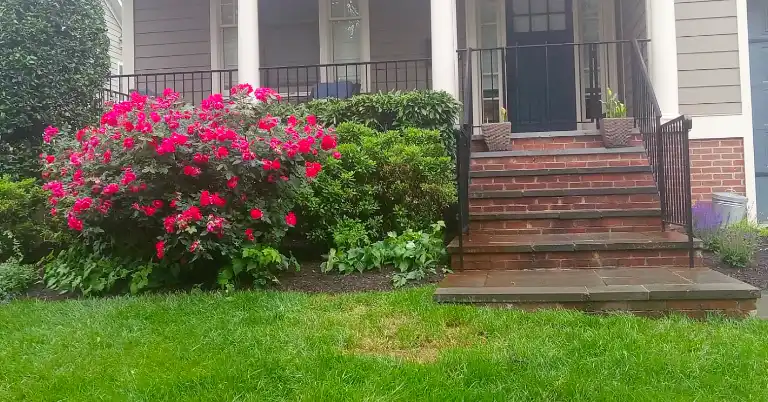


This past spring in Potomac, a homeowner told me their outdoor stairs had practically become an obstacle course. Between the warped boards and the shaky railing, even taking the dog out felt like a trust exercise. After rebuilding the staircase with composite steps and a clean metal railing, the whole backyard felt instantly more secure and stylish. And, more importantly, it was stable and safe.
Across the DMV, outdoor stairs go through constant weather abuse, and once they weaken, it shows. Updating them brings back stability, improves drainage, and makes your outdoor space feel far more comfortable and complete.
Popular Outdoor Stairs and Railing Options
Outdoor stairs must handle heavy foot traffic, moisture, and major temperature swings in the DMV. Choosing the right material can make your space safer, more attractive, and easier to maintain.
Here are five outdoor stair and railing options that work especially well for Maryland, DC, and Virginia homes.
Natural Stone Stairs with Iron/Aluminum Railings
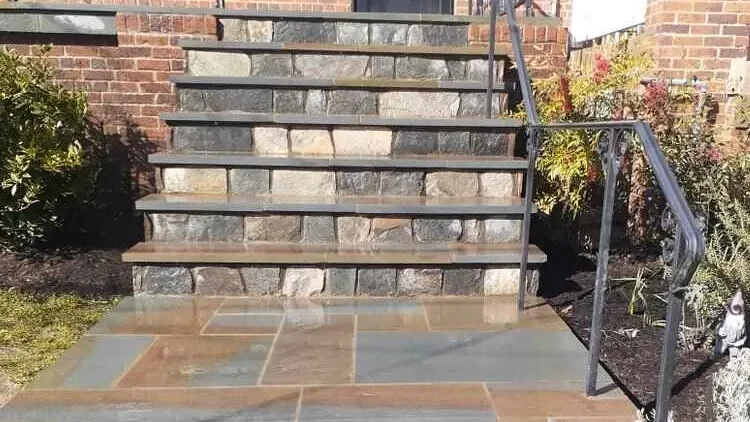
Flagstone, bluestone, and granite create durable, slip-resistant outdoor steps that suit both traditional and modern homes. Stone handles freeze-thaw cycles well and offers a high-end finish.
Popular DMV choices include full-color flagstone steps, stacked-stone landings, and bluestone caps paired with metal railings for added strength. Foggy Bottom stone veneer is also a favorite for risers or sidewalls because it adds rich texture without overpowering the design.
Concrete Stairs with Metal Railings
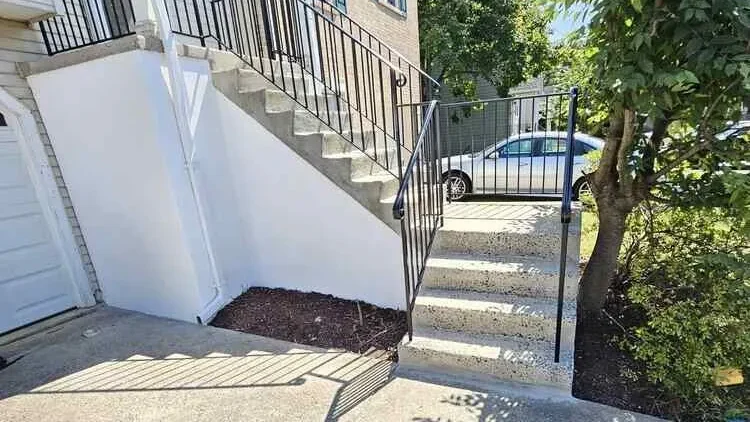
Metal railings provide strength, stability, and a modern look. Steel offers a bold, heavy-duty feel, while aluminum stays lightweight and rust-resistant.
Homeowners in Arlington, Silver Spring, and Bowie often choose metal because it handles seasonal expansion and contraction better than wood. Options include horizontal bars, vertical rods, and clean black square posts that pair well with composite or wood stairs.
Metal railings are versatile and pair especially well with concrete or composite stairs to create a durable, low-maintenance combination that handles seasonal weather swings with ease.
Composite Deck Stairs with Cable Railings
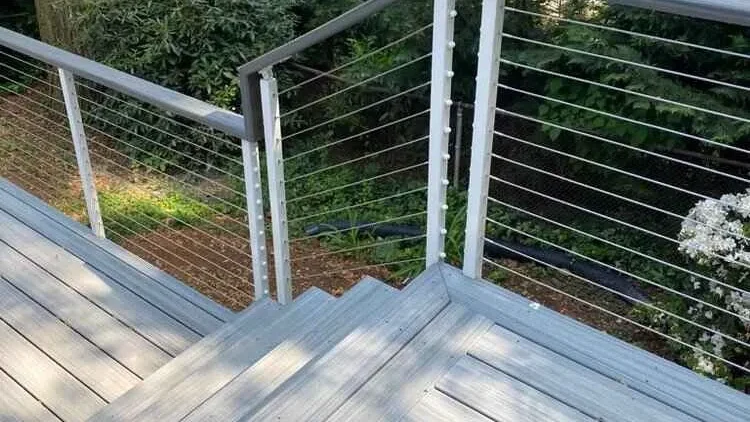
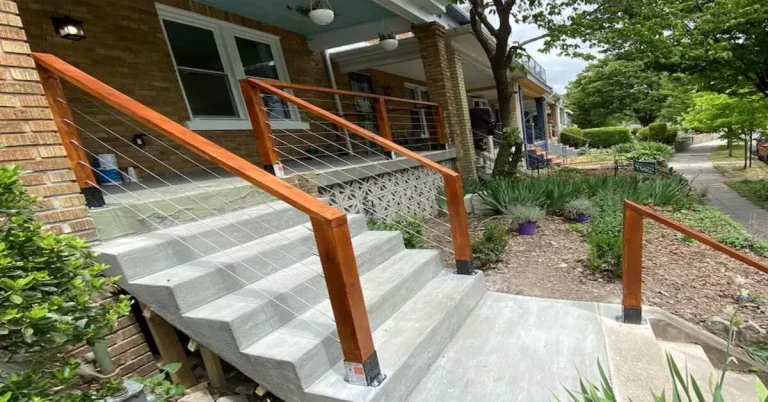
Cable railing uses tensioned stainless-steel cables to create an open, modern look that pairs perfectly with composite deck stairs. Composite boards resist fading, splintering, and rot, making them a durable, low-maintenance choice for high-traffic outdoor areas.
In the DMV, this combination is popular for homes with wooded views, landscaped yards, and decks because it keeps sightlines clear while performing well through humidity and rain. Common styles include black posts with silver cables or full stainless-steel systems for a clean, streamlined finish.
Wooden Stairs with Vinyl/PVC Railings
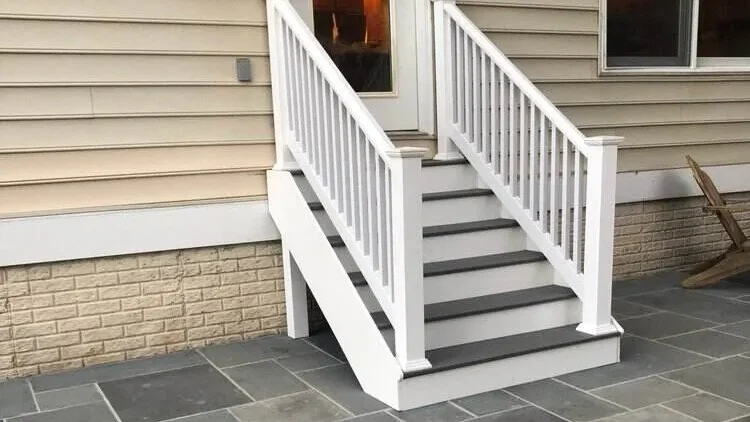
Vinyl and PVC railings provide a clean, classic appearance with virtually no maintenance. They don’t rot, peel, or warp, even under constant moisture or heat.
These railings pair well with either wooden or composite stairs and brighten outdoor spaces with options like white, almond, and light gray. Many homeowners choose them for porches, deck staircases, and breezeways because they stay crisp and durable year-round.
Pressure-Treated Wooden Stairs with Railings
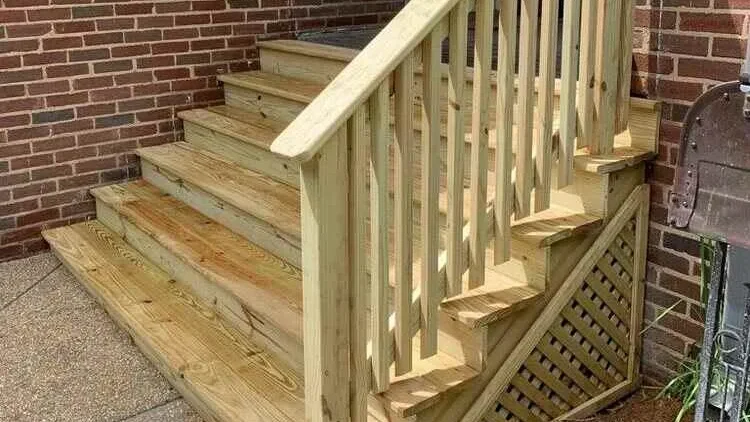
Pressure-treated wood is built to resist insects, moisture, and decay, making it one of the most common choices for outdoor stairs. It offers a natural look, blends with most homes, and stays budget friendly.
In the DMV’s humid climate, sealed pressure-treated wood performs well when maintained properly. Popular styles include wide treads, closed risers, and square or decorative wood balusters. Many homeowners choose this for porches, backyard decks, and garden transitions.
How to Choose the Right Outdoor Stairs for Your Home
When selecting materials for your outdoor stairs, consider durability, slip resistance, maintenance needs, and how each material handles the DMV’s mix of humidity and freeze-thaw cycles. Matching the stairs to nearby patios, decking, or landscaping creates a cohesive, long-lasting layout.
Proper grading also prevents water from settling at stair bases. If you have pooling water or erosion, our yard grading services help stabilize the soil and support long-term stair performance.
Outdoor Stairs Maintenance
| Material | Cleaning Frequency | Touchups Needed | Expected Lifespan |
|---|---|---|---|
| Pressure-Treated Wood | Twice yearly clean | Re-stain every 2 to 3 years | 15 to 25 years |
| Composite | Twice yearly rinse | None | 25 to 30 years |
| Metal (Steel/Aluminum) | Twice yearly wipe | Touch-up paint as needed | 30+ years |
| Cable | Twice yearly rinse | Re-tension annually | 25 to 40 years |
| Vinyl/PVC | Twice yearly rinse | None | 20 to 30 years |
| Stone | Twice yearly clean | Re-seal as needed | 40+ years |
| Mixed-Material | Depends on components | Minor annual touchups | 20 to 50+ years |
Simple seasonal cleaning keeps stairs safe, attractive, and long lasting. According to GSA’s maintenance on wood, applying water-repellent is a great way to extend the life of wood and prevent rot and warping.
When to Call a Professional
If your stairs feel soft, uneven, slippery, or unstable — or if the railing is loose or rusted — it’s time to contact a professional outdoor living contractor. Outdoor stairs must support heavy weight, resist moisture, and meet local building codes, especially for elevated decks and steep transitions.
A professional ensures your staircase is safe, stable, durable, and built to last through Maryland, DC, and Virginia weather.
Let’s Take the Next Step Together
If your outdoor stairs feel worn, unsafe, or outdated, our team can build a staircase that’s sturdy, stylish, and designed for the DMV climate. Whether you need a simple upgrade or a full redesign, at Blue Collar Scholars, we tailor every project to fit your home and your budget.
Your next set of steps should feel solid, look great, and last for years. Request your free estimate today and let’s elevate your outdoor space, one step at a time.
Frequently Asked Questions About Stairs
How long do outdoor stairs last?
Outdoor stairs typically last between 15 and 40+ years, depending on the material and how well they’re maintained. Wood tends to have a shorter lifespan unless it’s regularly sealed, while composite, stone, and metal systems hold up much longer in Maryland, DC, and Virginia weather. Proper drainage and seasonal cleaning can extend their lifespan significantly.
Is composite better than wood outdoors?
Composite is often the better long-term option because it resists fading, splintering, and moisture damage far better than wood. In the DMV’s humid climate, composite boards stay stable and require almost no maintenance to look clean and new. Homeowners who want durability without constant upkeep usually prefer composite stairs and railings.
Do stone stairs get slippery?
Natural stone is one of the safest outdoor materials when it has the right texture and finish. Flagstone and bluestone naturally offer slip resistance, even when wet, which makes them great for pool areas, entryways, and garden paths. If you’re concerned about traction, we can recommend specific finishes that maximize grip without sacrificing style.
Can I mix materials?
Yes! Having a custom design with multiple materials is one of the most popular trends for outdoor stairs. Combining wood or composite treads with metal railings or adding stone landings to a deck staircase creates both visual interest and durability. This approach also helps each part of the staircase perform well in tough weather conditions while staying stylish.
Do I need a permit for outdoor stairs?
Most elevated deck staircases and any stairs attached to a structure require permitting in Maryland, DC, and Virginia. This ensures the stairs meet building codes for safety, railing height, and load-bearing requirements. We handle this process for homeowners so the project moves forward smoothly and stays compliant.