

Your front porch probably sits empty most of the year—not because you don’t want to use it, but because mosquitoes, direct sun, and lack of privacy make it uncomfortable. Adding a screened in porch instantly changes that. By searching for screened-in porch ideas and adding the right screened porch design to your home, your porch becomes private, bug-free, shaded, and usable most of the year, effectively adding functional square footage without a full addition.
Before diving into screened in porch ideas, it’s important to understand that front porch screening is different from screening a back porch. It faces the street, influences curb appeal, and alters how people approach your home. Sight lines, architectural style, and material selection all matter. Done correctly, a screened front porch feels welcoming and intentional. Done poorly, it looks like an awkward enclosure attached to the façade.
For homeowners wondering about value, here’s a helpful guide:
👉 Does a screened-in porch add value?
Why Screening Your Front Porch Changes Everything
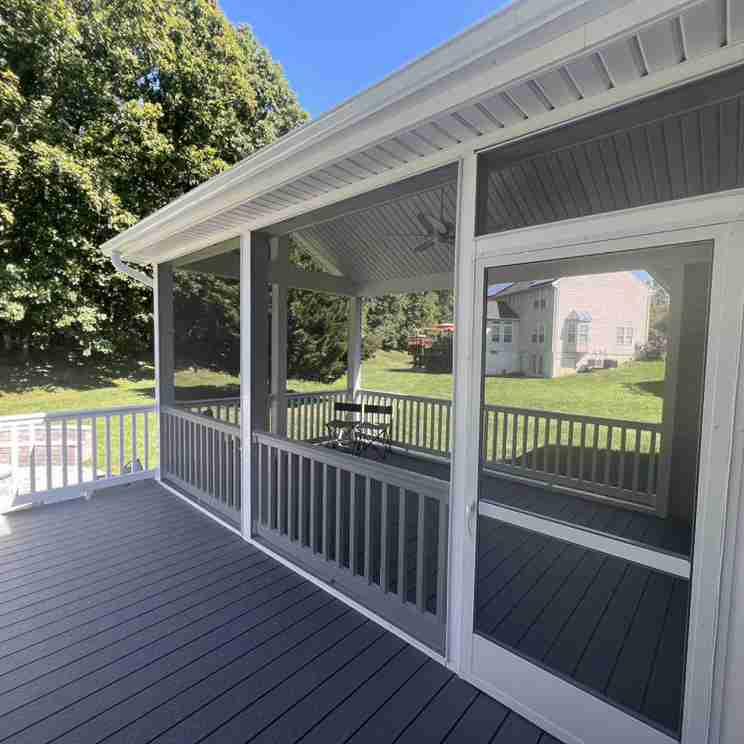
An open porch is mostly decorative. Weather, pests, and visibility mean most people barely use it. Adding a screened front porch increases usability dramatically—often from a few dozen days a year to well over 150—thanks to increased shade, privacy, and protection from insects, wind, and rain.
Screened front porches also create a valuable transition zone: a comfortable landing area for deliveries, shoes, early guests, or simply relaxing without feeling exposed. For inspiration on layouts and design styles, see the large library of projects on Houzz’s screened-in porch ideas.
And in our climate – Maryland’s humidity, DC’s summer heat, Northern Virginia’s mosquitoes – screening converts months of unusable time into comfortable living space. That’s not a small thing when you’re making an investment.
Unlike backyard structures, screened front porches directly affect curb appeal and home value. Screened porch design must align with your home’s architecture—colonial, craftsman, farmhouse, Mediterranean, or modern.
Why Front Porch Screening Is Different From Back Porch Screening
Door placement matters, too. Screen door swing, alignment, and entry flow affect daily use more than symmetry. HOAs, setbacks, and historic district rules often include additional requirements.
Common Front Porch Screening Mistakes
- Treating screens as an afterthought
Screening affects structure, spacing, and sight lines; it must be part of the core design. - Misplaced screen doors
A centered door can look right but function poorly. - Insufficient lighting
Screens reduce natural light; add layered lighting to avoid a dim or cave-like feel. - Ignoring winter appearance
Your porch remains visible from indoors year-round. - Cheap screen materials
Fiberglass tears easily, especially at frequently used front entries. - Difficult-to-maintain screens
Designs that require complex removal make re-screening unnecessarily hard.
Screened Porch Design Styles That Work Best
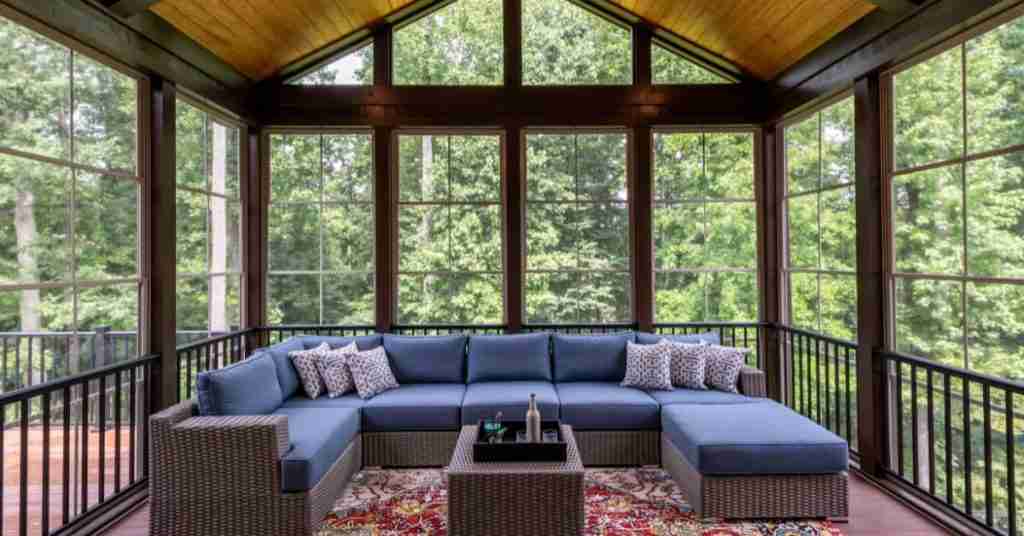
Ultimately, you want to add a screened-in porch design that matches the overall aesthetic of your house. This means, matching the porch design to the design that best represents your house. Below are some of the most common types of styles:
- Colonial: Crisp white framing, symmetry, and darker screens. Visually timeless and widely compatible.
- Craftsman: Tapered posts, natural materials, and rich colors. Darker screens highlight shadow lines.
- Modern Farmhouse: Board-and-batten siding, black trims, and simple lines. Minimalist screens and neutral palettes shine here.
- Mediterranean: Stucco, arches, and wrought iron. Bronze screens complement warm tones.
- Contemporary Minimalist: Floor-to-ceiling screens and sleek aluminum frames. A more premium approach but visually stunning.
For more style inspiration, This Old House offers great examples:
👉 Screened-in porch ideas from This Old House
Screen Material Options: What Matters Most

Not all screens are created equal, and choosing the wrong one is one of the easiest ways to end up frustrated later. Fiberglass is the budget-friendly standby—lightweight, easy to install, and perfectly fine for low-traffic porches. But if you have pets, kids, or a front porch that gets a lot of use, it often won’t hold up.
Aluminum screens are stronger and don’t sag, though they’re more visible from inside and can dent if hit. For most front porch screening projects, pet screen is the sweet spot. It’s made of heavy-duty polyester, resists tearing, and lasts 15–20 years—exactly what you want for a space you walk through daily.
If your porch faces the afternoon sun, solar screens can be a game-changer. They cut UV exposure, reduce glare, and can add a bit of privacy in neighborhoods where the sidewalk feels too close. And for extending your screened porch into chillier months, many homeowners add clear vinyl panels in fall and remove them in spring.
Here is a quick cheat guide to common screen materials, for your reference:
- Fiberglass – Affordable; best for low-traffic porches.
- Aluminum – Durable but more visible; can dent.
- Pet Screen – Heavy-duty polyester; ideal for high-use front entries.
- Solar Screen – Blocks 70–90% of UV rays; ideal for west/south exposure.
- Clear Vinyl Panels – Extend seasonal comfort; ideal for shoulder months.
Effective Front Porch Screening Approaches
When it comes to screened in porch ideas, there’s no one-size-fits-all option—your porch’s depth, size, and purpose influence what works best.
A full-width screen room turns your porch into a true three-season space. If your porch is at least 8–10 feet deep, this can feel like adding a cozy outdoor living room right at your entry. On the other hand, partial screening—like screening only the front and one side—keeps the porch airy and open while still blocking bugs and sun where it matters most.
If you prefer flexibility, seasonal screens that pop in and out each year can give you the best of both worlds: open porch in winter, screened sanctuary in summer. Integrated storm doors are another smart option, allowing you to switch between glass and screen without changing the look of your front entry.
And then there are privacy-first designs. Solar screening or floor-to-ceiling panels can make a porch feel secluded even if you’re just a few feet from the sidewalk. If your existing porch is too shallow to enjoy, porch extensions with screening can transform it into something genuinely usable.
Furniture, Layout & Aesthetic Considerations
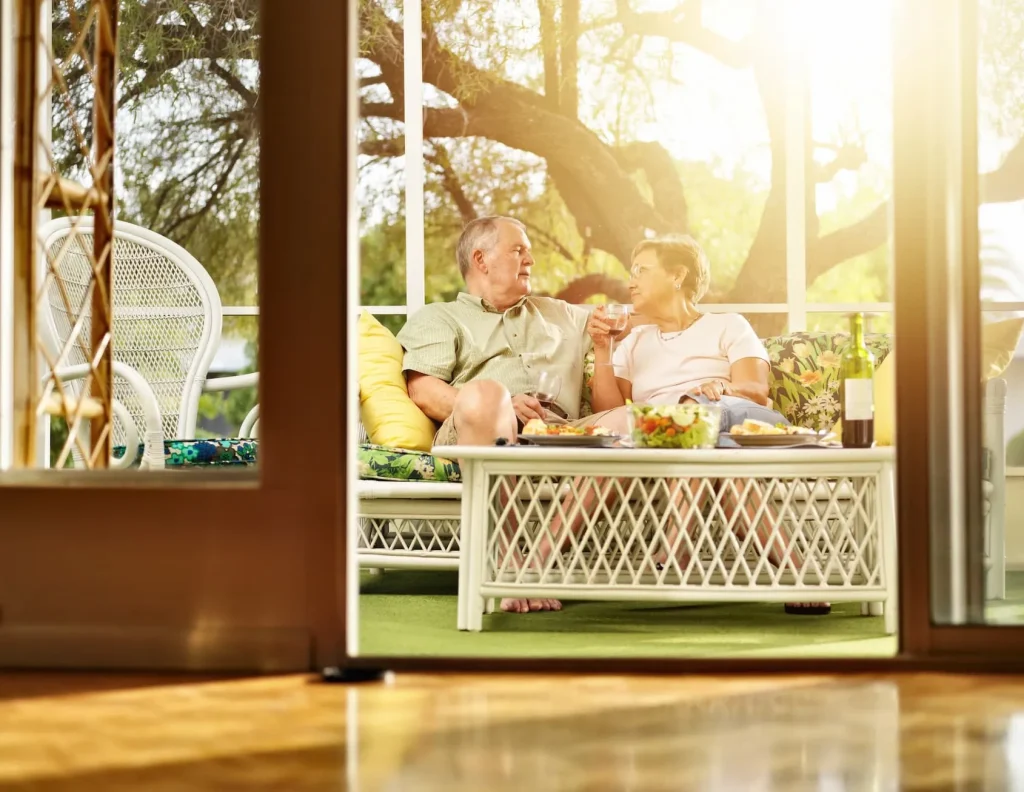
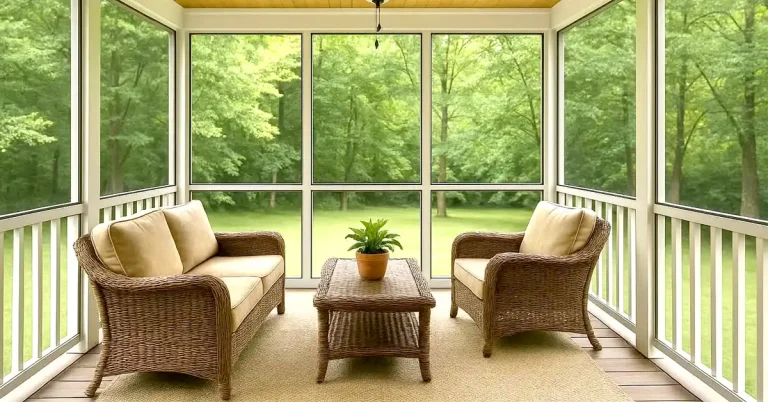
A good screened porch design isn’t just about screens—it’s about how you’ll actually use the space. Conversation areas tend to work better than “everything against the wall” layouts. Think two chairs angled toward each other, a loveseat facing outward, or a small grouping that frames your view of the street.
Because the porch is semi-outdoor, materials matter. All-weather wicker, teak, and indoor–outdoor cushions hold up well while still looking inviting. Rugs can add warmth and help define zones, especially on longer porches.
Lighting is one of the most overlooked elements of screened porches. During the day, screening naturally dims the space compared to an open porch. Adding a ceiling light, sconce, or even a battery-powered lamp can make nights on the porch feel magical.
A few plants—ferns, pothos, small palms—thrive in screened spaces and instantly make them feel finished. And don’t forget storage for blankets, candles, or cushions. Even a small bench with hidden storage can make the space far more functional.
Electrical & Climate Control Options
If you’re screening your porch for the first time, it’s worth adding electrical before everything is enclosed. Once the screens are up, running new wiring becomes more complicated (and more expensive).
You’ll want:
- A ceiling box for a fan or light
- GFCI-protected outlets
- Switches placed near the entry door for convenience
A ceiling fan is almost essential in warm climates and dramatically expands how often you use the space. For homeowners who want a true three-season room, a mini-split HVAC unit or radiant heat can make chilly mornings or fall evenings surprisingly comfortable.
Most people find that a simple fan + well-placed lighting strikes the perfect balance between comfort and practicality.
Permits, HOAs & Local Regulations
Front porch screening often triggers different rules than backyard projects. Many counties require building permits if you’re altering the structure, adding electrical, or changing the exterior appearance. HOAs may require a design review, especially if you’re adding new framing or altering the porch’s visibility from the street.
Some historic districts require the screen framing to match a specific architectural style or even prohibit certain materials. Submitting drawings early helps avoid delays, and a contractor familiar with local regulations can usually streamline the process.
Longevity & Maintenance
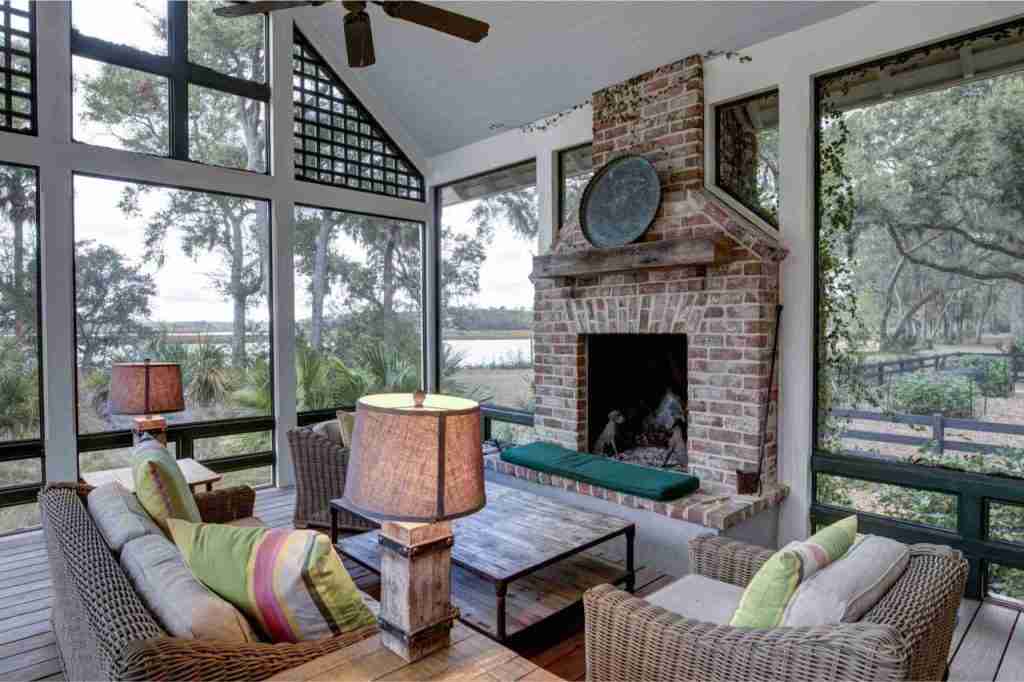
A well-built screened porch can last decades, but like anything on the exterior of a home, it needs a bit of routine care. Simple cleaning once or twice a year keeps screens looking clear. Wood trim should be repainted or stained every 5–7 years, and screen doors may need the occasional hinge tightening or closer adjustment.
Most screens last 10–15 years depending on material. Pet screens and aluminum screens last longer; fiberglass tends to need replacing sooner. Re-screening is typically inexpensive and quick compared to the original installation.
Mistakes to Avoid
Even beautiful screened porches can become frustrating if small details are overlooked. A screen door that swings the wrong direction, for instance, becomes a daily annoyance. Gaps near the ceiling can let bugs in, defeating the whole purpose.
Furniture scale is another issue—oversized seating can make even a deep porch feel cramped. And drainage matters more than many people realize; improper slope can lead to puddles or rot. Finally, avoid overbuilding for your neighborhood. The goal is to elevate your home, not create something that stands out for the wrong reasons.
Why Our Screened Porches Last Long-Term
Screened-in porches by Blue Collar Scholars stand the test of time because we:
- Use proper footings, flashing, drainage
- Choose premium materials like pet screen
- Ensure architectural compatibility
- Plan electrical layouts early
- Understand HOAs and local permit rules
- Communicate clearly from design to completion
Our screened porch designs pass inspection the first time and maintain long-term durability and beauty.
Your Front Porch Should Work as Hard as Every Other Room
Screening transforms an underused porch into a functional, comfortable extension of your home. With thoughtful front porch screening, smart planning, and the right screened in porch ideas, you can create a welcoming space you’ll use daily.
If you’re considering a screened front porch, we can walk your property, evaluate your existing structure, discuss screened porch design options, and provide a clear proposal.
Your front entry should do more than look nice—it should work. Get started on your screened porch journey today – contact us for a free quote!
Screened-In Porch Ideas – Frequently Asked Questions
What are the best screened in porch ideas for front porches?
The best ideas include partial or full-width screening, privacy screens, seasonal panels, and porch extensions. These improve comfort while boosting curb appeal.
Does a screened front porch add value to a home?
Yes—when designed well. A screened porch increases usable living space and improves curb appeal. Learn more here: Does a screened-in porch add value?
What’s the difference between front porch screening and back porch screening?
Front porch screening impacts curb appeal, door flow, HOA oversight, and architectural compatibility. Back porches typically have more flexibility.
Which screen materials are best for high-traffic areas?
Pet screen is the most durable option for families with pets, children, or heavy foot traffic. Aluminum is also strong but more visible.
Do screened porches work in all climates?
Yes. Solar screens help in sunny climates, clear vinyl extends shoulder seasons, and fans improve airflow in humid areas.