

So you’re thinking about a new driveway. The big question most homeowners get stuck on? Which material actually makes sense for their home.
Your choice affects more than how well it handles vehicle weight. It shapes your home’s curb appeal, resale value, and how much maintenance you’ll do over the years.
Pick the wrong material and you’re stuck with cracks, fading, or weeds pushing through. Pick the right one and it basically takes care of itself for years. That choice also changes what buyers will pay for your house someday. Driveways are one of those things people notice without realizing they’re noticing.
Here in the DMV, homeowners have a lot of materials to work with.
Why Driveway Materials Matter
Your material choice does more than affect how your driveway looks. It determines drainage, durability, maintenance requirements, and how much value your driveway adds to your home.
Consider this: your driveway is one of the first things guests and potential buyers notice. Realtor.com notes that a well-maintained driveway signals that someone has cared for the entire home. That impression builds buyer confidence before they ever walk through the front door.
Local conditions across the DMV make this decision even more important. Maryland’s clay-heavy soils, Virginia’s freeze-thaw cycles, and D.C.’s compact urban lots all demand materials that drain properly and hold up through the region’s seasonal swings.
With that in mind, here are the nine most popular driveway types homeowners are choosing today.
Concrete Driveway
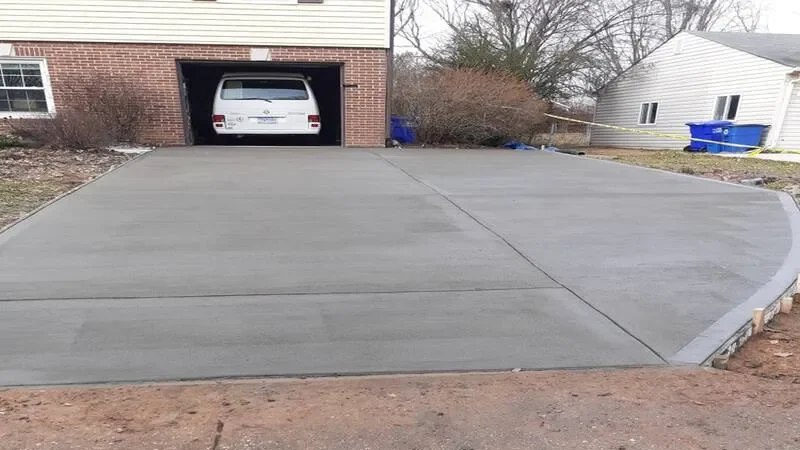
A concrete driveway is a type of driveway made from cement, sand, and gravel that hardens into a strong, uniform surface. Among all types of driveways, concrete remains one of the most durable and widely used materials across the DMV. Proper curing and installation make it one of the longest-lasting driveway materials.
Concrete is a good choice because it offers a solid, low-maintenance surface that resists heavy traffic and weather damage. It’s known for its clean, modern look and structural durability. It also provides excellent structural support for vehicles of all sizes.
Homeowners choose this because it delivers a neat, polished appearance and long lifespan with minimal upkeep.
✅ Concrete Driveway Pros
- Long lifespan (30–50 years).
- Easy to clean and shovel in winter.
- Can be colored or textured later.
❌ Concrete Driveway Cons
- Can crack in freeze–thaw cycles.
- Repairs are visible once patched.
Asphalt Driveway
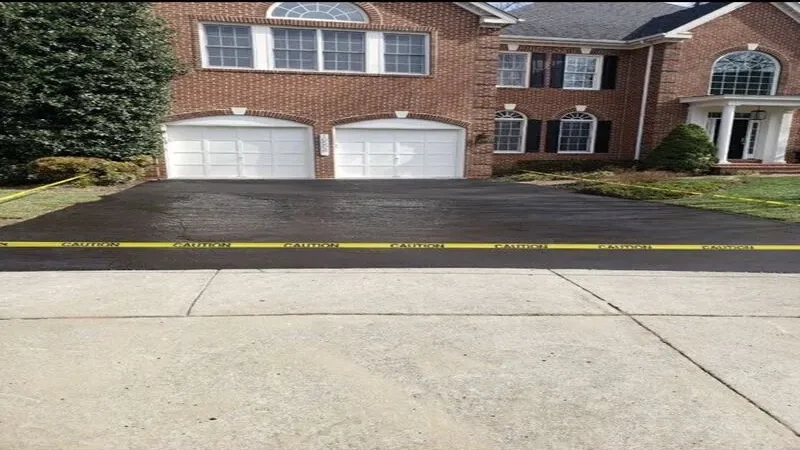
An asphalt driveway is a type of driveway made by mixing hot bitumen (black petroleum binder) with crushed stone and compacting it into a smooth surface. Its flexibility helps prevent cracking in Maryland and Virginia temperatures.
Asphalt is a good choice because it can create driveways of all shapes and sizes, provides a smooth, durable surface that performs well through freeze-thaw cycles. It also allows for easy snow removal during winter.
Homeowners choose this because it’s affordable, quick to install, and simple to repair compared to other materials.
✅ Asphalt Driveway Pros
- Lower initial cost.
- Smooth and flexible surface.
- Can be resealed for longer life.
❌ Asphalt Driveway Cons
- Requires sealing every few years.
- Can soften in summer heat.
Gravel Driveway
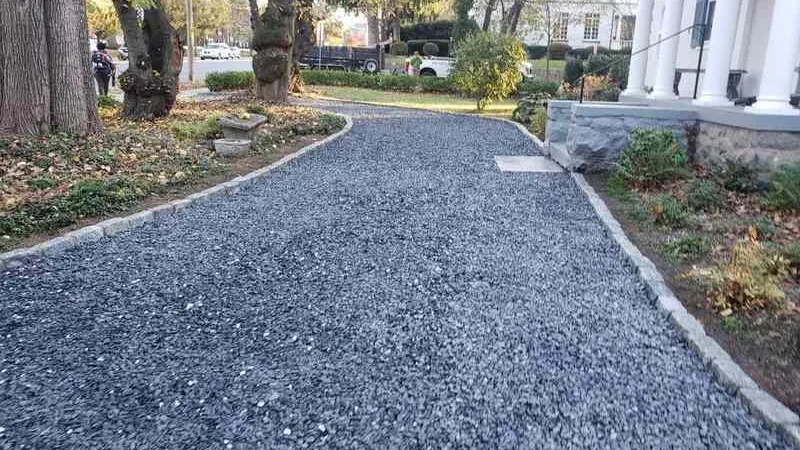
A gravel driveway is a type of driveway made from layers of compacted crushed stone topped with loose gravel. It offers a natural and textured look that blends well with the rural and suburban landscapes of the DMV.
Gravel is a good choice because it provides excellent drainage, preventing puddles and runoff on sloped or clay-heavy lots. It’s also easy to reshape or expand.
Homeowners choose this because it’s budget-friendly, fast to install, and simple to maintain without professional help.
✅ Gravel Driveway Pros
- Inexpensive and quick to install.
- Great drainage.
- Easy to repair or refill.
❌ Gravel Driveway Cons
- Needs occasional raking.
- Can track dust or pebbles.
Paver Driveway
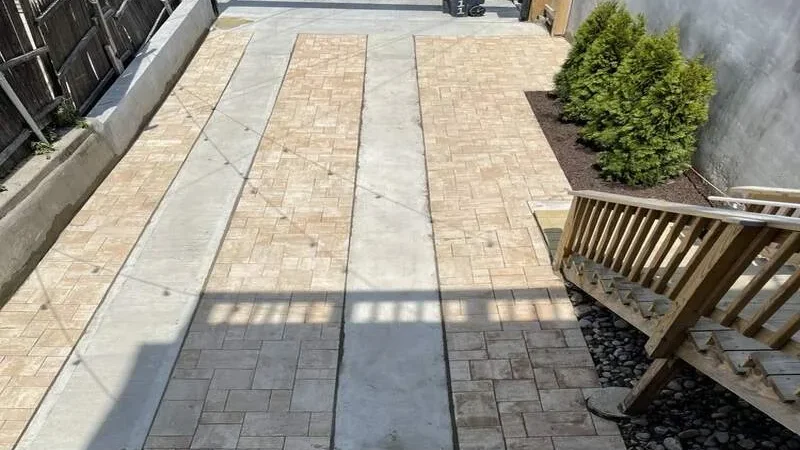
A paver driveway is a type of driveway made from interlocking blocks of concrete, brick, or stone placed over a compacted base. The joints between pavers allow for natural flexibility and drainage.
Pavers are a good choice because they combine visual appeal with durability, handling freeze-thaw movement without cracking. The modular design also allows for creative patterns and color choices.
Homeowners choose this because it adds a custom, high-end look that boosts curb appeal and resale value.
✅ Paver Driveway Pros
- Highly customizable patterns and colors.
- Easy to replace damaged sections.
- Excellent drainage.
❌ Paver Driveway Cons
- Higher upfront cost.
- Weeds can grow between joints.
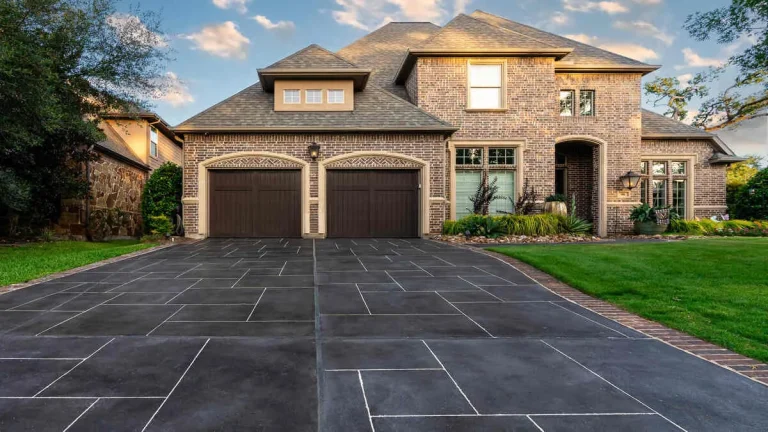
Stamped Concrete Driveway
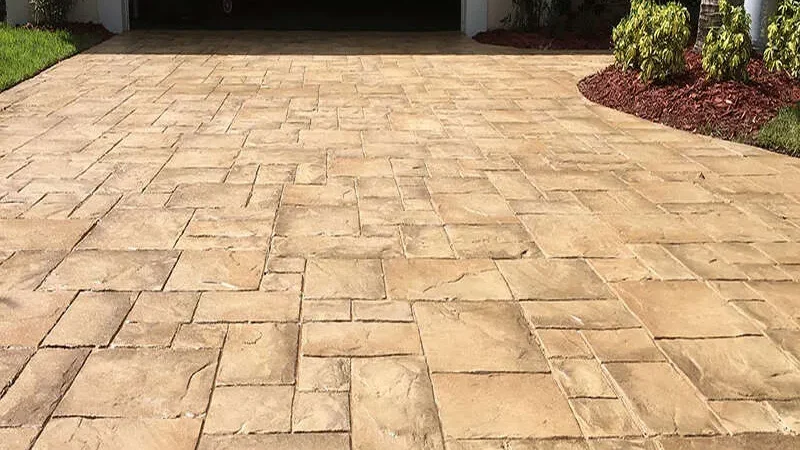
A stamped concrete driveway is a type of driveway where wet concrete is textured and colored to resemble natural stone, brick, or slate. It gives homeowners the decorative appeal of pavers without the higher installation cost.
Stamped concrete is a good choice because it merges strength with design, offering visual texture and charm while remaining a single solid surface.
Homeowners choose this because it delivers a premium look at a lower price point and with less maintenance than individual pavers.
✅ Stamped Concrete Driveway Pros
- Attractive, decorative finish.
- Seamless surface for easy care.
- Wide color and pattern options.
❌ Stamped Concrete Driveway Cons
- Can crack if not reinforced.
- Color matching repairs can be tricky.
Brick Driveway
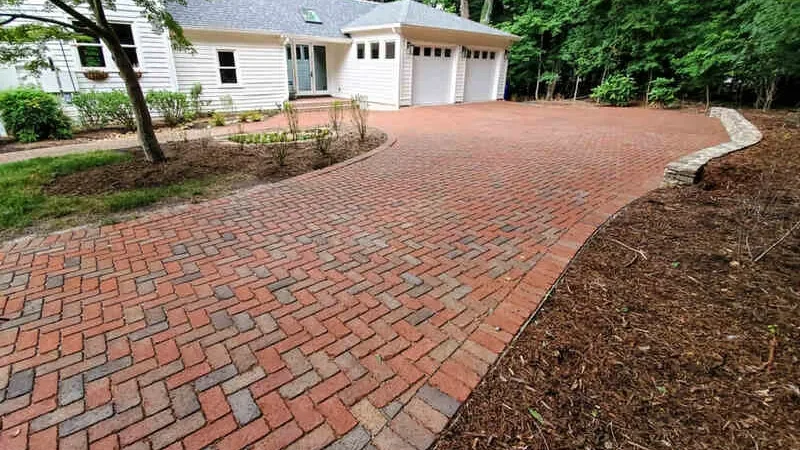
Brick is a good choice because it’s both strong and elegant, capable of handling vehicle weight while enhancing architectural character.
Homeowners choose this because it brings classic charm and long-term value to historic or traditional-style homes.
✅ Brick Driveway Pros
- Elegant, timeless style.
- Very durable under traffic.
- Environmentally friendly material.
❌ Brick Driveway Cons
- Higher material and labor cost.
- Can shift or grow weeds.
Cobblestone Driveway
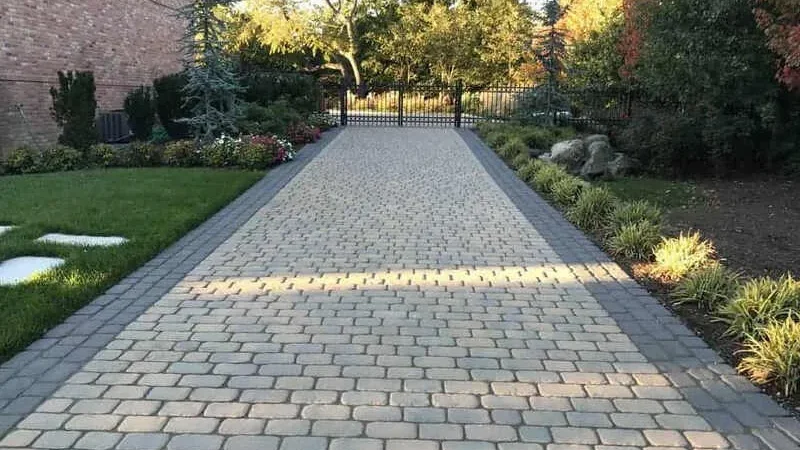
A cobblestone driveway is a type of driveway made from hand-cut granite or basalt stones set into sand or mortar. Each stone’s natural variation gives the surface a unique, old-world appearance.
Cobblestone is a good choice because it’s nearly indestructible and adds a distinct, high-end aesthetic that never goes out of style.
Homeowners choose this because it creates an elegant, historical look that dramatically increases curb appeal.
✅ Cobblestone Driveway Pros
- Exceptionally durable.
- Distinctive, luxury appearance.
- Adds property value.
❌ Cobblestone Driveway Cons
- Expensive to install.
- Uneven surface can feel bumpy.
Tar and Chip Driveway
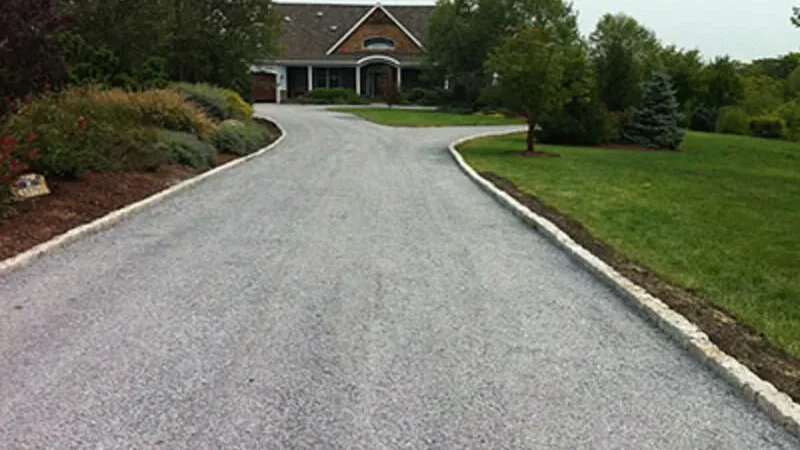
A tar-and-chip driveway is a type of driveway made by spreading hot asphalt and pressing stone chips into the surface. It creates a textured, rustic look that’s both functional and slip-resistant.
Tar and chip is a good choice because it combines the strength of asphalt with the natural look of gravel. It offers excellent traction and moderate durability at a lower price.
Homeowners choose this type of driveway because it’s affordable, easy to maintain, and looks right at home on rural or farmhouse-style properties.
✅ Tar & Chip Driveway Pros
- Affordable and low maintenance.
- Good traction and rustic appeal.
- Resists light weather damage.
❌ Tar & Chip Driveway Cons
- Limited installer availability.
- Shorter lifespan than asphalt.
Turf or Permeable Driveway
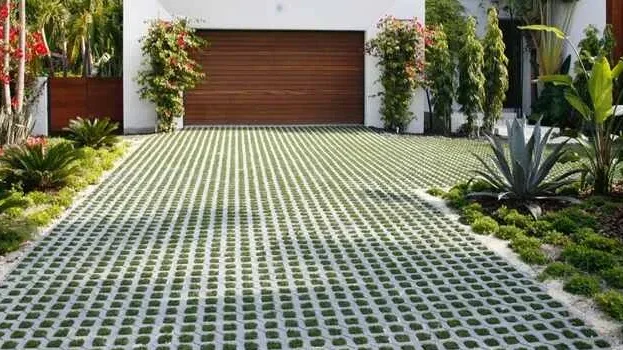
A turf or permeable driveway is a type of driveway that uses open-grid pavers filled with grass, gravel, or turf. The design allows rainwater to drain through instead of running off, helping reduce flooding and erosion.
Permeable systems are a good choice because they manage stormwater naturally while blending into the landscape. They’re especially useful in neighborhoods with strict drainage rules or environmental focus.
Homeowners choose this because it’s sustainable, attractive, and helps keep their property cooler in summer.
✅ Permeable Driveway Pros
- Great for stormwater control.
- Eco-friendly and attractive.
- Cooler surface temperature.
❌ Permeable Driveway Cons
- Needs periodic upkeep.
- Not ideal for heavy daily traffic.
Choosing Between Types of Driveways
Each of these types of driveways offers unique benefits depending on your budget, soil conditions, and design preferences. Whether you want the timeless look of brick, the durability of concrete, or the sustainability of a permeable system, Blue Collar Scholars can design and install a driveway that performs beautifully through every DMV season.
Always confirm if your county requires a driveway permit, especially for expansions or concrete pours near sidewalks.
Ready to Build or Repair Your Driveway?
At Blue Collar Scholars, we’ve been designing and building driveways across Maryland, D.C., and Virginia for over 15 years. From design and excavation to drainage and finishing, our in-house team delivers driveways built for local soils and seasons.
Our driveway services come with an unbeatable 3-year satisfaction guarantee. We’re licensed and insured, providing peace of mind alongside expert craftsmanship.
So let’s pave the way to a smoother, better-looking home exterior that makes pulling into your driveway the best part of coming home after a long and tiresome day.
Schedule your free driveway assessment today, before spots fill up fast across the DMV.
Frequently Asked Questions
What are some inexpensive driveway options?
The most affordable driveway materials are gravel, tar-and-chip, and asphalt millings. Gravel offers great drainage, and can be installed quickly. Tar-and-chip provides a more stable surface with a rustic look at a slightly higher cost. These options are ideal for homeowners wanting long driveways or rural properties without breaking the budget.
What are the types of driveway finishes?
Driveway finishes include brushed concrete for traction, exposed aggregate for a decorative stone look, and stamped concrete that mimics brick or slate. Asphalt driveways can be sealcoated for a smooth, glossy finish, while pavers offer natural texture and color variation for added visual appeal.
What are the top 3 best driveway materials for drainage?
The best driveway materials for drainage are gravel, permeable pavers, and tar-and-chip. Gravel naturally allows rainwater to filter through, making it ideal for sloped or clay-heavy yards. Permeable pavers feature open joints or grid systems that let water pass directly into the ground instead of pooling. Tar-and-chip driveways also handle runoff well, offering a balance of structure and permeability for homes in the DMV’s rainy seasons.
Which driveway material is easiest to maintain?
Concrete and pavers require the least upkeep. Regular sealing and occasional cleaning are usually enough to keep them looking new. Gravel needs more frequent raking and topping off, while asphalt needs sealing every 2–3 years.
What is the longest-lasting driveway material?
Cobblestone and brick driveways can last over 75 years with proper installation and base preparation. Concrete and pavers also offer excellent longevity when sealed and maintained, often lasting 30–50 years.