

You’re driving through the neighborhood and spot it: leaning panels, missing boards, posts tilting like dominoes down the street. A worn-out fence drags down an entire property’s look, even if you’ve stopped noticing. One Rockville homeowner had no idea how much their old fence was hurting their curb appeal until it fell over during a windy spring weekend. A week later, new cedar fence, backyard felt private, clean, and finished.
A well-built fence is more than a boundary. It’s part of your home’s first impression. In this guide, we cover the most popular types of fences and materials across the DMV, customization options, costs, installation timelines, and how to keep your fence standing for decades.
What Is the Purpose of a Fence?
A fence is a structure that encloses an area made from materials such as wood, vinyl, metal, or a even a mixture. It defines property lines, provides privacy, boosts security, and enhances curb appeal.
Fences are especially important in the DMV, where narrow suburban lots, busy roads, and HOA guidelines make thoughtful fence selection essential.
Why Is a Fence Important?
A quality fence does more than mark your property line. It protects your pets, adds privacy, boosts curb appeal, and can raise your home’s value. The style you choose also shapes how your yard looks and feels, whether you’re going for open and airy or closed and secure.
In neighborhoods like Bethesda, Fairfax, and Silver Spring, homeowners factor in everything from architectural style and yard slope to local height regulations when picking the right fence.
Here’s a list of benefits you don’t want to miss out on:
- Improved privacy and security
- Better curb appeal and resale value
- Safe play area for kids and pets
- Clear property boundaries
- Noise reduction (especially with wood or composite fences)
- Deter intruders
- Stop deer from causing destruction to your garden
Signs You May Need a New Fence
Not sure if you’re ready for an upgrade? Let’s take a look at some important factors.
- Posts leaning or wobbly
- Rotting or cracked boards
- Rusted metal sections
- Missing panels or sagging gates
- HOA violations or outdated designs
- You’re adding a pool or pets that require enclosure
But here’s where it gets even better: adding a new patio or deck can elevate the entire space and make your fence upgrade feel even more intentional.
A well-designed patio creates a natural gathering area, while a deck adds usable square footage for dining, relaxing, or hosting. When paired with a fresh fence, your yard feels more complete, more private, and far more enjoyable day to day.
Types of Fences
There are many types of fences available, each offering its own look, strength, and level of privacy.
To make your decision easier, here are the five most popular types of fences homeowners across the DMV rely on for durability, curb appeal, and year-round performance. Let’s take a closer look at what sets each material apart.
Wood Fences

A wood fence uses natural materials like cedar, pine, or pressure-treated lumber to give your yard a warm, classic, and private feel. Homeowners choose it for its timeless look and the ability to customize everything from stains to decorative tops.
Maintenance:
- Stain or seal every 2–3 years to prevent rot and fading.
- Power wash annually to remove mildew and dirt.
- Refasten loose boards and check for termites or rot.
Customization Options:
- Wood staining (cedar tone, walnut, espresso, gray wash)
- Decorative tops (dog-ear, lattice, cap & trim)
- Post caps or solar lighting for curb appeal
Composite Fences
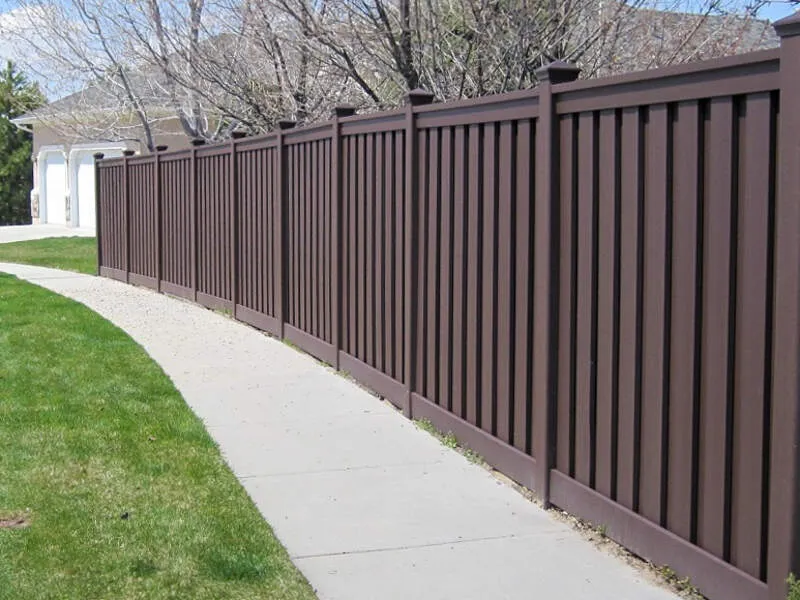
Composite fencing blends recycled wood fibers with durable plastics to create a modern, long-lasting fence that looks like wood but requires almost no upkeep. It’s ideal for homeowners who want strong privacy and a clean, contemporary design that won’t warp, crack, or attract insects.
Maintenance:
- Rinse twice a year with soap and water
- No staining, sealing, or painting
- Inspect brackets and fasteners annually for tightness
Customization Options:
- Vertical or horizontal slat layouts
- Wood-tone colors (walnut, cedar, driftwood, charcoal)
- Aluminum or black metal framing
- Decorative privacy panels with modern patterns
Vinyl Fences
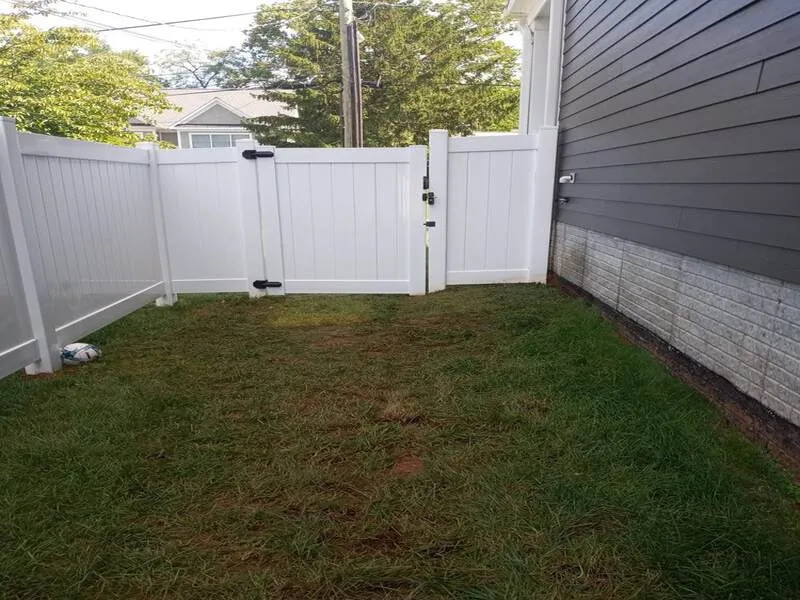
Vinyl fencing is made from durable PVC that mimics wood while eliminating the need for staining, sealing, or repainting. It offers excellent privacy and is a top choice for pool areas or homeowners who want a bright, clean appearance year-round.
Maintenance:
- Rinse with a garden hose monthly to remove dust or pollen.
- Use a mild detergent for stains or mildew.
- No painting or sealing required.
Customization Options:
- Textured finishes that look like real wood
- Multiple colors (white, tan, gray, driftwood)
- Decorative panels or scalloped tops
Metal Fences
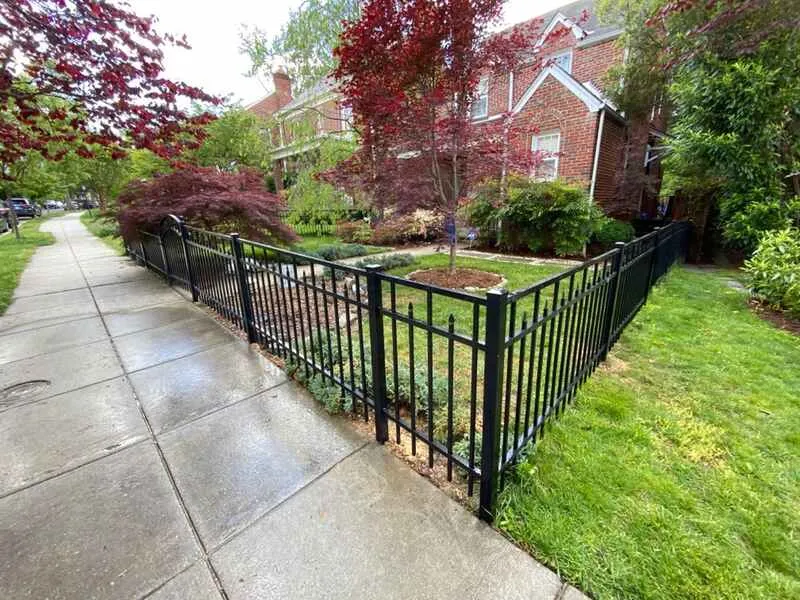
Metal fences crafted from steel or wrought iron deliver unmatched strength, security, and a classic architectural presence. They’re perfect for high-end properties or historic homes that want long-term durability and sophisticated curb appeal.
Maintenance:
- Inspect for rust annually; sand and repaint small spots as needed.
- Clean with mild soap and water to preserve finish.
- Recoat every 5–7 years for lasting protection.
Customization Options:
- Powder-coated finishes in black, bronze, or matte gray
- Integrated gates or decorative stone pillars
Aluminum Fences
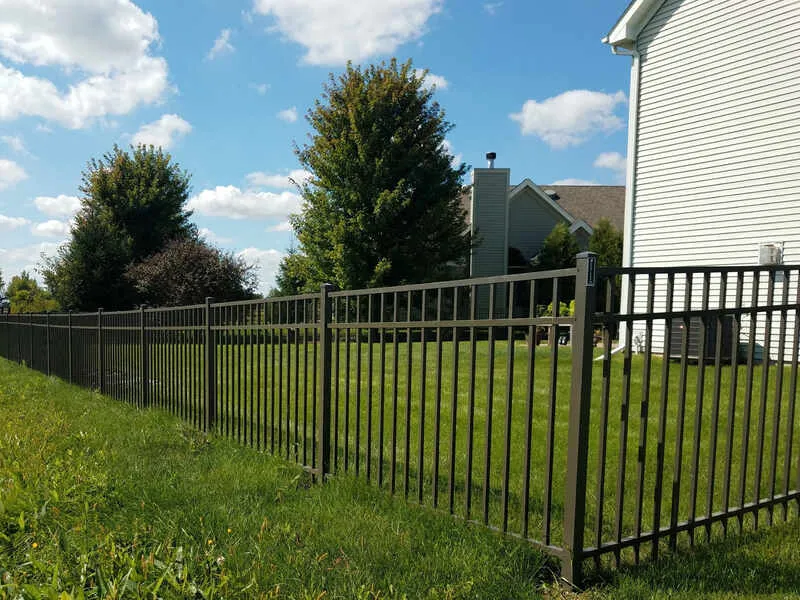
Aluminum fencing offers the elegant look of wrought iron at a lower cost, with the added benefit of being lightweight and rust-resistant. It’s a great choice for front yards, pools, and sloped properties where durability and decorative style matter.
Maintenance:
- Wash occasionally to remove dirt.
- Inspect for scratches and touch up paint to prevent oxidation.
- Virtually no rusting compared to steel.
Customization Options:
- Spear tops or flat tops
- Custom powder coating colors
- Ornamental gate accents
Fence Cost Factors
Your final cost depends on:
- Material (cedar vs composite)
- Height & style (privacy vs picket)
- Gate additions (manual or automatic)
- Terrain (sloped or rocky yards require deeper post setting)
- County permits and HOA requirements
Fence Installation Timeline
| Step | Task | Typical Duration |
|---|---|---|
| Design & permit review | HOA approval & layout design | 1–2 weeks |
| Site prep & post setting | Excavation, concrete setting | 1–2 days |
| Panel installation | Framing & finishing | 2–5 days |
| Cleanup & inspection | Final walkthrough | 1 day |
Average Total Time: 2–3 weeks from permit to completion.
Important Note: The process of acquiring a permit for a fence is different for each county. We handle the entire permitting process for you, so you don’t have to worry about any county-specific requirements.
If you are curious about the process: here’s a link to Montgomery’s fence permit guide as a quick reference.
Fence Maintenance & Cleaning
| Material | Cleaning Frequency | Sealing/Staining | Expected Lifespan |
|---|---|---|---|
| Wood | 1–2 times a year | Every 2–3 years | 15–25 years |
| Composite | Twice a year | None | 30–40 years |
| Vinyl | Monthly rinse | None | 25–30 years |
| Metal | 1–2 times a year | Repaint every 5–7 years | 30–50 years |
| Aluminum | Twice a year | Touch-up paint as needed | 30+ years |
Your Yard Called… It Wants a New Fence
At Blue Collar Scholars, we’ve built and repaired fences across Maryland, D.C., and Virginia for over 15 years.
From custom cedar privacy fences to modern composite designs, our team handles design, permits, and installation with precision.
Get a peace of mind and curb appeal that lasts. Our fence installations come with a 3-year satisfaction guarantee.
Don’t stay on the fence, schedule your free fence estimate today!
Frequently Asked Questions
What is the best fence for privacy?
Wood and vinyl fences are top choices for privacy, blocking both sound and sight lines. Composite offers similar privacy with longer lifespan and lower upkeep.
Do I need a permit to install a fence?
In most Maryland and Northern Virginia counties, you need a permit especially if it’s over 6 feet tall or near property lines. Blue Collar Scholars handles all county and HOA approvals.
How long does a fence installation take?
Most fences take about 2–5 days once posts are set. Permits and HOA approvals may add one to two weeks before work begins.
Should I stain my wood fence right after installation?
Wait 3–6 weeks before staining new wood so moisture can evaporate. Then seal or stain to protect against rot and UV damage.