

A surface drainage system directs rainwater away from your home using visible channels, slopes, and collection points like swales, catch basins, and graded surfaces. Unlike underground systems, it works instantly when rain falls – using gravity to prevent water from pooling near foundations, eroding soil, or flooding basements. For homeowners in Maryland, DC, and Virginia dealing with clay-heavy soils and intense storms, proper surface drainage is essential protection against costly water damage.
I’ll never forget September 2008, during Tropical Storm Hanna. I was living in Montgomery County, and after hours of relentless rain, my neighbor’s yard had turned into a swamp. Water pooled near their foundation, creeping toward their basement windows.
They spent the entire night with buckets and a shop-vac trying to keep water out. Meanwhile, our yard? Bone dry. The difference wasn’t luck – we had installed a basic grading and swale system a few months earlier. Nothing fancy. Just smart planning.
Watching my neighbor scramble while my property stayed intact taught me something important: when it comes to water, you either control it, or it controls you. In this guide, I’ll break down how surface drainage works, why they matter, and how to choose the right one for your property.
What Is a Surface Drainage System?
Think of surface drainage as a network of roads for rainwater. Just like cars need roads to move safely, water needs channels to flow away from your home. Without them, water pools, seeps into your foundation, or erodes your soil.
Here’s the key difference: surface drainage uses visible features – things you can see and inspect yourself. Graded slopes guide water downhill. Shallow swales (grass-lined dips) collect and channel it. Catch basins (basically shower drains for your yard) capture it at low points. Gravel-lined ditches move larger volumes.
The beauty? No electricity. No pumps. Just gravity doing what it does, working 24/7 without asking for a raise.
Compare that to subsurface drainage systems, like French drains, which rely on hidden pipes buried underground. Both approaches have their place, but surface drainage is your first line of defense – and usually the most cost-effective way to solve water problems.
How Surface Drainage Systems Work?
The mechanics are simple: water flows downhill. By shaping your yard with intentional slopes and channels, you create paths that guide rainwater away from vulnerable areas before problems start.
When rain hits your property, these features immediately direct water toward designated exit points – whether that’s a street storm drain, a dry well, or a natural drainage easement. According to the United States Geological Survey’s research on surface runoff, proper management of surface water is critical for preventing soil erosion and reducing flooding risk in residential areas.
The golden rule? Your yard should slope away from your foundation at roughly 2 inches for every 10 feet. That’s a 2% grade – subtle enough that you won’t notice it visually, but aggressive enough to move water before it causes trouble. Features like swales and catch basins then collect this water and channel it to a safe discharge point.
I’ve seen homeowners try to “eyeball” their yard’s slope. Bad idea. Even a slight reverse grade – where water slopes toward your house instead of away – turns every storm into a potential disaster.
Why Surface Drainage Matters for Homeowners?
A puddle doesn’t look scary. But water is patient. Given time, it finds weak spots. In many cases, the problem isn’t just rain on your property – it’s runoff coming from uphill lots, which often requires specific solutions for blocking water drainage from a neighbor’s yard before it reaches your foundation.
Here’s what happens when drainage fails:
- Foundation damage: Water pools against basement walls, building pressure. That pressure finds cracks – tiny ones you can’t even see – and forces its way through. Before you know it, you’re dealing with basement seepage, wall cracks, or worse.
- Soil erosion: Each storm washes away another layer of topsoil. That’s the good stuff your grass needs to grow. Eventually, you’re left with hard clay or muddy patches where nothing will thrive.
- Mosquito breeding: Standing water is a mosquito nursery. According to the CDC’s mosquito control guidelines, it only takes a few days for eggs to hatch. Small puddles become big problems fast.
- Dead grass and plants: Roots need oxygen. When soil stays saturated, roots suffocate. You’ll see yellow patches, then brown, then bare dirt.
- Property value loss: When buyers see poor drainage, they see dollar signs – repairs they’ll inherit after closing. A soggy yard is a red flag that lowers offers and kills deals.
This isn’t about aesthetics. It’s about protecting the single largest investment most people ever make.
Do You Need a Surface Drainage System?
Here’s a question I get constantly: “Do I really need to worry about this?”
My answer: I’ve never met a homeowner who regretted installing drainage. But I’ve met dozens who regretted waiting. “I’ll do it later” might be the most expensive sentence in home ownership.
Warning signs your drainage is failing:
- Puddles lasting longer than 24-48 hours after rain
- Cracks in foundation walls or damp basement spots
- Soggy areas that never fully dry
- Water stains on siding after storms
- Moss or algae growing in low spots
- Water flowing toward your house instead of away
Each signal means water has nowhere to go. And when water has no path? It creates its own – usually through your house.
Benefits of Surface Drainage Systems
Surface drainage hits a sweet spot between effectiveness and affordability. Here’s why it works:
- Instant results: The moment rain falls, your system is working. No startup delay. No waiting for pumps to kick in. Water moves immediately because gravity never takes a day off.
- Budget-friendly: Compared to excavating for French drains or full basement waterproofing, surface drainage costs less. Most solutions involve reshaping soil or adding shallow features – not major excavation.
- Easy maintenance: You can see everything. Leaves in a swale? Clear them out. Grate clogged? Clean it. No special equipment needed.
- Environmentally smart: Swales and grass-lined channels slow water down, letting soil absorb naturally. This reduces runoff, prevents erosion, and helps recharge groundwater. You’re working with nature, not against it.
- Adaptable: Small yard? Large property? Flat or sloped? There’s a surface drainage solution that fits. The flexibility makes it work across the entire DMV region, from Bethesda townhomes to Potomac estates.
Types of Surface Drainage Systems
Different properties need different solutions. Here’s how each type works.
Grading and Sloping
Grading reshapes your yard’s surface so water naturally flows away from your home. It’s the foundation of any drainage strategy – literally.
The process involves adjusting soil elevations to create gentle slopes that direct rainwater downhill to safe drainage points instead of letting it collect in low spots. Think of it like tilting a table so spills run off the edge instead of pooling in the middle.
The purpose of proper grading and sloping is to prevent standing water, erosion, and foundation damage. A well-graded yard keeps water moving in the right direction – away from your house, walkways, and garden beds – while protecting your lawn and landscaping.
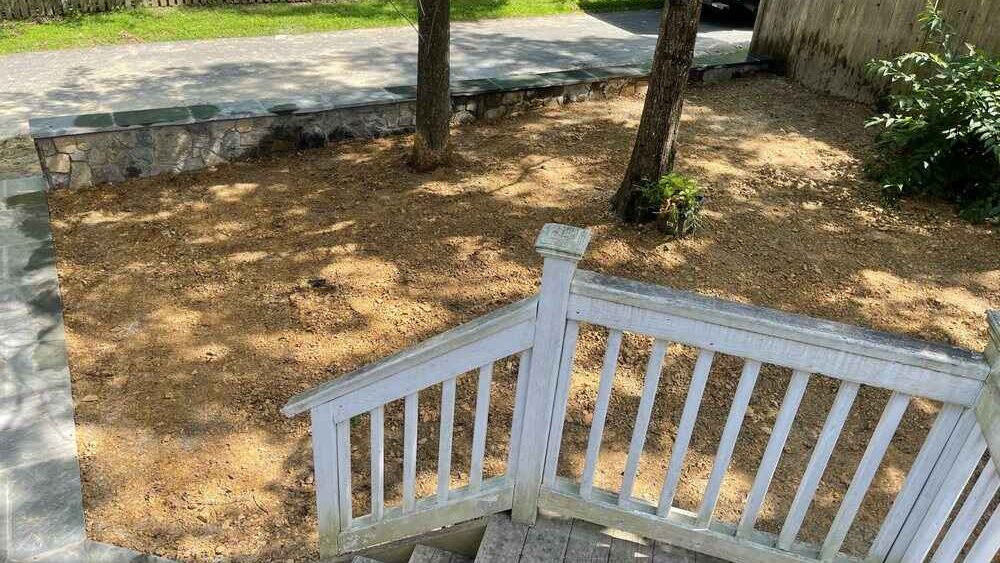
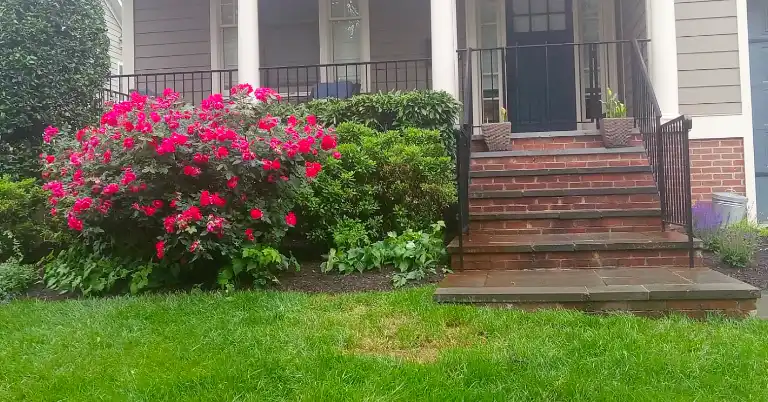
The soil has been sloped so water naturally flows away from the house and into the newly installed box drain. Once the grass returns, the yard will look seamless while still keeping water under control.
Swales
A swale is a shallow, U-shaped dip in your yard that acts like a natural channel for water. Many are grass-lined so they blend with your lawn, but some use stone for added durability and visual interest.
Swales collect surface water and guide it gently away from homes, gardens, or patios toward safe drainage points. The main purpose? Slow down stormwater and spread it out so it doesn’t overwhelm one spot. They’re popular in residential neighborhoods because they handle runoff without looking like construction.
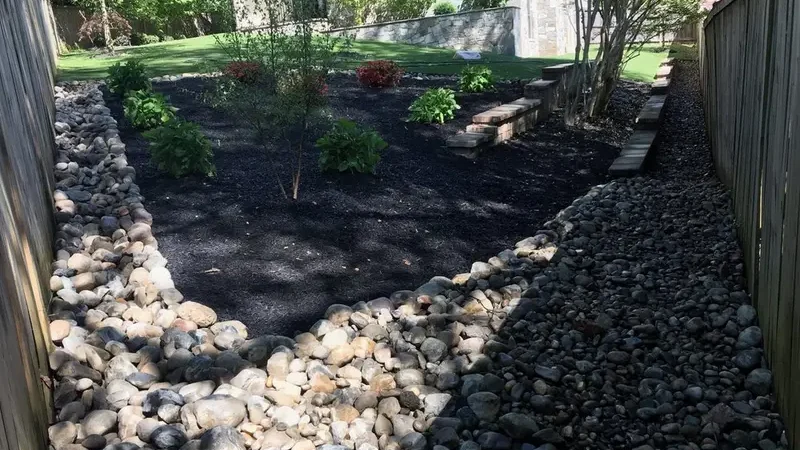
The channel is shallow and filled with river rock, which prevents erosion while adding a decorative element. Notice how the yard slopes toward this corner – the grade directs water into the swale, which then carries it to the drainage exit point.
Shallow Ditches
Shallow ditches are straightforward: low, narrow channels dug to carry water away from problem areas. They’re often lined with rocks or gravel to prevent soil erosion and guide water flow more effectively.
The goal is simple – prevent water from pooling in yards, gardens, or near foundations. By creating a clear path for water to follow, ditches reduce erosion, protect landscaping, and keep outdoor areas usable after heavy rain.
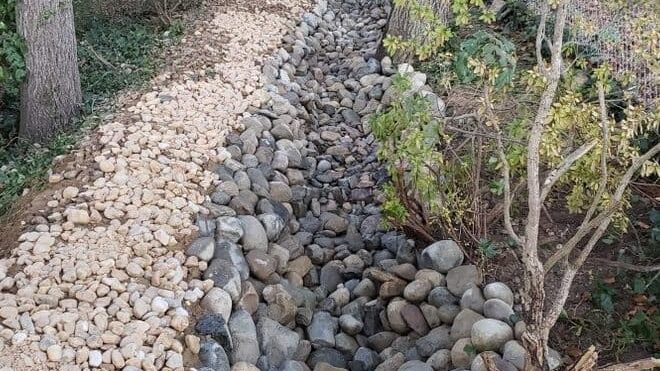
The rocks slow down rushing water, prevent soil erosion, and direct flow toward a safe exit point. When it rains, water collects in the ditch and moves safely downhill instead of spreading across the yard.
Channel Drains
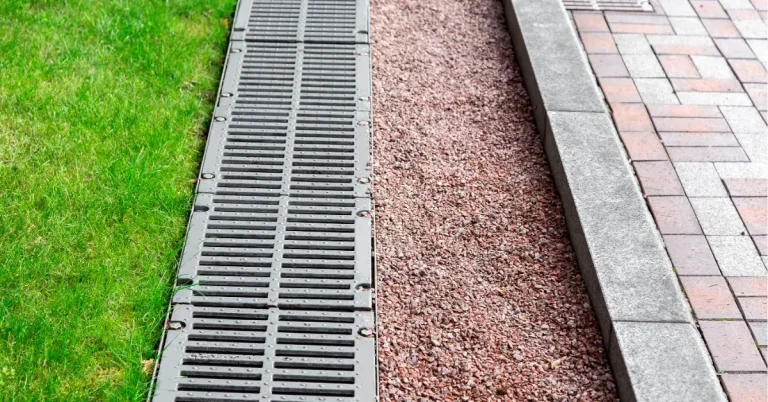
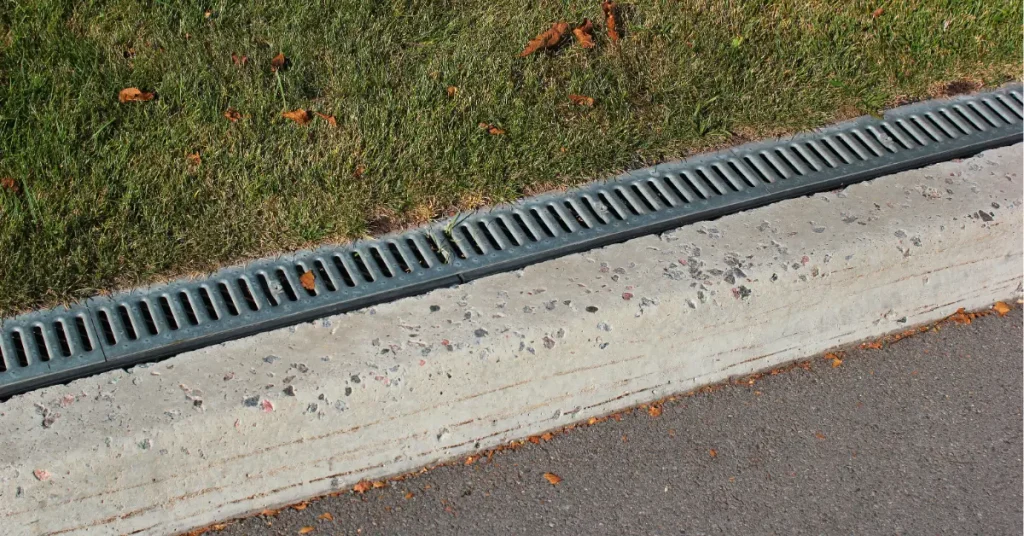
Channel drains are long, narrow drains designed to collect surface water across wide, flat areas. They’re typically installed in concrete or pavement, covered with a grate that allows water to enter while keeping debris out.
Their purpose? Stop water from pooling on driveways, patios, or walkways. By stretching across the surface, they capture runoff quickly and send it underground through drainage pipes.
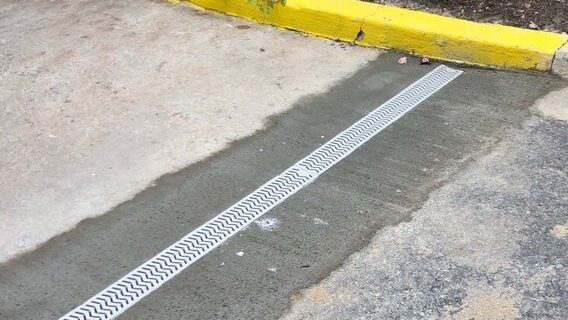
As shown in the image above, a channel drain installed in a paved area – this example is commercial, but the same type is commonly used in residential driveways, garage entrances, and pool decks. Think of it like a line-shaped catch basin that stretches across pavement, collecting water from a wide area and sending it underground before flooding or surface damage occurs.
Catch Basins
A catch basin is essentially a water collection box buried in the ground. On top sits a slotted grate where water flows in. The grate also keeps out leaves, mulch, and other debris that could clog underground pipes.
Inside the box, water gathers briefly, then exits through an outlet pipe buried underground. Homeowners typically place catch basins in the yard’s lowest spot, sometimes adding a shallow swale to help guide water toward it.
The purpose? Stop water from sitting where it doesn’t belong. Standing water kills grass, damages garden beds, and weakens foundations. By collecting runoff and moving it into underground pipes, catch basins give water a safe exit path.
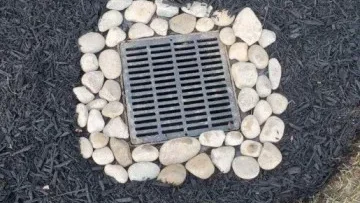
As shown in the image above, a box drain hidden in a mulch bed – one type of catch basin. The grate is where water enters, while surrounding river rocks hold the mulch in place and guide rainwater toward the drain. This manages water without taking away from your landscaping design.
Bottom line: Surface drainage systems come in different forms, but they all share one goal – moving water safely away. The right choice depends on your yard’s layout, soil type, and how much water you’re managing.
Surface Drainage System Comparison
Choosing the right system is easier when you can compare options side by side. Here’s how the main types stack up:
| System Type | Best For | Installation Time | Maintenance Level | Visibility |
|---|---|---|---|---|
| Grading & Sloping | Flat yards, foundation protection | 2-5 days | Low (annual check) | Invisible once grass grows |
| Swales | Gentle slopes, natural look | 3-7 days | Medium (annual reseeding) | Low (blends with landscape) |
| Shallow Ditches | Steep slopes, heavy flow | 5-10 days | Medium (clear debris) | Visible but can be decorative |
| Channel Drains | Driveways, patios, flat hardscape | 1-3 days per section | Low (clean grates) | Grate visible in pavement |
| Catch Basins | Low spots, collection points | 3-5 days | Low (clean grate 2x/year) | Small grate, easy to hide |
Choosing the Right Surface Drainage System
Want to know which system your property needs? Watch your yard during a storm. Rain reveals problem spots. This is also where working with experienced yard drainage contractors makes a difference, because proper design depends on slope measurements, soil behavior, and where water can legally discharge.
- Flat yards with puddles need grading to create slope, often combined with catch basins. Flat ground gives water nowhere to go naturally, so you have to create the path yourself. Think of it like building roads into an undeveloped area.
- Gently sloped yards work well with swales. These shallow, grassy channels guide water safely across your property while blending into landscaping. They’re nature’s version of a shallow stream bed – dry most of the time, working when needed.
- Steep slopes require ditches or open channels because water gains speed fast on steep terrain. That speed can tear up grass and wash soil away. Reinforced channels handle the extra force.
- Driveways and patios need catch basins or channel drains. Hard surfaces don’t absorb water, so puddles form in low spots. These drains act like storm drains, pulling water through grates and sending it underground.
Soil type matters too. Clay-heavy soil (common in Maryland and Virginia) holds water on the surface like a bowl. According to the USDA Natural Resources Conservation Service, understanding soil composition is critical for effective water management. Sandy soil drains more easily, but even then, proper grading is essential.
In many cases, combining methods works – grading plus swales, or swales plus catch basins. The DMV region’s clay soils and unpredictable storms often demand layered solutions.
Surface Drainage System Installation Process
Installing surface drainage is about shaping land to direct water where you want it: away from your yard and house.
- The process starts with surveying slopes. Contractors use laser levels or string lines to map which direction ground tilts. This reveals where water naturally wants to go and where it’s actually going. Sometimes those two paths don’t match – that’s the problem being solved.
- Next comes marking high and low points. Stakes placed throughout the yard show where water starts and where it should end up. It’s like drawing a map for water flow.
- Then the physical work begins – excavating channels for swales, ditches, or catch basin locations. This creates the paths water will follow.
- Re-grading reshapes soil into gentle slopes, then compacts it so it stays in place during storms. Loose soil settles and defeats the purpose.
- If needed, catch basins get installed and connected to underground PVC pipes (usually 4-6 inches wide) that carry water to a safe outlet.
- Finally, reseeding and finishing adds grass or plants back to disturbed areas so the system blends with your yard.
A properly designed system should look natural, not like construction. Once it’s done, the only sign you’ll notice is how well your yard handles the next storm. Blue Collar Scholars has 15+ years of experience designing and installing drainage systems throughout the DMV region, ensuring every project meets both functional needs and aesthetic standards.
Cost of Surface Drainage Systems
Surface drainage is an investment that typically costs less than repairing water damage would. Before pricing, we evaluate if your property needs one of these drainage solutions:
- Basic grading
- Swales
- Channel drains
- Catch basins with piping
- Open channels or ditches
Many homeowners pick the cheapest quick fix — adding dirt against the foundation or installing undersized drains — only to call contractors back when problems return worse than before.
A properly designed system costs more upfront but prevents the cycle of patchwork repairs. Long-term, the right solution saves money and stress.
Wondering what a drainage solution would cost for your specific property? Request a free quote and we’ll provide a detailed assessment based on your yard’s unique conditions.
Surface Drainage vs Subsurface Drainage: Which Do You Need?
I get this question almost weekly: “Should I do surface drainage or French drains?” The answer isn’t always one or the other – sometimes you need both. But most homeowners should start with surface drainage and add subsurface only if needed. Here’s why.
Surface drainage handles water flowing across the top of your yard using visible features like slopes, swales, and catch basins. It works immediately when rain falls and costs less to install. It solves most residential drainage problems – especially water pooling on lawns, driveways, or near foundations.
Subsurface drainage (like French drains) handles water that’s already soaked into the ground, using buried perforated pipes surrounded by gravel to collect and redirect groundwater. This system is necessary when you have a high water table, consistently saturated soil, or basement seepage that surface drainage alone can’t fix.
For most DMV homeowners, starting with surface drainage makes sense. It’s more affordable, easier to maintain, and solves the majority of water problems. You can always add subsurface drainage later if needed. Many professionals recommend both systems together for comprehensive protection – surface drainage prevents water from entering the ground while subsurface drainage handles any water that does soak in.
How to Maintain Your Surface Drainage System
The good news? Surface drainage doesn’t demand much. A few simple checks throughout the year keep everything running smoothly, and most tasks take minutes, not hours.
- Clear leaves and debris from swales and basins after big storms
- Reseed swales annually to prevent bare patches
- Check grading once yearly to ensure soil hasn’t settled
- Inspect gravel ditches for sediment or blockages
- Remove vegetation growing in channels that might slow water flow
With seasonal attention, your system should last decades without major repairs.
Common Drainage Mistakes to Avoid
I’ve seen homeowners with good intentions accidentally make their drainage problems worse. Here are the mistakes that create the most headaches:
- Ignoring puddles that persist for days
- Planting trees or shrubs directly in swales (roots will clog them)
- Installing catch basins too small for storm volume
- Attempting grading without measuring slopes first
- Directing drainage toward a neighbor’s property without coordination
Each mistake creates bigger problems later. Address issues properly and maintain existing drainage measures so your system does its job.
How Surface Drainage Protects Your Foundation
Here’s something most homeowners don’t realize until it’s too late: your foundation’s biggest threat isn’t age or settling – it’s water pressure.
When rainwater pools next to your foundation, it creates hydrostatic pressure – a force that pushes water through tiny cracks and pores in concrete. Over time, this leads to vertical and horizontal foundation cracks, basement leaks and moisture problems, bowing or shifting foundation walls, and settlement issues affecting your entire home.
By maintaining that minimum 2% slope away from your foundation and using swales and catch basins, surface drainage eliminates this threat before pressure builds. Water flows away from your home before damage starts – protecting your foundation from repairs that could cost tens of thousands.
Local Drainage Concerns in Maryland, DC, and Virginia
The DMV region throws some unique challenges at homeowners. Our clay-heavy soils don’t drain naturally, and our weather swings from summer downpours to winter freeze-thaw cycles that can wreck poorly installed systems.
Counties like Montgomery and Fairfax often require formal drainage plans for major projects. These rules exist because poorly managed runoff affects entire neighborhoods, not just one yard. Before starting a big project, check local codes or hire a yard drainage contractor familiar with regional requirements.
The freeze-thaw cycles we experience also matter. A system installed by someone from out of state might not account for how Maryland winters stress drainage features. Working with local professionals who understand these conditions ensures your system lasts through all four seasons.
When to Call a Professional
Look, I respect DIY spirit. But drainage is one of those areas where mistakes cost more than hiring professionals from the start.
If you’re dealing with heavy runoff, water pooling in specific areas, or basement flooding, call someone who can assess your property and design a lasting solution. Without accurate slope measurements, you might push water toward your foundation instead of away. I’ve seen homeowners spend double fixing failed DIY drainage projects.
That’s where Blue Collar Scholars comes in. We’ve helped countless DMV homeowners correct poor drainage and protect their homes from costly water damage. Whether it’s grading, swales, catch basins, or a complete yard drainage system, our team has the experience to do it right the first time. We don’t chase volume. We pursue precision.