

Does this sound familiar? You’ve research about drainage systems online, talked to a few contractors, and still feel like you’re missing something. That’s because you probably are.
Most homeowners know about surface drainage. Fewer know about subsurface drainage, the underground side of the equation that handles water you never actually see.
The Soggy Lawn Problem Every Homeowner Knows
Three days after the storm ended, you’re standing in a backyard that still squishes under your feet. Your neighbor’s lawn looks fine. You’ve got a weekend BBQ coming up, a partner asking when you’re finally going to fix this, and no good answer.
You tried extending your downspouts. You cleaned the gutters. Maybe you even had someone regrade the yard. And yet here you are again.
If that sounds familiar, you’re in the right place. This guide covers subsurface drainage systems: how they work, which type fits your situation, and when it makes sense to call a professional.
What Is a Subsurface Drainage System?
A subsurface drainage system, sometimes called an underground drainage system, is a buried network of pipes, gravel, and filter fabric that collects excess groundwater and moves it away from your foundation and landscaping.
Think of it as plumbing for your yard. Surface drains handle the water you can see. Subsurface systems handle the water you can’t.
In Maryland and Virginia, where clay-heavy soil holds water like a bowl, that distinction matters. Without underground drainage, water doesn’t have anywhere to go except sideways, straight into your basement walls.
Why Surface Drains Alone Aren’t Always Enough
Surface drainage systems, like swales, channel drains, and catch basins, are your first line of defense. They handle stormwater before it saturates the ground. But during heavy rain, surface drains can clog with leaves, sediment, or debris. When they overflow, water pushes down into the soil.
That’s where subsurface drainage comes in. It’s the backup that prevents foundation damage and swampy lawns when surface systems get overwhelmed.
The short version: fix surface drainage first, then add subsurface drainage as the safety net.
Signs You Need a Subsurface Drainage System
Not every property needs one. But these are the signals worth paying attention to:
- Water pools for days after a storm instead of draining naturally
- Surface drains overflow during heavy rainfall
- Basement walls feel damp or show cracks
- Your lawn stays soggy long after the rain stops
- Low spots flood after every storm
If you’re seeing more than one of these, your surface drainage isn’t keeping up.
What Subsurface Drainage Actually Does for Your Home
- Foundation protection. Reduces underground water pressure that can crack or bow walls.
- Healthier soil. Keeps roots from drowning in oversaturated ground.
- Stronger hardscaping. Prevents erosion beneath patios, walkways, and driveways.
- Invisible system. Buried underground, it doesn’t change how your yard looks.
- Layered defense. Acts as a backup when surface systems get overwhelmed.
Which Subsurface System Fits Your Yard?
Subsurface drainage can sound overwhelming at first, but once you understand the main system types, you’ll feel confident talking to contractors and making the right call for your property. The right system depends on your soil type, yard slope, rainfall patterns, and where water can safely discharge. No single solution works for every home.
Perforated vs. Solid Pipes

Before diving into system types, it helps to understand one key distinction. Perforated pipes have small holes along their length that let water seep in from surrounding soil. Solid pipes have no holes and are used strictly to move water from one place to another.
French Drain

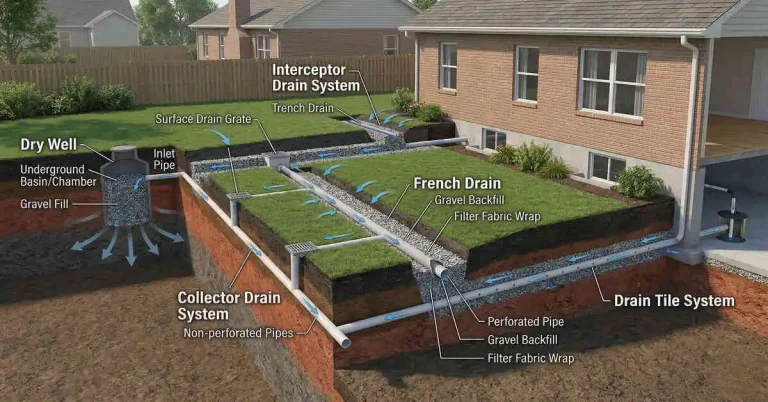
A French drain system is a trench lined with filter fabric, filled with gravel, and fitted with a perforated pipe. When the ground gets saturated, water enters through the pipe’s holes, travels along the gravel trench, and exits at a safe discharge point.
This system is especially useful in Maryland and Virginia where clay soils cause water to sit for days. It reduces soggy spots and relieves water pressure against basement walls.
Dry Well
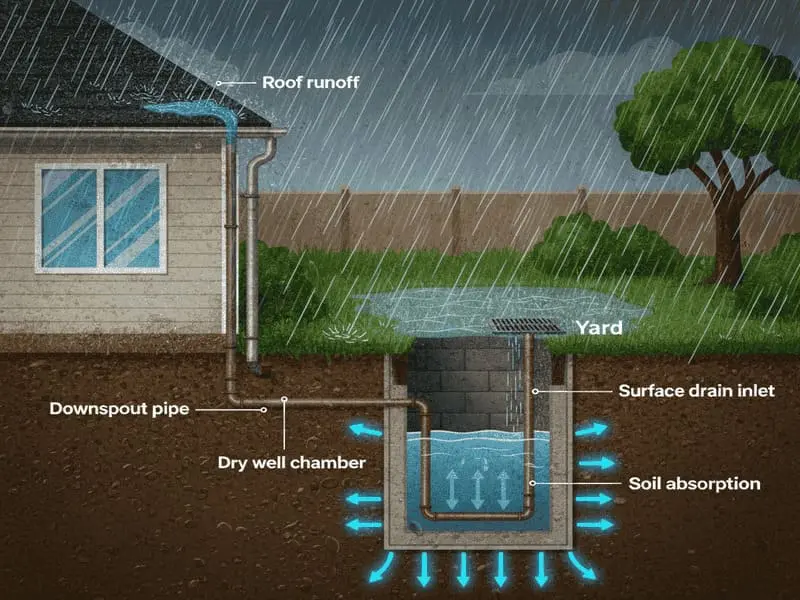
A dry well is an underground container, typically made of plastic, concrete, or stone, that temporarily stores stormwater and lets it slowly soak back into surrounding soil. It works well for handling large volumes of water from roof downspouts or driveway drains.
In clay-heavy areas like Montgomery County or Fairfax, dry wells need to be properly sized or paired with another solution. Clay absorbs water slowly, which can cause the system to drain sluggishly if it isn’t designed with that in mind.
Drain Tile System

A drain tile system is a network of perforated pipes placed around the base of your foundation. These pipes collect groundwater that builds up against your basement walls, reducing the pressure that causes seepage and cracking.
Most drain tile systems discharge into a sump pump or a daylight outlet. Without this system, that persistent pressure is one of the leading causes of foundation damage over time.
Collector Drain System

A collector drain is a main pipe that ties multiple smaller drains together and funnels everything to a single discharge point. Think of it like a tree: branch pipes from different areas of your yard all feed into one trunk.
This setup is particularly useful for larger properties or homes with several wet spots. Instead of addressing each problem area separately, a collector drain handles everything through one coordinated system.
Interceptor Drain System

An interceptor drain is a shallow gravel trench with a perforated pipe, installed uphill from your home to catch runoff before it reaches the house. It stops water at the source rather than managing it after it’s already pooled.
This is a preventative approach, well-suited for properties near slopes in Maryland or Virginia where stormwater naturally flows toward the foundation. Catching it early means less work for every other part of your drainage system.
Choosing the Right Subsurface System
There’s no universal answer. According to a USDA Natural Resources Conservation Service, the right system depends on your soil type, yard slope, rainfall patterns, and where water can safely discharge. A property with clay soil on a slope needs a different solution than a flat lot with sandy soil.
Getting a professional assessment before committing to a system helps ensure you get the right solution for your specific property.
Professional Installation: What to Expect
Installing subsurface drainage is like building a hidden highway underground. This process requires careful planning and consideration to ensure nothing goes wrong in the design.
The installation process involves:
- Site evaluation and design planning
- Excavation and trenching
- Pipe and gravel installation
- Filter fabric placement
- Backfilling and restoration
- Final testing and inspection
Reality check: Surface drains are visible and easy to install. However, subsurface drains work invisibly beneath the soil, making proper installation equally important for solving water drainage problems.
Cost of Subsurface Drainage Systems
I know you’re thinking, “This all sounds great, but what’s this going to cost me?” It’s the question that keeps most homeowners up at night, especially when you’re already stressed about water damage. If you’re bracing yourself for shock, take a breath. Yes, these systems cost money upfront, but let’s put it in perspective.
Costs vary depending on the system type, your yard’s layout, and your soil conditions. Getting a quote from a qualified drainage contractor near you is the best way to understand how much it will cost.
Important note: In Maryland, DC, and Virginia, clay-heavy soil and narrow lots often raise installation costs.
How to Maintain Your Subsurface Drainage System
A well-built subsurface system can last decades with minimal upkeep:
- Flush pipes every 2 to 3 years
- Keep gutters, swales, and basins clear
- Check outlets after heavy storms
- Watch for soft spots in the yard, which can signal a collapsed pipe
After major storms, outlets and surface drains can clog with leaves, mulch, or sediment. When those exit points get blocked, water backs up into the system. Staying on top of small maintenance checks prevents bigger problems.
5 Mistakes That Cause Subsurface Drainage to Fail
1. Installing Pipes Without Proper Slope
Water moves by gravity. Pipes need to slope downward at least 1 inch per 100 feet. Install them too flat and water sits, stagnates, and attracts debris that clogs the system.
2. Skipping Filter Fabric
Filter fabric keeps soil particles from washing into your gravel and pipes. Without it, soil migrates in over time and creates blockages that require digging everything back up to fix.
3. Using the Wrong Pipe Type
Solid pipes can’t collect groundwater. Thin corrugated pipes collapse under soil pressure. Perforated PVC handles both water collection and the weight of soil above it.
4. Poor Outlet Planning
A drainage system without a proper outlet is like a highway that ends in a brick wall. Your pipes can collect water perfectly, but without somewhere for it to escape, it backs up and floods your yard anyway. Always plan your exit strategy first.
5. Installing Too Shallow
Pipes buried less than 18 inches deep freeze in winter, get damaged during lawn maintenance, and can’t intercept the groundwater that’s causing the problems. Deep installation costs more upfront but prevents expensive failures later.
Do You Need a Professional?
That depends on the scope of the problem and your comfort level with the work involved.
Surface drainage fixes, like extending downspouts or adding a simple surface drain, are reasonable DIY projects. Subsurface work is a different category. It involves precise slope calculations, knowledge of soil behavior, heavy equipment, and in most Maryland, DC, and Virginia jurisdictions, permits for excavation and stormwater discharge. DIYing without those permits can result in fines, failed inspections, or being required to redo the work.
If your drainage issue is affecting your foundation, basement, or hardscaping, or if water is consistently sitting for more than 48 hours after a storm, it’s worth getting a professional assessment.
Ready to Finally Fix Your Drainage Problems?
Whether you’re in Montgomery County, Northern Virginia, or DC, Blue Collar Scholars designs and installs drainage systems built for your specific soil conditions and property layout.
Schedule a free drainage assessment and we’ll inspect your yard, identify the actual cause of the problem, and put together a custom solution backed by our 3-year craftmanship warranty.
Subsurface Drainage: Frequently Asked Questions
Do I really need subsurface drainage if I already have gutters and surface drains?
If water still pools, your lawn stays soggy, or your basement walls show dampness after heavy rain, then surface systems alone aren’t enough. Subsurface drainage handles the water that surface systems miss.
Can I install a French drain or dry well myself?
Technically yes, but most DIY installs fail due to incorrect slope, wrong pipe type, or missing filter fabric. If you’re comfortable with excavation and grading, small projects are manageable. For anything near your foundation, it’s worth getting a professional involved.
Will it change my yard’s appearance?
No. Subsurface systems are buried underground. Once the work is backfilled and restored, there’s nothing to see until the next heavy rain, when your lawn actually drains the way it should.
How long does a subsurface drainage system last?
A properly installed subsurface drainage system built with quality materials can last 30 to 50 years. Regular maintenance, like flushing pipes every few years and keeping outlets clear, is what separates a system that holds up from one that fails early.
Does my yard need to be torn up to install a subsurface drainage system?
Some excavation is unavoidable, but a good drainage contractor will minimize disruption and restore your yard once the work is done. The short-term mess is worth it compared to years of water damage working quietly against your foundation and landscaping. Euro Sense