

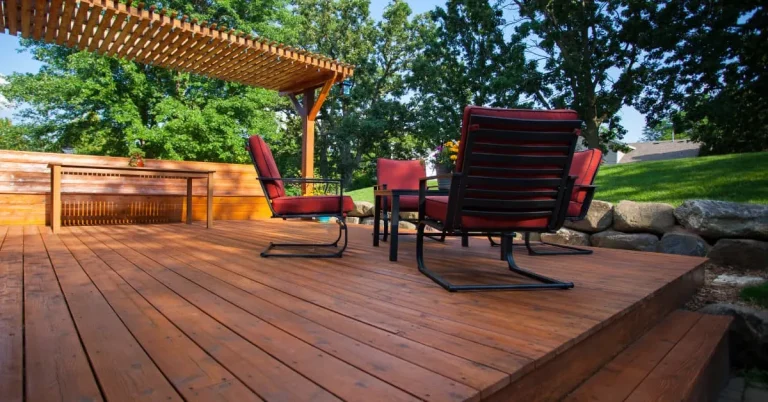
Your Potomac backyard stretches out behind your Colonial, plenty of space but only grass to show for it. You picture family dinners outside, weekend gatherings with friends, a place to grill without hauling everything back inside. A deck alone sits up high by the door. A patio alone stays flat on the ground. Put them together and you get zones for different activities, transitions between levels that feel natural, and space that works the way you actually use it.
Deck and patio combinations give you the raised platform for dining near the kitchen and the ground-level area for a fire pit or lounge chairs. You walk down a few steps from one to the other. McLean homes with walkout basements use this layout to connect both levels to outdoor space. Bethesda split-levels drop from the deck to a stone patio that flows into the yard. The deck handles cooking and eating. The patio handles gathering and relaxing. You end up with outdoor space that serves more than one purpose.
Two Surfaces Create Distinct Zones
Decks sit higher. Great Falls homeowners put grills and dining tables on decks because the elevation keeps you close to the kitchen door. You carry food straight out without walking down stairs. Patios sit at ground level. Arlington families use patios for fire pits, outdoor sofas, and kids playing because the solid base gives you stability and room to spread out.
The height difference separates activities naturally. Chevy Chase Colonials place the grill station on the deck where smoke rises away from seating. The patio below holds chairs around a fire feature. Rockville Cape Cods put play equipment on the patio where toddlers stay close to the ground. The deck above becomes the spot for parents to watch while relaxing with coffee. You get separation without building walls or fences.
Material choices reinforce the zones. Composite decking on top, pavers on the ground. Different colors, different textures. The eye registers each area as its own space even though they connect. Ashton Tudor homes pair dark composite boards with light concrete pavers. Gaithersburg farmhouses match cedar decking with natural flagstone. The contrast makes each level feel intentional instead of tacked on as an afterthought.
Uneven Yards Work Better With Multiple Levels
Sloped yards in Germantown challenge single-surface layouts. Build a deck high off the ground and you waste the space underneath. Pour a patio at the bottom and you need long stairs to reach it. A combination solves both problems by giving you usable space at each elevation.
The deck attaches to your main level at a comfortable height. Silver Spring split-levels might need three feet of clearance. Clarksville raised ranches might only need one foot. The patio fits where the ground levels out. You drop down from the deck with stairs that feel manageable, not steep and intimidating. Columbia homes with walkout basements add a third level by placing a small paver area right outside the basement door. Three outdoor zones without extensive grading or retaining walls.
Flat yards benefit too. Olney executive homes with level backyards still use the deck for height and views. The slight elevation changes how the space feels. You look out over the yard instead of sitting in it. The patio below gives you that ground-level connection where feet touch grass easily and kids step right onto the lawn. Kensington townhouses with small yards use height to create visual interest where horizontal space runs short.
Stairs Connect the Surfaces
Good stairs move people comfortably. Wide treads, proper spacing. Damascus Colonials use broad staircases that double as seating during parties. Guests sit halfway between the grill and fire pit.
Landings break up longer runs. Poolesville estates with eight foot drops add midway landings. The landing becomes a third zone for plants or a bench.
Materials for stairs matter. Montgomery Village split-levels match deck boards on treads. Burtonsville farmhouses use stone risers that tie into patio pavers. Railing choices affect the whole layout. Cable rails keep sightlines open. Wood balusters add traditional detail.
Weather Protection Expands Usability
Covering part of the deck gives you shade and rain protection. North Potomac homes add pergolas over dining areas. You eat outside without squinting. Light rain means moving under the pergola instead of going inside.
Full roof coverage changes the space completely. Darnestown Colonials close in deck sections with solid roofing and screens. You get a screened porch connected to an open deck that drops to a patio. The screened area works spring through fall.
Retractable awnings give you flexibility. Bethesda Tudor homes mount awnings over deck sections. Pull them out for shade, retract for evening stars. Laytonsville contemporary builds use pergolas with adjustable louvers.
Cost Reflects Size and Material Choices
Building both surfaces at once costs more than one alone but less than doing them separately later. Material drives most of the expense. Pressure-treated lumber keeps deck costs down. Composite boards last longer and need less maintenance but add to the budget. Concrete pavers for the patio cost less than natural stone or stamped concrete.
Size determines total spend. A 12×16 foot deck with a 14×14 foot patio runs lower than a 20×20 deck with a 16×20 patio. Gaithersburg split-levels with 300 square feet of combined outdoor space spend less than Potomac estates with 600 square feet. Features like built-in benches, lighting, and multiple levels add to labor and materials.
Installation sequence affects pricing. Building the patio first lets you set footers for the deck during excavation. You dig once. Adding the deck later means coming back with equipment, tearing up finished patio edges to place posts, and matching old work with new. Rockville contractors who coordinate both phases save you money and hassle. Silver Spring homeowners who plan the whole layout upfront avoid rework and patching.
Material Selection Changes Maintenance and Appearance
Decking material determines how much work you put in yearly. Pressure-treated lumber needs sealing every two to three years. Germantown Colonials using treated pine spend spring weekends power washing and resealing. The wood grays without treatment, splinters develop, and rot starts in high-moisture areas. Cost per square foot runs lowest but maintenance time adds up over decades.
Composite decking eliminates most upkeep. Damascus families with Trex or TimberTech boards wash them once yearly with soap and water. No sealing, no staining, no splinters. The boards resist fading and won’t rot from Maryland humidity. Upfront cost runs higher than wood but the time savings and longevity balance out. Ashton Tudor homes choose composite to match low-maintenance siding and trim.
Patio materials range from poured concrete to natural stone. Concrete pavers in Olney backyards cost less than flagstone but still resist settling better than poured slabs. Individual pavers let you replace damaged pieces without tearing out entire sections. Permeable pavers handle drainage better than solid surfaces. Poolesville estates with clay soil use permeable systems to avoid standing water after storms.
Natural stone like bluestone or flagstone costs more and looks different from manufactured materials. Potomac executive homes pair natural stone patios with wood decking for contrast. The irregular edges and color variation of stone create a softer look than straight-edged pavers. Stone stays cooler underfoot during summer. Concrete heats up fast in direct sun. Kensington families with south-facing patios pick stone to keep bare feet comfortable.
Layout Options Fit Different Yards
Side-by-side placement keeps both surfaces at nearly the same level. Clarksville raised ranches with flat yards run the deck into a patio with minimal steps. The slight transition defines zones without interrupting flow.
Stacked layouts work for sloped lots. Montgomery Village split-levels drop straight down from deck to patio. The upper deck gives you elevated views. The lower patio connects to yard activities.
Wraparound configurations maximize space. North Potomac estates run the patio around multiple sides of the deck. You step down at different points. One section holds the fire pit. Another has lounge chairs.
L-shaped combinations fit corner lots. Gaithersburg contemporary builds place the deck along the back and extend the patio to one side. The corner becomes a natural gathering spot.
Outdoor Kitchens and Fire Features Add Function
Built-in grills on the deck put cooking close to the indoor kitchen. Silver Spring split-levels run gas lines to the deck for permanent grill stations. You get counter space on both sides and storage underneath. Chevy Chase families who grill frequently build full outdoor kitchens with sinks and refrigerators.
Fire pits on the patio create gathering spots after the sun sets. Columbia homeowners place stone or metal fire pits at the center of the lower level. Montgomery County permits typically allow fire features on patios with proper clearances from structures. Potomac estates add built-in seating around fire pits.
Lighting Extends Evening Use
Step lights on stairs prevent trips after dark. Arlington families install low-voltage LED strips along stair risers. The lights mark each step clearly. Ashton split-levels use solar-powered options that turn on automatically at dusk.
Deck post lights add ambient illumination. Olney Colonials mount fixtures on railing posts. Dimmable options adjust brightness for cooking or conversation. Kensington homeowners add string lights overhead for softer mood lighting.
Patio lighting requires different placement. In-ground fixtures along edges define the space. Damascus estates use uplights aimed at trees. Solar path lights mark safe routes to other yard areas.
Drainage Prevents Water Problems
Decks need proper water runoff. Deck boards with slight spacing let rainwater fall through. North Potomac builders pitch deck framing away from the house. Bethesda homeowners add gutters to direct water away from finished basement space.
Patios require base preparation and grading. Rockville contractors excavate to proper depth, add compacted gravel, and slope away from structures. Laytonsville split-levels with clay soil need extra attention. Permeable pavers help but base work matters more.
The transition between surfaces creates a collection point. Silver Spring builders install drains at the base of stairs. Gaithersburg families who skip this step deal with frozen puddles. Montgomery Village Colonials add channel drains along the patio edge.
Permits Vary by Location
Montgomery County requires permits for decks over 30 inches high and most patio installations. Germantown homeowners submit plans showing dimensions and materials. Inspections happen at multiple stages. Skipping permits risks fines and creates issues when selling.
Northern Virginia counties follow similar processes. Arlington and Fairfax require deck permits based on height. Damascus families in Frederick County deal with different requirements than Potomac families in Montgomery County. Contractors familiar with local codes handle applications and inspections.
HOA approvals add another layer. Clarksville communities need design approval before permits. Silver Spring townhouse associations restrict materials and colors. Starting the process early prevents delays.
Construction Sequence Affects Cost
Building the patio first makes practical sense. Rockville contractors excavate for the patio and set footers for the deck during the same dirt work. The patio provides a stable work area for deck construction. Bethesda projects that build the deck first risk damaging finished surfaces.
Weather impacts scheduling. Spring and fall offer ideal conditions. Summer heat makes work uncomfortable. Winter freezing stops concrete pours. Poolesville families who want May completion start planning in February.
Phasing spreads costs over time. Olney split-levels might build the deck this year and add the patio next year. Planning both upfront means the deck design anticipates the future patio. Footer placement and stair location account for what comes later.
Maintenance Varies by Material
Wood decks need annual inspection and sealing every two to three years. Pressure-treated lumber in Gaithersburg humidity shows wear faster than composite. Check areas around posts and under planters where water collects. Kensington homeowners who neglect sealing replace boards sooner.
Composite decks require minimal upkeep. Wash once or twice yearly. North Potomac families spend less time on maintenance. The boards don’t splinter so kids play barefoot safely.
Patio maintenance depends on material. Concrete pavers need occasional cleaning and joint sand replacement. Natural stone requires sealing to prevent staining. Sweep regularly to prevent dirt buildup. Damascus estates reseal flagstone every few years.
Furniture Completes the Space
Dining furniture on the deck makes sense near the house. Silver Spring Colonials use six to eight person tables with weather-resistant materials like aluminum or teak. Covered deck sections let you leave cushions out longer. Uncovered areas require storage or quick-dry foam.
Lounge furniture on the patio creates relaxation zones. Laytonsville families arrange sectional sofas around fire pits. Poolesville estates add outdoor rugs to define seating areas. Umbrellas provide portable shade. Pergolas on decks add permanent architectural interest and support for shade cloth or climbing vines.
Value Comes From Use and Resale Potential
Outdoor living space ranks high on buyer wish lists. Potomac Colonials with deck and patio combinations attract more interest when listed. Montgomery County agents point to outdoor areas as differentiators. Homes with finished outdoor space sell faster.
Personal enjoyment matters more than resale for most families. North Bethesda homeowners who use their combination weekly get immediate returns. Summer dinners outside, fall evenings by the fire. The space changes how you live in your home. Damascus families suddenly have a favorite part of the property.
Professional Installation Delivers Better Results
Building deck and patio combinations requires coordinating multiple trades. Excavation for the patio, concrete work for footers, framing for the deck, electrical for lighting. Burtonsville contractors who handle complete projects manage scheduling and quality across all phases. You get one point of contact instead of juggling separate companies. Work progresses smoothly because each trade knows what the others did and what comes next.
Experience with local conditions prevents problems. Gaithersburg builders understand Maryland clay soil and how it affects patio base preparation. Rockville contractors know Montgomery County code requirements and inspection expectations. Silver Spring companies familiar with older neighborhoods work around existing utilities and mature tree roots. That local knowledge saves time and avoids mistakes that delay projects.
Warranty coverage protects your investment. Reputable contractors stand behind their work. Structural issues, material defects, or installation problems get addressed without argument. Clarksville homeowners with warranty coverage call for service when boards warp or pavers settle. The contractor returns to fix it. Companies without solid warranties often disappear when problems arise. You end up paying another contractor to repair the original work. Darnestown families who choose established companies with track records get reliability and recourse.
Schedule a Consultation for Your Backyard
Your yard has potential for multiple outdoor zones. A deck near the kitchen. A patio in the yard. Stairs connecting them. Space for cooking, space for gathering, space that fits how your family actually uses the property. Montgomery County homeowners who plan both surfaces together get better layouts than those who add one then try to squeeze in the other later.
Blue Collar Scholars builds deck and patio combinations across Maryland, Northern Virginia, and Washington DC. We handle permits, excavation, construction, and finishing. The project gets completed by one team that coordinates every phase. You work with people who know local codes and soil conditions. The deck attaches properly to your home. The patio drains correctly. Stairs feel safe and comfortable. Materials match your budget and maintenance preferences.
Call us to discuss your backyard layout. We look at your property, listen to how you want to use the space, and explain what makes sense for your yard and budget. You get specific information about your project, not generic advice. The consultation costs nothing. You learn what’s possible and what it takes to build it right. That information helps whether you move forward now or plan for next year.