

Leaf removal is a time-consuming fall task for DMV homeowners. It’s a chore that doesn’t have to leave you sore.
Picture this: it’s a crisp Saturday morning in Maryland. The trees along your street — oak, maple, sycamore — have finally let go of their leaves. Piles scatter across your lawn, the driveway, and the flower beds.
Your neighbor is already outside, bent over a rake, grumbling about sore shoulders. Another is firing up a gas blower, the roar echoing down the block. Across the street, a family has turned it into playtime — kids jumping into piles before Dad drags a tarp to the curb.
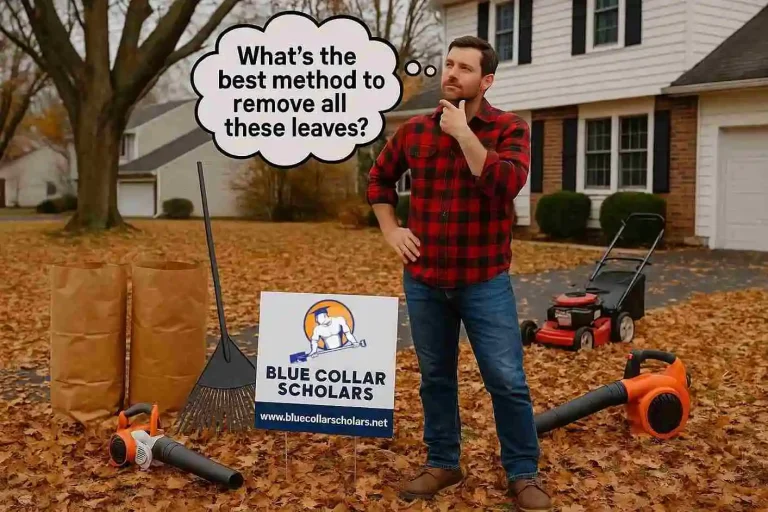
And you? You’re left with the question every DMV homeowner faces this time of year: What’s the best way to get rid of all these leaves?
If you’re already searching for “leaf removal near me,” or “leaf removal services,” or even “leaf removal services near me,” we are the best lawn care company in the DMV. Get your free estimate here and let us handle the heavy lifting. But if you want to learn about your options first, keep reading to discover the best ways to tackle those leaves yourself.
Understanding the Three Categories of Leaf Removal
Every leaf removal method falls into one of three categories:
- Manual – hands-on tools such as rakes, tarps, and scoops
- Mechanical – powered tools like blowers, vacuums, mowers, and shredders
- Alternative/Creative – composting, mulching beds, community pickup, or hiring a crew
Which option works best for you depends on time, money, yard size, and your environment. A half-acre sloped property in Great Falls needs a different approach than a small, flat Bethesda yard. And if you leave piles too long? You’re inviting lawn disease, pests, and even snakes that love damp leaf cover.
Let’s break down each method.
1. Rake Leaves (Manual & Time Consuming)
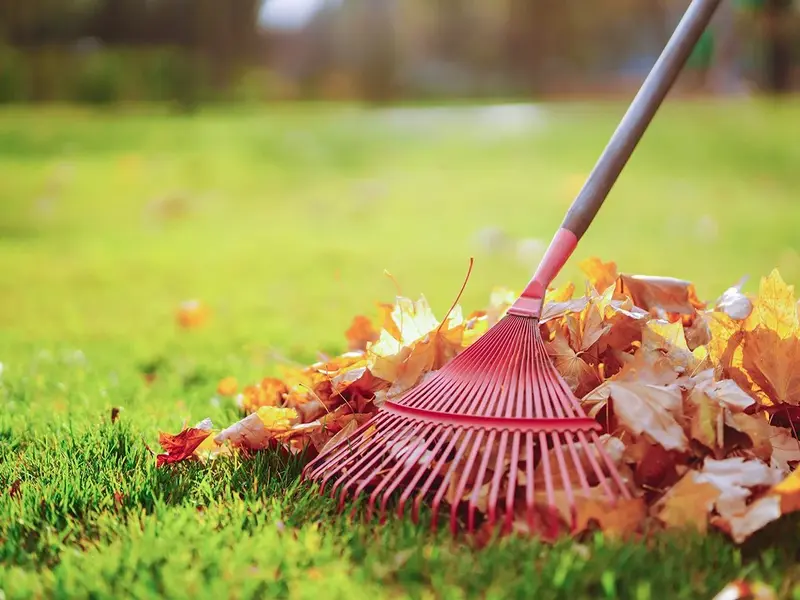
A leaf rake will clear leaves, twigs, and clippings, but it’s back-straining work if you tackle it alone. To make it easier, choose a rake with an ergonomic handle and a wide, lightweight design. Many homeowners also use a tarp instead of bagging — it’s easier to drag the pile than to lift it.
Raking doesn’t always have to feel like a chore. If you want a family bonding workout, raking together can actually be fun. Kids love jumping into leaf piles, and many families in Montgomery County make it part of their fall routine.
Pros:
- Inexpensive and durable, lasting years with minimal maintenance
- Versatile for clearing twigs, clippings, and leaves from any surface
- Ideal for small yards where powered equipment isn’t necessary
- Provides a full-body workout that burns calories
Cons:
- Time-consuming and tiring, especially on larger properties
- Inefficient for heavy leaf coverage or multiple large trees
- Risk of shoulder or back strain with extended use
2. Blow Leaves Into Piles With a Leaf Blower (Mechanical)
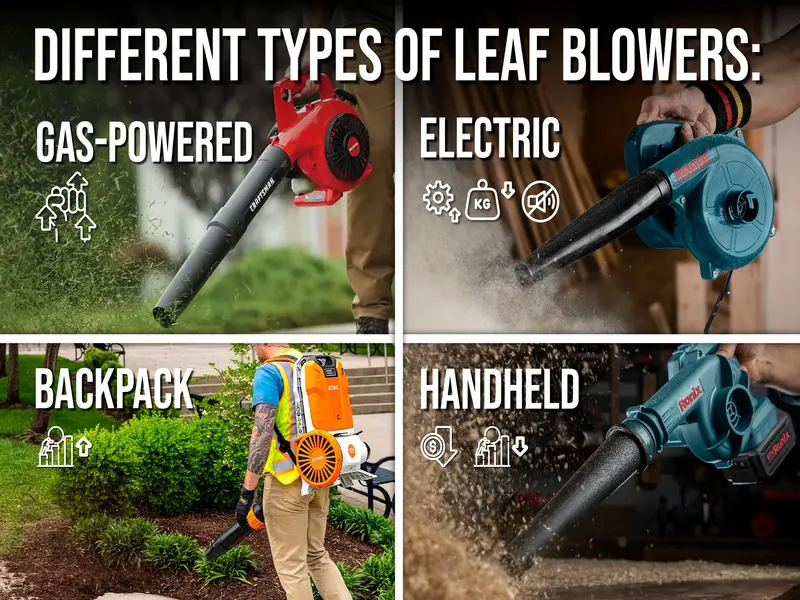
Leaf blowers are one of the fastest ways to clear a yard. Electric models are lightweight and great for smaller suburban lots, while gas blowers bring raw power for big properties — though some DMV cities and counties now restrict or ban gas blowers due to noise and emissions.
The best method: blow leaves onto a tarp or directly to the curb for county pickup.
Beyond speed, many homeowners say blowing leaves is oddly satisfying. Watching messy lawns transform into neat stripes is almost therapeutic — a bit like pressure washing.
Pros:
- Saves hours of labor compared to manual raking
- Easy to operate with minimal learning curve
- Works efficiently for medium to large yards
- Instantly visible results as you transform your yard
Cons:
- Loud operation requires checking local noise ordinances
- More expensive upfront cost than manual rakes
- Gas models need regular maintenance and fuel
- Creates dust, so eye protection is recommended
3. Suck Up Leaves With a Leaf Vacuum (Mechanical)

Leaf vacuums work like blowers in reverse — sucking leaves into a collector bag. Handheld models work for tight spots, while mower attachments handle larger yards. Many shred leaves in the process, reducing volume and making them compost-ready.
- Pros:
- Precise cleaning for corners, edges, and mulch beds
- Shreds leaves while collecting, reducing volume significantly
- Cleaner than raking or blowing by containing debris
- Cons:
- Collection bags fill quickly, requiring frequent emptying
- Noisy and dusty during operation
- Limited capacity makes them better for smaller properties
4. Chop Up Leaves With a Mulching Lawn Mower (Mechanical)
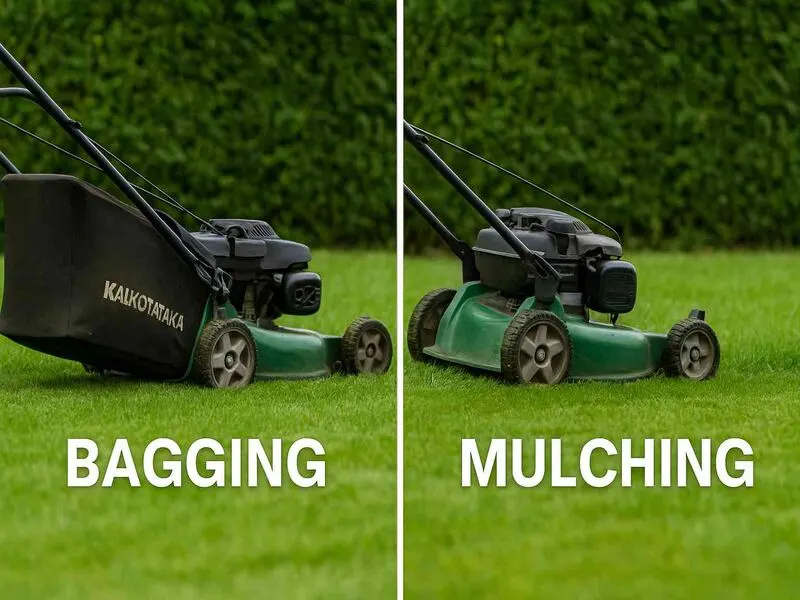
Instead of raking and hauling heavy bags of leaves, you can let your mower do the work. A mulching mower chops leaves into dime-sized pieces that break down over the winter, feeding your soil with organic matter and nutrients. This method improves your lawn’s health while saving you time and yard waste bags.
If your mower has a bagging compartment, you get another option: collect the shredded leaves directly. Bagging is useful if you don’t want leaf bits left on the lawn, or if you’d like to repurpose them in compost bins or garden beds as mulch.
Pro tip: mow in stripes, then cross over at a right angle for an even finer shred. This crisscross pattern helps leaves disappear into the grass instead of clumping on top. Avoid trying this on wet leaves—they’ll clog your mower and make cleanup harder.
Pros:
- Saves time by eliminating bagging and hauling
- Fertilizes lawn naturally as leaves decompose
- Reduces waste sent to landfills
Cons:
- Requires dry conditions to work effectively
- Can spread lawn chemicals or pests across your yard
- Not ideal for very thick leaf cover
5. Use a Leaf Shredder or Chipper (Mechanical)
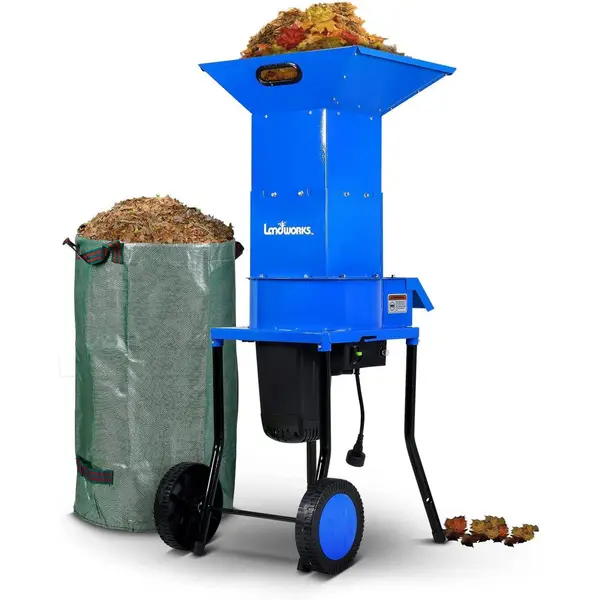
Dedicated shredders reduce leaf piles by up to 90%. They’re great if you compost or want free garden mulch.
Pros:
- Massive volume reduction from large leaf piles
- Eco-friendly alternative to sending leaves to landfills
- Produces high-quality garden mulch
Cons:
- Another piece of equipment to purchase and store
- Quite noisy during operation
- Best suited for active gardeners or composters
6. Compost, Mulch, or Use Community Pickup (Alternative)
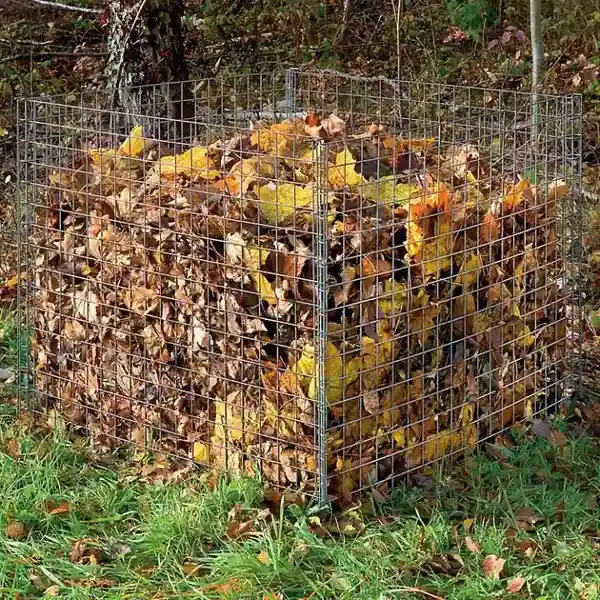
Compost or Create a Leaf Mold Pile
Pile leaves in a corner and let nature do the work. Over 6–12 months, they break down into rich leaf mold — perfect for improving garden soil.
Pros:
- Produces free mulch and soil conditioner
- Reduces waste through natural decomposition
- Requires minimal effort once established
Cons:
- Takes 6 months to a year to fully decompose
- Needs dedicated space away from main yard
Apply Shredded Leaves as Garden Mulch
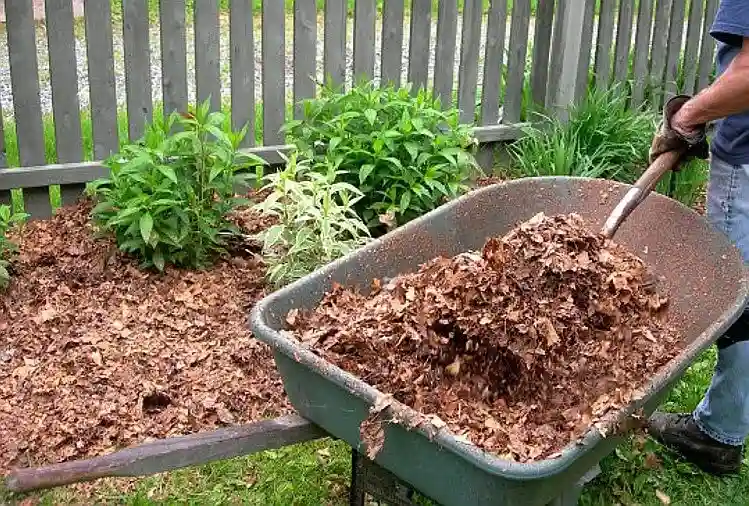
After running leaves through a shredder or mulching mower, spread a 2-3 inch layer around the base of shrubs, perennials, and trees. This creates an insulating blanket that protects plant roots from winter freeze-thaw cycles while suppressing weed growth come spring.
Pros:
- Saves money on commercial mulch ($4-$6 per bag)
- Adds valuable organic matter to soil as leaves decompose
- Improves drainage and fertility without additional cost
- Popular among DMV gardeners with flower beds or vegetable gardens
Cons:
- Must keep mulch away from tree trunks and plant stems
- Can attract rodents if placed too close to structures
- Requires shredding equipment for best results
Take Advantage of Community Pickup & Leaf Vacuum Trucks
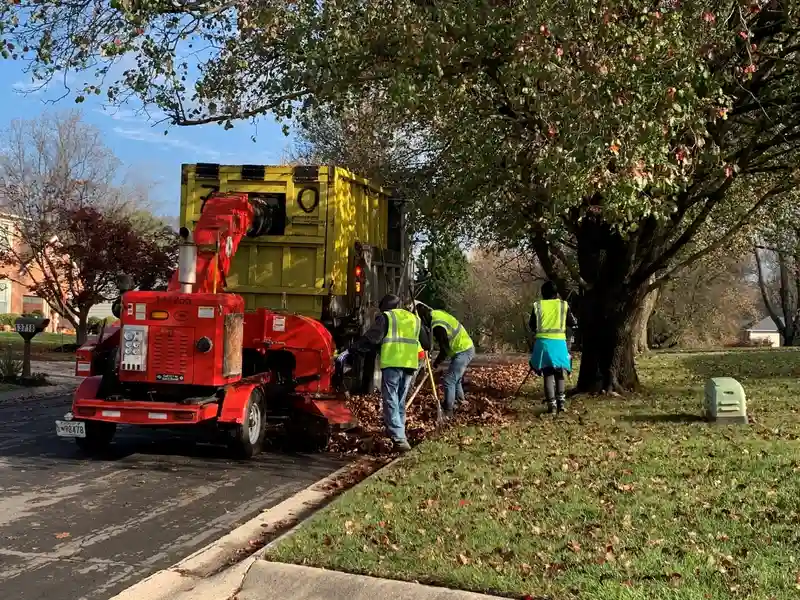
Throughout the DMV region, most counties and cities offer free or low-cost leaf collection programs during the fall months. Montgomery County runs its leaf vacuum program from mid-October through early December, while Prince George’s County and Northern Virginia communities provide similar services.
Pros:
- Free or low-cost disposal option
- No bagging required in most programs
- Convenient scheduled pickup from your curb
- Saves trips to yard waste facilities
Cons:
- Must follow strict program rules and schedules
- Leaves must be free of branches, trash, or debris
- Collection schedules vary by neighborhood
- Limited to specific timeframes each fall
7. Hire a Professional Leaf Removal Crew
If you’d rather spend your weekends with family or hosting friends instead of raking, hiring a crew is the easiest path. If you don’t already have a leaf blower or mulching lawn mower, let the pros with the proper gear handle your leaf removal. Blue Collar Scholars makes it easy — just “leaf” it to us.
Contact a Blue Collar Scholars local leaf removal service and get a quote with just a call or click. Leaf removal crews have the tools to blow, rake, and mulch your yard’s leaves efficiently.
Pros:
- Saves your time and physical effort
- Professional-grade equipment for fast, thorough cleanup
- Seasonal packages available for multiple visits
- Guest-ready yard without weekend work
Cons:
- More expensive than DIY methods
- Requires scheduling and coordination
- May need multiple visits throughout fall season
Common Leaf Removal Mistakes to Avoid
Common mistakes in leaf removal include poor timing, improper disposal, and overlooking ecological benefits. Understanding why fall leaf removal is critical for your DMV yard helps you avoid these costly errors:
Timing Mistakes
- Waiting too long — Wet, matted leaves suffocate grass and promote mold
- Starting too early — You’ll repeat the work as more leaves fall
- Ignoring frost warnings — Frozen leaves create slippery hazards and compact soil
Improper Disposal
- Raking into storm drains — Causes flooding and water pollution
- Sending to landfills — Wastes organic matter and produces methane gas
- Burning leaf piles — Fire hazard, air pollution, and often illegal
Inefficient Methods
- Leaving thick layers — Smothers lawn, blocks sunlight, harbors pests
- Using gas blowers — Less eco-friendly than electric or battery options
- Poor raking technique — Twisting while raking causes back strain; use your legs and a tarp
Ignoring Ecological Benefits
- Over-tidying everything — Removes habitat for pollinators and beneficial insects
- Shredding indiscriminately — Can destroy overwintering butterfly eggs and caterpillars
- Skipping composting — Misses a free, nutrient-rich soil improvement opportunity
Time is Money: How Will You Handle Leaf Removal?
At the end of the day, leaf removal always comes down to two things: your time and your money.
Small, flat yard? A rake and tarp might do the job. Big, sloped yard with heavy tree cover? Save yourself the strain — buying mechanical tools or getting professional help are the smarter choices.
And let’s be real: your free time matters. Whether you’re having friends over for a cookout, hosting a fall birthday party, or just hanging out with family, the last thing you want is to be buried in leaves instead of enjoying the people you love.
Yes, raking can be a family bonding workout. Yes, leaf blowing is satisfying. But let leaves pile up too long, and the consequences are costly:
- Suffocated grass and brown patches by spring
- Mold, turf diseases, and clogged drains
- Hidden pests like ticks and copperheads in damp piles
The real question isn’t if you’ll remove the leaves — it’s how quickly and efficiently you’ll do it.
With Blue Collar Scholars, you won’t waste weekends battling piles. Our crews bring professional-grade blowers, vacuums, and mulchers to keep your yard clean, safe, and guest-ready.
Your time is valuable, and so is your lawn. Don’t “leaf” it to chance — schedule your free estimate today on seasonal leaf removal in Maryland, DC, and Northern Virginia.
Frequently Asked Questions
Do leaves kill grass if left too long?
Yes, thick mats of leaves block sunlight and trap moisture, leading to brown spots and disease. When leaves remain on your lawn for extended periods, they create an environment that suffocates the grass beneath and promotes fungal growth. The matted leaves also prevent air circulation, which is essential for healthy turf.
Is mulching better than bagging?
Mulching saves time and feeds your soil by returning valuable nutrients back to your lawn as the shredded leaves decompose. However, bagging is the better choice if you have thick leaf cover that would smother the grass, or if your lawn has been treated with chemicals that you don’t want redistributed. For most homeowners with moderate leaf fall, mulching is the most efficient and eco-friendly option.
Can I burn leaves in Maryland or Virginia?
Most counties in Maryland and Virginia prohibit open burning of leaves due to fire hazards and air quality concerns. Burning leaves releases harmful particulates and can be dangerous, especially during dry conditions. Always check your local county regulations and obtain any required permits before considering burning, as violations can result in fines.
What are DMV restrictions on blowers?
DC banned gas-powered leaf blowers in 2022 due to noise and emission concerns. Montgomery County is following suit with restrictions taking effect in 2025. Additionally, many homeowners’ associations (HOAs) throughout the DMV region have their own rules limiting the hours when leaf blowers can be operated, so always check your local ordinances and HOA guidelines.