

Most homeowners never think about yard drainage issues until they are standing in a flooded basement at midnight. By that point, what started as a small grading problem or a clogged downspout has already turned into an expensive problem costing thousands of dollars to repair.
With over 15 years of working on properties across Maryland, DC, and Northern Virginia, our drainage experts have seen the same pattern over and over. The good news is that yard drainage issues almost always show warning signs first. The key is knowing how to recognize them early before they get serious.
Warning Signs of Yard Drainage Issues You Should Not Ignore
These are the most common red flags we’ve seen on job sites across the DMV area:
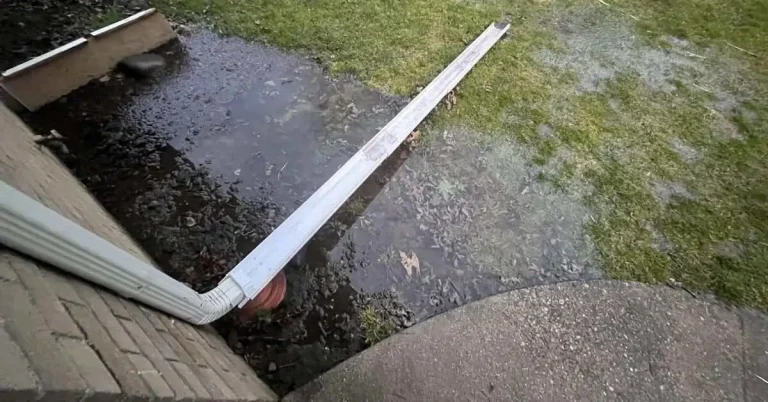
- Standing or pooling water after rain that doesn’t go away within 24 to 48 hours
- Mosquitoes breeding in standing water near your yard or foundation
- Water collecting near your foundation or against exterior walls
- Foundation cracks that appear or slowly widen over time
- Damp or musty smells coming from your basement
- Mold or mildew forming on basement walls
- Mulch or soil washing away after storms
Having one of these issues may seem minor, but two or three appearing at the same time usually means you already have an active drainage problem that needs attention.
What Causes Yard Drainage Issues in the DMV
Yard drainage issues are especially common in Maryland, DC, and Northern Virginia because of a few regional factors that homeowners face.
Clay-Heavy Soil
Many homes in the Maryland, DC, and Northern Virginia area sit on dense clay soil that doesn’t absorb water well. So as rainwater lands on your yard, it tends to sit on the surface and move horizontally instead of soaking into the ground. Water will always follow the path of least resistance, so if your yard slopes towards your home instead of away from it, that path leads straight to your foundation.
Settled or Aging Grading
Yards naturally shift over time. A property that was properly graded over 20 years ago may have settled into a shallow bowl shape that now directs water toward the house. Soil compaction, freeze-thaw cycles, tree roots, and landscaping changes can slowly alter how water flows across your yard, eventually creating drainage problems around the foundation.
Aging Drainage Systems
Some homes have older drainage systems such as French drains or footing drains, while others may not have any of the types of drainage systems installed at all. In properties that do have them, these systems can fill with sediment, crack, or become clogged by tree roots over time. From the surface everything may look fine, but underground the system may no longer be moving water away from the foundation properly.
A Real Life Example: Catching Yard Drainage Issues Early in Rockville
A homeowner in Rockville, Maryland contacted us about what seemed like a minor issue. After a heavy rainstorm, water was pooling near the corner of their house and the basement wall felt slightly damp. They didn’t make the connection at first, and assumed it was just humidity.
When we inspected the property, we found that the yard was actually sloping towards the foundation and the original drainage system had completely clogged with sediment and tree roots. We also noticed small hairline cracks beginning to form along the basement wall, a sign that water pressure had been building up outside the foundation for years.
We regraded the yard, extended the downspouts, and installed a new French drain system to redirect water safely away from the house. Problem solved.
Catching the drainage issue early saved them from a massive repair expense later on.
Common DIY Mistakes That Make Drainage Problems Worse
We respect homeowners who like to tackle projects themselves, but drainage is one area where the wrong fix can actually make things worse.
Here are a few mistakes we often see.
Incorrect Regrading
Many homeowners move soil around thinking that they’ve fixed the slope. However, they actually create new low spots that collect water in different places. Proper grading requires knowing where the water needs to go, not just pushing it away from one area.
Ignoring Gutters and Downspouts
Clogged gutters and short downspouts are one of the most common causes of drainage problems near the foundation. When gutters overflow, roof runoff pours directly next to the house and quickly saturates the soil. Cleaning gutters regularly and extending downspouts away from the foundation can prevent many drainage issues before they start.
Using the Wrong Drainage Materials
Not all pipes are designed for drainage. We often see homeowners install thin irrigation tubing or lightweight PVC that eventually collapses or clogs underground. Proper drainage systems require perforated pipes, gravel, and filtration fabric to move water effectively.
Not Identifying Where Water Should Exit the Property
Many homeowners redirect water away from one spot without thinking about where it will end up. As a result, the water may collect somewhere else in the yard, flow back toward the house, or even run into a neighbor’s property which could cause legal issues. A proper drainage solution always starts with identifying a safe discharge point where water can leave the property without creating problems elsewhere.
Delaying Drainage Repairs
This mistake costs homeowners the most money. Yard drainage issues rarely resolve on their own and typically get worse with every storm, freeze-thaw cycle, and season. If you notice the warning signs, addressing the problem early can prevent much larger repairs later.
The Most Important Thing To Do Right Now
The next time it rains heavily, walk around your property and watch where the water goes. This simple step tells you almost everything you need to know.
- Water should always move away from your foundation
- Water should move towards a safe discharge point somewhere lower on your property
If your yard does not have a natural low point, a dry well can help. A dry well collects runoff underground and allows it to slowly disperse into the soil away from the house.
Also, even small signs like a damp basement corner or a hairline crack in a wall are worth paying attention to. Fixing drainage early is almost always the cheapest home improvement you can make.
When to Contact a Drainage Professional
Some drainage maintenance is homeowner friendly such as cleaning the gutters, extending downspouts, or adding splash blocks.
But certain warning signs are worth having a professional evaluate:
- Water pooling within three feet of your foundation
- Basement moisture, mold, or efflorescence (white mineral deposits on walls)
- Lawn areas that stay saturated days after rain
- Visible erosion channels cutting through the yard
- Downspouts discharging water directly next to the house
If you are seeing any of these issues, it is worth having an expert look at the property.
At Blue Collar Scholars, we inspect properties across Maryland, Washington DC, and Northern Virginia. With more than 15 years of experience in this region, we understand the soil conditions, local codes, and the yard drainage issues homeowners face here. Every project we complete is backed by our 3-year craftsmanship guarantee.
Catching yard drainage issues early is the cheapest home improvement you’ll ever make. The cost of a fix now versus the cost of foundation repair, basement waterproofing, or mold remediation later isn’t even close.
Think you might have a yard drainage issue? Contact Blue Collar Scholars for your free drainage assessment.