

A few months ago, I received a call from a homeowner in Potomac asking us to take a look at their stamped concrete patio. Upon further investigation, it seemed the old concrete was cracking and splitting, clear signs that it was reaching the end of its lifespan.
The family had spent thousands of dollars years ago on faux flagstone, but the inflexible material eventually gave way to the freeze-thaw cycles of the DMV, resulting in chips and cracks throughout the surface.
The client pointed out a neighbor’s house a few doors down, wishing their patio had aged like theirs. The difference? The neighbors had a real flagstone patio, which looked just as good as it did fifteen years ago.
So what makes flagstone patios worth it — and how do you plan, install, and maintain one that lasts decades in our DMV climate?
Let’s dive in.
What Is a Flagstone Patio?
If you’re not sure what “flagstone” actually is, the material itself, where it comes from, or how it differs from concrete.
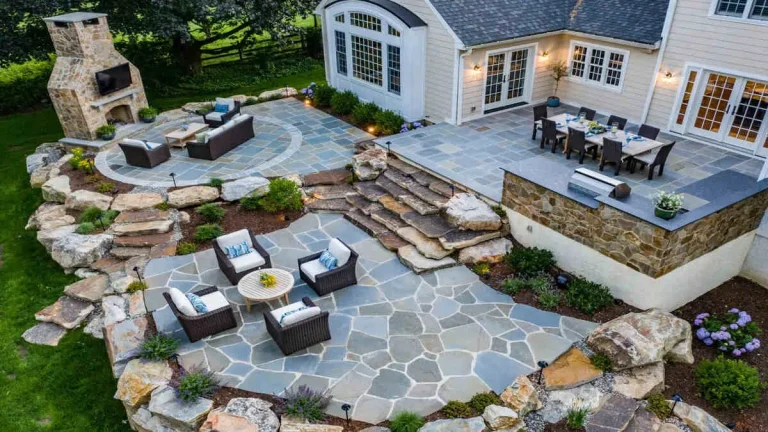
In short, a flagstone patio is an outdoor surface made of natural, flat stone slabs set over a prepared base. Each piece is unique in color, texture, and shape, creating that signature organic look no stamped surface can truly replicate.
Why Homeowners Choose Flagstone Patio
Flagstone offers that rare mix of durability, beauty, and timeless character, which is ideal for the Mid-Atlantic’s clay-heavy soils and shifting weather.
Here’s why it stands out in Maryland, DC, and Northern Virginia:
- Built for freeze–thaw durability: stones flex slightly, preventing cracks.
- Naturally slip-resistant: ideal for rainy or shaded yards.
- Adds instant curb appeal: elevates outdoor living spaces with a high-end feel.
- Low maintenance: a sweep and an occasional joint refill are often enough.
It’s the difference between “just another patio” and one that becomes part of your home’s architecture.
Signs You Need A Flagstone Patio
Whether you need an old patio replaced or you’re looking to upgrade your outdoor space, let’s take a look at the signs you should consider flagstone:
- You’re upgrading from cracked or aging concrete.
- You want a natural, upscale aesthetic.
- Your yard struggles with drainage or clay soil.
- You want a surface that ages gracefully, not artificially.
- You plan to stay in your home long-term — and want a patio that will too.
Popular Flagstone Patio Styles
Flagstone patios come in a variety of styles, each with its own character, texture, and level of formality. The design you choose affects how your patio looks, drains, and feels underfoot, and it also determines the type of base, joint filler, and maintenance you’ll need over time.
Below are the most popular flagstone patio styles homeowners across Maryland, D.C., and Virginia choose. From relaxed, dry-laid patios that blend into gardens to formal, mortared layouts built for entertaining, these are the tried and true designs that define most outdoor living spaces in the DMV.
Let’s start with the most natural and flexible option, the dry-laid flagstone patio.
Dry-Laid Flagstone
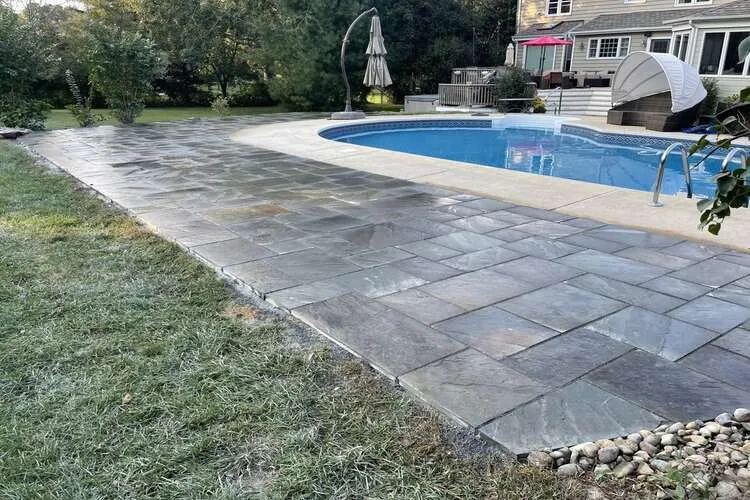
Dry-laid flagstone patios use individual stones set on compacted gravel and sand rather than mortar, creating a naturally flexible surface that drains well.
This design adds a relaxed, organic feel to your yard, perfect for garden patios or casual outdoor living spaces where you want that “walk through the meadow” look. Homeowners love this style because it allows rainwater to seep through the joints, reducing puddles and erosion issues.
In Maryland and Virginia, where heavy clay soils can cause drainage headaches, this method performs beautifully. It’s a practical yet elegant option for homes in areas like Montgomery County or Fairfax that experience frequent freeze-thaw cycles.
If you prefer something more polished or built for frequent entertaining, let’s look at the next option, the mortared flagstone patio.
Mortared Flagstone
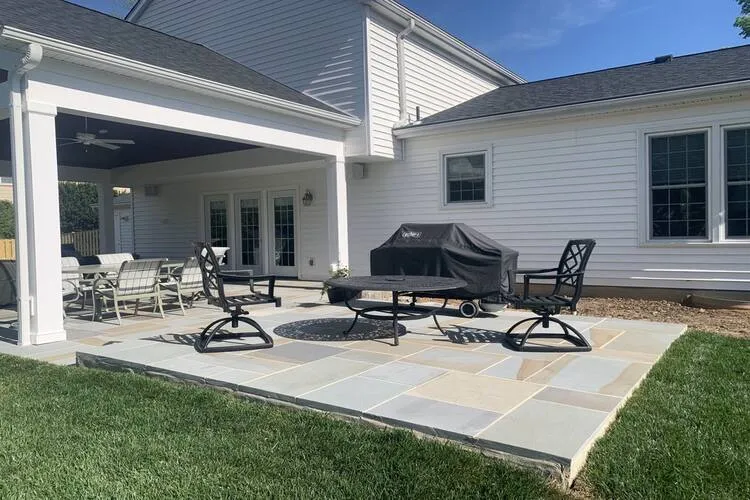
Mortared flagstone patios take a more formal, durable approach. Here, stones are permanently set into mortar over a concrete slab, giving a seamless, high-end appearance ideal for entertaining areas.
This style enhances any outdoor space by providing a clean, stable surface that holds up against heavy foot traffic and weather changes. It’s the go-to choice for homeowners who want a polished, long-lasting patio that complements refined architecture.
In dense urban areas like Washington, D.C., or Alexandria, where stability and precision are essential, a mortared flagstone patio holds strong year after year, even under constant use.
If you want something with more personality and a hand-crafted look, the irregular flagstone style might be exactly what you’re looking for.
Irregular Flagstone
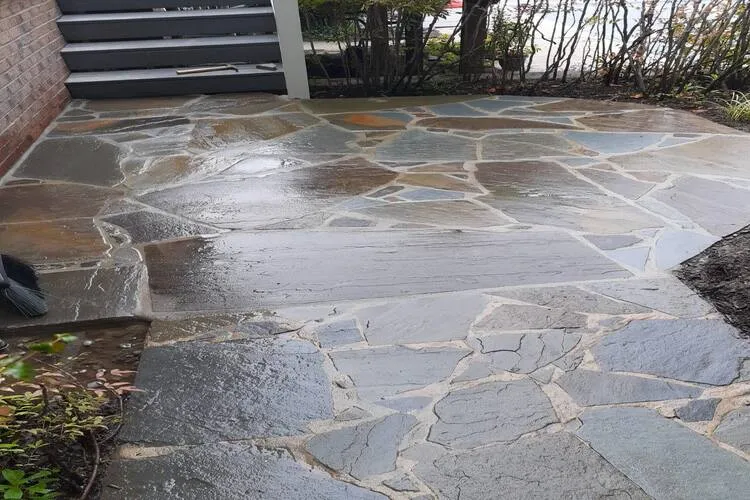
Irregular flagstone patios, also known as “crazy paving,” feature uneven, freeform pieces arranged like a natural puzzle. The result is a rustic, storybook look that instantly adds character and old-world charm to your yard.
This design is ideal for homeowners who want a more organic, one-of-a-kind aesthetic, with each stone placement feeling intentional yet effortlessly natural. It’s especially appealing in shaded garden patios or wooded settings common in Kensington and McLean, where the natural contours blend seamlessly into the surrounding landscape.
If you prefer cleaner lines or a modern, geometric look, keep reading because the cut or rectangular flagstone design might fit your home’s style perfectly.
Cut/Rectangular Flagstone
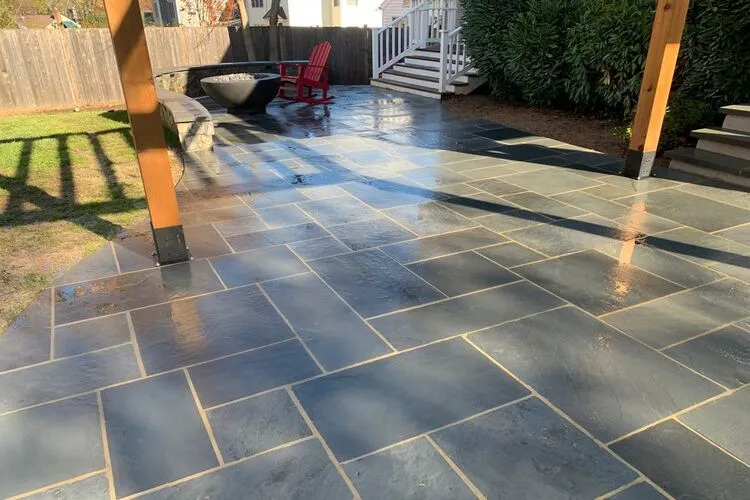
Cut or rectangular flagstone patios offer a sleek, contemporary look with their uniform, machine-cut shapes, typically in square or rectangular layouts. The clean lines and symmetry give your outdoor space a structured, modern feel, perfect for homeowners who prefer a minimalist aesthetic.
This design shines in more urban or architectural settings, such as the modern homes of Bethesda or Arlington, where precision craftsmanship elevates curb appeal and complements clean home design. Beyond aesthetics, its even surface makes it ideal for furniture placement and safe for kids and guests.
If you want something completely your own, the custom pattern and creative layout option lets you design a patio that’s as unique as your home.
Custom Patterns and Creative Layouts
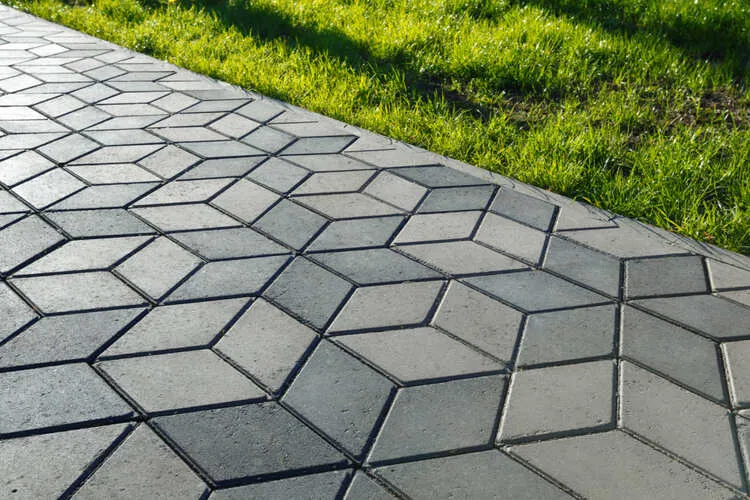
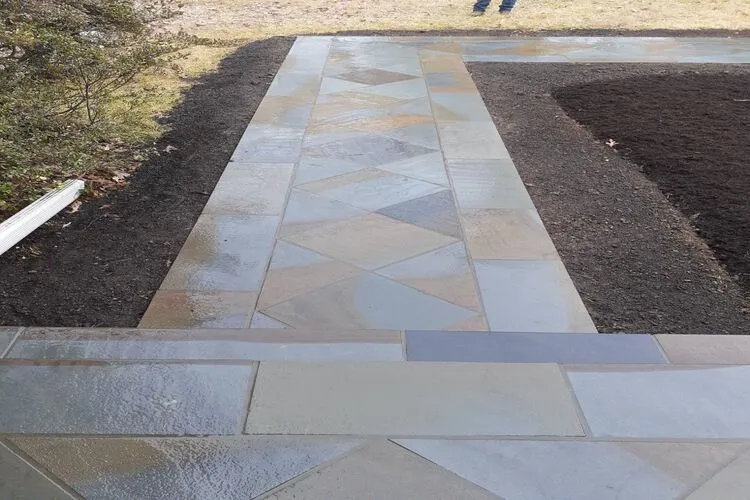
Flagstone is one of the most customizable materials you can choose for your patio. Beyond the standard patterns, homeowners often mix shapes, colors, and joint widths to create something truly personal.
Whether you want a blend of irregular and rectangular stones for visual contrast or a unique layout that frames a fire pit or garden bed, the possibilities are nearly endless.
Many Blue Collar Scholars clients across the DMV opt for custom designs that reflect their home’s character and their lifestyle, proving that flagstone isn’t just a patio material; it’s a design canvas waiting for your personal touch.
Choosing the Right Stone
After you’ve chosen the style that fits your flagstone patio — whether it’s dry-laid, mortared, or irregular — the next step is selecting the right material. There are several types of flagstone materials to choose from, each offering a distinct look and feel depending on your design goals.
As explained in the “What Is Flagstone? — Types, Colors & Pricing” post breaks down how options like slate, sandstone, limestone, quartzite, and bluestone perform across Maryland, D.C., and Virginia homes.
For patios, just remember:
- Slate: Rustic and dark, perfect for shaded or wooded backyards. Its natural texture creates grip underfoot and adds a timeless, earthy charm.
- Sandstone: Warm tan and brown hues that blend effortlessly with natural landscapes, giving your patio a soft, organic feel.
- Limestone: Smooth and elegant, often chosen for high-end homes in Fairfax and Chevy Chase that favor a clean, refined aesthetic.
- Quartzite: Light, shimmering, and extremely durable — an ideal choice for homeowners who want a touch of luxury with long-lasting strength.
- Bluestone: Cool gray-blue tones, most popular in Bethesda and Arlington, known for both its versatility and regional availability from nearby Pennsylvania quarries.
Here’s what to keep in mind when selecting the right stone for your flagstone patio:
- Color palette: Match tones to your home’s siding or trim for a cohesive look.
- Surface texture: Rough finishes provide grip, while smoother textures work well for dining or lounge areas.
- Thickness: Use thicker stones for dry-laid patios and thinner ones for mortared builds.
- Local availability: Bluestone sourced locally reduces both cost and emissions while supporting regional suppliers.
Pro Tip: Bring a piece of your home’s siding or decking when choosing stone — it helps visualize the contrast and tone outdoors.
Installation Overview
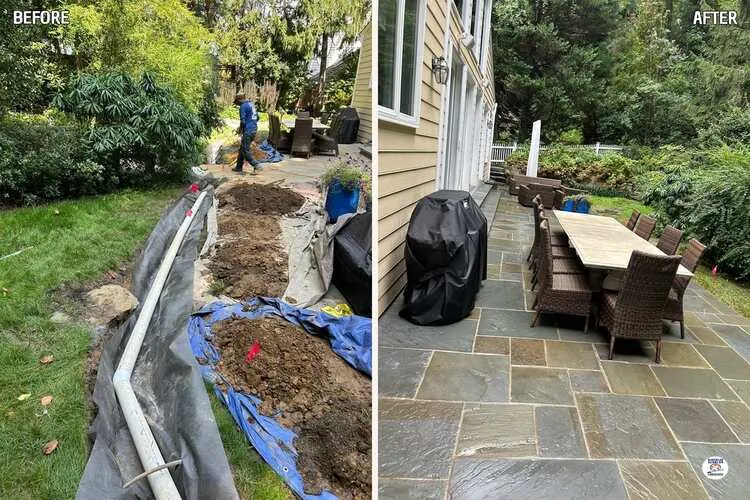
Before every flagstone patio installation, make sure you’ve selected the right style, material, and tools.
Each one affects how your patio looks, drains, and lasts.
- Choosing the style sets the foundation. It determines the base type, drainage method, and durability.
- Choosing the material defines the look and feel, matching your home’s design and the local climate.
- Gathering the right tools ensures efficiency and accuracy during installation.
Once those are set, it’s time to start the installation process:
- Excavate about 6–8 inches below ground level.
- Add drainage if needed to prevent pooling or shifting stones.
- Add compacted gravel and spread leveled sand for a strong, stable base.
- Lay the stones carefully, starting from one corner and working across.
- Check that each stone is level and fits neatly with the design.
- Fill the joints with sand or mortar, depending on your installation type, to lock everything in place.
- Slope the surface about ¼ inch per foot away from the house to ensure proper water runoff.
- Clean and finish the surface by sweeping away debris and rinsing lightly.
Important Note: Excavating enough inches creates a stable base that will support the patio and allow for proper drainage. Drainage and leveling are important because they keep water from pooling and prevent your patio from shifting or cracking over time.
Flagstone Patio Maintenance
One of the best parts of a flagstone patio is how easy it is to maintain.
Just follow some basic rules of care:
- Sweep off leaves and debris regularly.
- Refill sand joints as needed (dry-laid installs).
- Power wash gently once per year.
- Reseal every 3–5 years for enhanced color.
- Inspect after winter for movement or weeds.
Flagstone’s low-maintenance nature is what makes it ideal for busy homeowners.
Here’s the deal: a little attention goes a long way.
When to Call a Professional
From Bethesda’s historic homes to Fairfax’s modern builds, flagstone fits seamlessly into the DMV’s wide range of architectural styles. Its natural permeability makes it ideal for our clay-heavy soils, allowing rainwater to drain efficiently and preventing puddles or frost-related damage. The textured surface also provides reliable traction year-round, keeping patios safe even during icy winter mornings.
Another local advantage is sourcing. Most flagstone used across Maryland, D.C., and Virginia comes from Pennsylvania and Virginia quarries, meaning faster delivery, fewer emissions, and lower transportation costs while supporting regional suppliers.
Because our region’s soil and weather conditions can be challenging, it’s often worth calling a professional installer to ensure your patio is built to last.
You should bring in a pro if:
- You’re dealing with drainage issues or a sloped yard that needs proper grading.
- You want to add steps, seating walls, or integrated features to your patio.
- You’re installing over an existing surface or working in tight city spaces like D.C. row homes.
- You want a perfectly level, finished look with precise joints and consistent slope.
In the DMV’s unpredictable climate, a professional ensures your flagstone patio has the correct base depth, drainage setup, and joint type. That extra care prevents cracking, shifting, or water damage so your patio stays strong, stable, and beautiful for years to come.
Ready to Build Your Flagstone Patio?
At Blue Collar Scholars, we’ve spent over 15 years helping homeowners across Maryland, D.C., and Virginia design patios that look natural, drain correctly, and last for decades. From rustic garden retreats to formal courtyards, our licensed team handles every detail — design, permits, and installation — with precision and care.
Let’s make your plans set in stone.
Schedule your free consultation today and get a flagstone patio that’s as durable as it is beautiful.
Frequently Asked Questions
How long will my flagstone patio last?
A properly installed flagstone patio can last up to 75 years with consistent maintenance. Unlike concrete or pavers that may crack or fade over time, flagstone naturally weathers and strengthens its character as it ages, making it one of the most durable choices for DMV homes.
Do I need a permit?
Usually not if it’s under 500 sq. ft., but always check your local county or HOA guidelines. Some areas in Montgomery or Fairfax County may require a permit if drainage or grading work is involved.
Can I DIY a flagstone patio?
Small dry-laid patios or garden paths are manageable for DIYers with time and patience. However, larger patios or sloped yards often need a professional to ensure proper grading, drainage, and long-term stability.
What’s the difference between flagstone and pavers?
Pavers are uniform, budget-friendly, and quick to install, while flagstone offers a natural, one-of-a-kind look that lasts longer. Flagstone also handles temperature swings better, making it ideal for the DMV’s seasonal shifts
What stone thickness should I use?
Dry-laid patios typically use 1.5″–2″ thick stone for strength and stability, while thinner stone works well for mortared installations. Choosing the right thickness ensures your patio stays level and resists cracking over time.