

Most homeowners use the terms remodel vs renovation interchangeably. We hear it on almost every call. Someone says they want a home renovation, but once we walk the property, it turns out they’re describing a full remodel.
The difference matters more than most people realize. It shapes your budget, your timeline, your permits, and whether the project is even realistic. After 15+ years working on homes across Maryland, DC, and Virginia, here’s how we explain remodel vs renovation clearly.
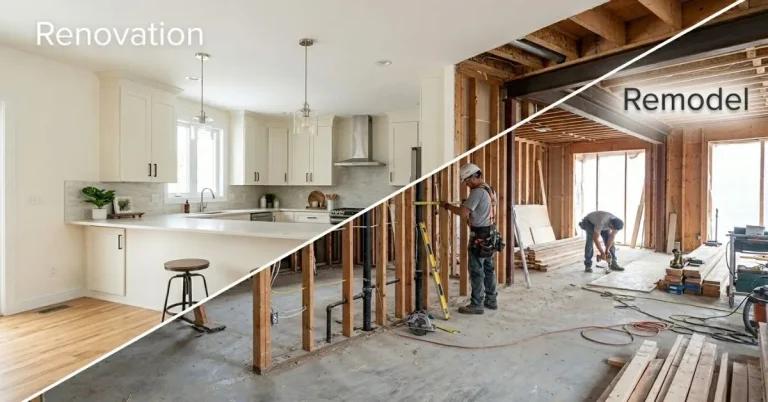
A renovation updates how a space looks without changing its layout. A remodel changes the structure, layout, or purpose of a space entirely. Renovations cost less, move faster, and rarely need permits. Remodels cost more and take longer, but they solve the bigger problems and add more long-term value to your home.
What Is the Difference Between Remodeling and Renovating a Home?
Remodeling changes the structure, layout, or purpose of a space. Renovating updates how a space looks or functions without changing its layout. That’s the whole difference between a remodel and a renovation: structural change vs cosmetic and functional updates inside the existing footprint.
In real projects the line can blur, but that rule holds up almost every time. The rest of this guide breaks down what each one actually looks like, what they cost, when you need permits, and how to tell which one your project needs.
What Is a Home Renovation?
A home renovation improves how a space looks or functions without changing its structure. From a contractor’s point of view, we’re working within the existing layout.
Common renovation examples include:
- Painting walls or cabinets
- Replacing flooring
- Updating light fixtures
- Installing a new vanity or faucet
- Swapping countertops or cabinets (same layout)
- Replacing windows, doors, or siding
The upside of renovating a home is that it costs less, moves faster, rarely needs any permits, and leaves room for some DIY work on smaller upgrades. The downside is that renovation won’t fix a bad layout. If the underlying structure is the real problem, a renovation is a band-aid that you’ll end up paying for twice.
What Is a Home Remodel?
A home remodel alters, reconstructs, or changes the structure, layout, or design of an existing residential space to improve how it functions and looks. This is where projects get more complex and where homeowners often underestimate scope.
Common remodel examples include:
- Removing or adding walls
- Expanding a kitchen
- Converting a basement into living space
- Adding a bathroom
- Building an addition
- Reconfiguring a floor plan
The upside of remodeling a home is that it solves layout and functional problems at the root, adds long-term value, and opens up possibilities a renovation can’t touch. The trade-offs are real though: higher starting cost, longer timeline, more disruption to your daily life, and the need for permits, inspections, and licensed professionals at almost every stage.
What Are the Main Differences Between a Remodel and a Renovation?
The main difference is structural. A renovation works inside the existing footprint and rarely touches plumbing or electrical. A remodel opens walls, moves systems, and changes the floor plan. That single difference cascades into everything else: cost, timeline, permits, and how disruptive the project is to your daily life.
Here’s how remodel vs renovation compares across every dimension that matters:
Remodel vs Renovation by Project Type
The most popular types of remodeling projects that account for most of the renovation vs remodel confusion we see are kitchens, bathrooms, and basements. Here’s where one ends and the other begins for each.
Kitchen: Layout or Finishes?
For kitchen projects, the line comes down to whether the layout changes. New cabinets in the same spots, a quartz counter swap, and updated lighting? That’s a renovation. Pulling down the wall between the kitchen and dining room to fit an island, or relocating the sink to a different wall? You’ve crossed into a remodel.
Bathroom: Plumbing or Finishes?
Bathroom projects split on whether plumbing or walls are moving. Retiling the shower, swapping the vanity, and updating the toilet keeps you in renovation territory and usually skips a permit. The minute you convert a tub to a curbless walk-in shower, push into the closet for a double vanity, or rough in plumbing for a new layout, it’s a remodel.
Basement: Finished or Unfinished?
Basement projects depend on the starting point. If you’re staring at bare concrete, exposed joists, and a furnace in the corner, you’re finishing the space, which means framing, insulation, drywall, flooring, and often an egress window. An already finished basement getting new carpet and paint is a renovation. Framing in a guest bedroom, adding a wet bar, or carving out a media room from one open space is a remodel.
How to Tell Which One Your Project Needs
The most expensive mistake homeowners make is renovating around a bad layout. Fresh paint and new countertops won’t fix a kitchen that’s too cramped to cook in or a bathroom with the toilet in the wrong place. When the layout is the real problem, a renovation is a temporary fix that you’ll end up paying for twice, first on the renovation, then again on the remodel you should have done from the start.
If you’re not sure which side of the line your project falls on, walk through the space and ask whether you’d be happy with how it functions if everything just looked newer. If yes, you need a renovation. If no, you need a remodel.
Why Remodels Cost More Than Renovations
The cost gap between renovation and remodel projects is often larger than homeowners expect. Renovations start lower because they don’t involve structural work. Remodels start higher because of added complexity at every stage. If you’re trying to figure out what’s reasonable to spend before you commit, the 30% rule for home renovation budgets is a useful starting framework.
What drives remodel cost up:
- Structural work
- Plumbing and electrical changes
- Permits and inspections
- Engineering requirements
- Material volume
Two projects that look similar online can have very different costs depending on scope. That’s why getting an in-person assessment before setting a budget matters.
When You’ll Need a Permit for a Remodel or Renovation
Permits are one of the biggest practical differences between remodel and renovation projects. Renovations may not require permits, with the usual exceptions for electrical, plumbing, and roofing work. Remodels almost always require permits and trigger inspections at multiple stages.
The DC Department of Buildings is one example of how strict local permitting can get, and Maryland and Virginia each have their own permitting processes that vary by jurisdiction. If you’re touching structure, plumbing, or electrical, assume a permit is needed and confirm with your contractor before work starts.
What You Can DIY and What You Can’t
Renovations leave plenty of room for DIY work. Painting, swapping fixtures, and basic upgrades are all fair game for handy homeowners.
Remodels are different. Structural work, electrical, and plumbing have to meet code and almost always require licensed professionals. DIY remodels often end up costing more in the long run, because what gets done wrong has to be undone and redone by a pro.
Common Remodel vs Renovation Mistakes Homeowners Make
The patterns we see across hundreds of projects:
- Confusing renovation with remodeling and underestimating their respective costs
- Skipping permits on structural work
- Upgrading finishes without fixing the underlying layout
- Hiring based on price alone instead of experience
- Not accounting for how long the space will be out of commission
The biggest mistake of all is starting a project without understanding what it actually involves. That’s where overspending and timeline blowouts come from.
Ready to Start Your Remodel or Renovation?
The clearer you are on remodel vs renovation before the first hammer swings, the better your project goes.
With over 15 years of experience as a home remodeling contractor in the DMV, Blue Collar Scholars helps homeowners across Maryland, DC, and Virginia plan projects the right way, backed by a 3-year craftsmanship guarantee.
Frequently Asked Questions about Remodel vs Renovation
Still deciding if you need a remodel vs renovation for your home? Here are the questions we hear frequently.
Do I need to move out during a remodel?
It depends on the scope and which rooms are affected. For major remodels involving kitchens or primary bathrooms, most homeowners find it easier to stay elsewhere temporarily. Renovations are usually manageable to live through since the disruption is lighter.
How do I know if my project requires a permit?
A good rule of thumb: if you’re touching structure, plumbing, or electrical, assume you need a permit. The safest move is to ask your contractor before work starts, since pulling permits after the fact is more expensive and more complicated than doing it right the first time.
Does a home remodel always add more value than a home renovation?
Not necessarily. A renovation that makes a space look fresh and current can deliver strong ROI, especially in a competitive market. Remodels add more value when they solve a real functional problem, like adding a bathroom or opening up a cramped floor plan.
How long does a typical home remodel take compared to a home renovation?
A renovation can run anywhere from a few days to a few weeks depending on scope. A remodel typically takes several weeks to a few months, especially once you factor in permits, inspections, and coordinating multiple trades.
Can a project start as a renovation and turn into a remodel?
Yes, and it happens more than people expect. Once walls open up, contractors sometimes discover issues with plumbing, electrical, or structural elements that need to be addressed. That’s why getting a thorough assessment upfront matters before you commit to a budget.