

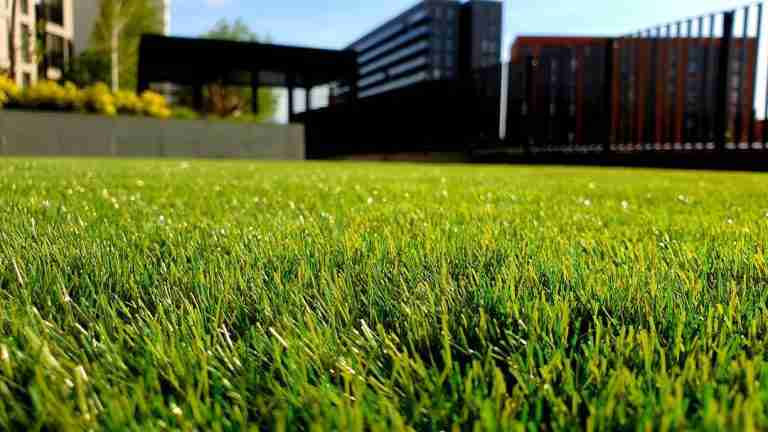
Overseeding is the process of spreading grass seed over an existing lawn to thicken turf, fill bare spots, and improve overall lawn health without tearing up your yard. In the DMV region (Maryland, Virginia, and Washington D.C.), the ideal time to overseed is mid-August through mid-October when soil temperatures range from 50-65°F. Turf-type tall fescue is the recommended grass variety for most DMV lawns due to its drought tolerance and adaptability to the region’s transition zone climate.
Nearly 69% of Americans believe their lawns need improvement, and overseeding offers a straightforward solution that delivers visible results within weeks. Unlike complete lawn renovation, overseeding works with your existing turf to create a denser, healthier lawn that naturally crowds out weeds and withstands the stresses of hot summers and cold winters that define our regional climate.
What is Overseeding and Why Does Your Lawn Need It?
Overseeding involves planting new grass seed directly into your existing lawn without removing the current turf. This technique addresses thin or patchy areas, introduces newer grass varieties that may be more disease-resistant, and increases overall lawn density. The result is a thicker carpet of grass that better resists weed invasion, handles foot traffic, and recovers faster from seasonal stress.
DMV lawns face unique challenges that make overseeding particularly valuable. The region sits in what turf specialists call the “transition zone” where neither cool-season nor warm-season grasses perform perfectly year-round. Cool-season grasses like tall fescue dominate our area but can lose up to one-third of their density during hot, humid summers. Regular overseeding helps maintain the thick turf coverage that keeps your Bethesda, McLean, or Potomac lawn looking its neighborhood-worthy year after year.
Key Benefits of Overseeding Your DMV Lawn
- Fills in bare patches before weeds can establish
- Introduces newer, disease-resistant grass varieties
- Increases drought tolerance over time
- Reduces the need for chemical weed treatments
- Improves overall lawn resilience to foot traffic
When to Overseed Your Lawn in Maryland, Virginia, and DC
Timing determines success with overseeding. According to the University of Maryland Extension, the recommended window for overseeding cool-season grasses in Maryland runs from mid-August to mid-October, with October 15th serving as the practical cutoff date. Virginia Cooperative Extension provides similar guidance, noting that late summer to mid-fall offers warm days and cool nights that create ideal conditions for tall fescue, Kentucky bluegrass, and fine fescue germination.
Soil temperature matters more than calendar dates. Grass seed germinates when soil temperatures reach 50-65°F, which typically occurs in our region during September and early October. By overseeding during this window, new grass has six to eight weeks to establish roots before the first hard frost, usually arriving in mid-October to mid-November depending on your specific location within the DMV.
| Season | Dates | Soil Temperature | Success Rate |
|---|---|---|---|
| Fall (Optimal) | Mid-August to October 15 | 50-65°F | High – Warm soil, cool air, less weeds |
| Spring (Secondary) | Late February to early April | 50-65°F | Moderate – Weed competition, summer stress ahead |
Fall (Optimal)
Spring (Secondary)
DMV Pro Tip
Spring overseeding is possible but presents more challenges. If your Montgomery County or Fairfax County lawn needs attention and you missed the fall window, spring overseeding still beats waiting another full year.
Choosing the Right Grass Seed for DMV Lawns
The transition zone location of Maryland, Virginia, and Washington D.C. limits which grass varieties perform well here. According to the University of Maryland Extension publication TT-77, turf-type tall fescue is the recommended all-purpose grass for sunny DMV lawns. It offers the best combination of drought tolerance, disease resistance, and adaptability to our region’s variable conditions.
For optimal results, look for seed blends containing 90-95% turf-type tall fescue and 5-10% Kentucky bluegrass. The fescue provides durability and heat tolerance while Kentucky bluegrass adds self-repair capability through its spreading growth habit.
| Your Property Type | Recommended Seed Mix | Why This Works |
|---|---|---|
| Full Sun (Bethesda, Potomac open lawns) | 90% Turf-Type Tall Fescue + 10% Kentucky Bluegrass | Heat tolerance for DMV summers + self-repair capability |
| Partial Shade (McLean wooded lots) | 60% TTTF + 30% Fine Fescue + 10% KBG | Shade tolerance balanced with durability |
| Heavy Shade (Great Falls mature trees) | 80% Fine Fescue blend + 20% TTTF | Maximum shade survival (minimum 4 hours sunlight) |
| High Traffic (Arlington family yards) | 70% TTTF + 20% Perennial Rye + 10% KBG | Quick recovery + wear tolerance |
Full Sun (Bethesda, Potomac)
Partial Shade (McLean)
Heavy Shade (Great Falls)
High Traffic (Arlington)
How to Prepare Your Lawn Before Overseeding
Preparation determines how well your new seed establishes. Grass seed requires direct contact with soil to germinate, so any barrier between seed and soil reduces your results. Start preparation one to two weeks before your planned seeding date.
Mow Low
Set your mower to 2-2.5 inches, lower than your typical summer cutting height of 3-4 inches. This shorter height allows sunlight to reach new seedlings and reduces competition from existing grass. Bag the clippings during this mow to expose more soil surface.
Address Thatch
If your lawn has more than half an inch of thatch (the layer of dead grass and roots between soil and green grass blades), remove it before overseeding. Rent a power rake or vertical mower from a local equipment rental company. Most fescue lawns in the DMV region do not develop significant thatch problems, but Kentucky bluegrass lawns may need this step.
Core Aeration – Critical for DMV Clay Soils
For compacted soils common throughout Northern Virginia and Montgomery County, core aeration dramatically improves overseeding success. A core aerator pulls plugs of soil from the ground, creating ideal pockets for seed germination while allowing air, water, and nutrients to reach grass roots.
Clay Soil Reality Check
Clay-heavy soils found in areas like Silver Spring, Arlington, and much of Northern Virginia benefit particularly from aeration. These soils compact easily under foot traffic and summer heat, restricting root development. The combination of aeration and overseeding addresses both the density problem on the surface and the compaction problem below.
Soil Testing
A soil test through your local extension office reveals pH levels and nutrient needs. Most DMV soils run acidic and may benefit from lime application based on test results. The optimal pH range for lawn grasses is 6.0-6.8.
Step-by-Step Overseeding Process
With preparation complete, the actual overseeding process moves quickly. Plan to complete seeding in a single session if weather allows.
Step 1: Divide Your Seed
Split your total seed quantity in half. Apply the first half while walking in a north-south direction across your lawn, then apply the second half while walking east-west. This crossing pattern ensures more even coverage and prevents striping.
Step 2: Use a Spreader
A broadcast spreader works well for large areas, though drop spreaders offer more precision near flower beds and walkways. Set your spreader to deliver 4 lbs per 1,000 square feet for turf-type tall fescue overseeding.
Step 3: Ensure Seed Contact
After spreading, lightly rake the area or roll with a water-filled lawn roller to press seeds into the soil surface. Good contact between seed and soil is essential for germination.
Step 4: Apply Starter Fertilizer
New grass seedlings benefit from starter fertilizer high in phosphorus, which supports root development. Follow Maryland’s fertilizer law requirements, which restrict nitrogen application between November 15 and March 1.
Step 5: Water Immediately
Begin watering right after you finish seeding. The goal is to keep the top inch of soil consistently moist without creating puddles or runoff. This typically means brief watering sessions two to three times daily for the first two weeks.
Watering and Aftercare for New Grass Seed
The weeks following overseeding determine whether your investment pays off. New grass seedlings have shallow roots and cannot survive if soil dries out during germination.
Watering Schedule for DMV Climate
- First Two Weeks: Water lightly but frequently to keep the soil surface moist. Two to three brief sessions daily (5-10 minutes each) works better than one long watering. Morning and early afternoon watering allows grass blades to dry before nightfall, reducing disease risk.
- Weeks Three and Four: As seedlings establish, gradually transition to deeper, less frequent watering. Reduce frequency to once daily while increasing duration. This encourages roots to grow downward in search of moisture.
- After One Month: Resume normal watering practices for established lawns in the DMV area, typically providing about one inch of water per week including rainfall.
First Mowing Guidelines
Wait until new grass reaches three inches in height before mowing, and then cut no shorter than two inches. This typically takes three to four weeks after germination begins. Use sharp mower blades to make clean cuts rather than tearing grass blades.
Need help with your fall lawn care routine? Our team combines overseeding with comprehensive fall cleanup services throughout the DMV region. Learn more about our landscaping services.
Professional vs DIY Overseeding in the DMV Area
Deciding between professional service and doing the work yourself depends on your lawn’s size, condition, and your available time. Both approaches can produce excellent results when executed properly.
Professional services make sense when your lawn exceeds half an acre, when compaction issues require commercial equipment, or when your schedule prevents the consistent watering that new seed demands. Larger properties in Great Falls or Potomac often benefit from professional slit-seeder equipment that creates seed-to-soil contact more effectively than broadcast spreading.
Transform Your Thin, Patchy Lawn
Our landscaping team serves homeowners throughout Maryland, Northern Virginia, and Washington D.C. with professional aeration and overseeding services tailored to your property’s specific needs.
Common DMV Overseeding Mistakes and Solutions
Many homeowners struggle with overseeding because they overlook simple but critical details specific to the DMV region. Avoid these mistakes:
| Problem | Cause (DMV-Specific) | Solution |
|---|---|---|
| Seed washed into storm drains | Heavy September rainstorms common in DMV | Wait 24-48 hours after seeding before major rain. Use erosion control mesh on slopes. |
| Crabgrass explosion | Overseeding too early (before Aug 15) | Wait until soil temps drop below 70°F consistently. Check UMD Extension soil temp map. |
| Seed not germinating | Clay soil barrier, poor contact | MUST aerate clay soils first. Use slit-seeder for best contact in Northern VA clay. |
| Patchy results | Inconsistent watering, deer traffic | Install motion-activated sprinkler. Fence newly seeded areas from wildlife. |
| Winter kill | Overseeded too late (after Oct 15) | Plan for late August to mid-September seeding. Aim for 6-8 weeks growth before first frost. |
| Heavy shade failure | Using TTTF in areas with less than 4 hours sun | Switch to 80% Fine Fescue blend for mature tree canopies in Bethesda/Great Falls. |
Seed Washed Away
Crabgrass Explosion
Seed Not Germinating
Patchy Results
Winter Kill
Heavy Shade Failure
Frequently Asked Questions About Overseeding in the DMV
Can I just throw grass seed on my existing lawn without preparing the soil?
You can spread seed on an existing lawn, but germination rates will be significantly lower without soil preparation. Grass seed needs direct contact with soil to germinate properly. At minimum, mow your lawn short and rake lightly before spreading seed. Core aeration before overseeding dramatically improves results, especially in the clay-heavy soils common throughout Northern Virginia and Montgomery County. The University of Maryland Extension specifically notes that good seed-to-soil contact is necessary for germination.
How long should I wait to mow after overseeding my lawn?
Wait until new grass reaches approximately three inches in height before the first mow, typically three to four weeks after germination begins. When you do mow, cut no shorter than two inches and ensure your mower blade is sharp. A dull blade tears grass rather than cutting it cleanly, which stresses new seedlings. Keep foot traffic off newly overseeded areas until after the first mowing to avoid disturbing developing root systems.
Should I apply crabgrass preventer before or after overseeding?
Do not apply crabgrass preventer (pre-emergent herbicide) before or immediately after overseeding. These products work by preventing seed germination, which means they will stop your grass seed from sprouting along with the weeds. If you used pre-emergent in spring, it typically breaks down by late summer and should not affect fall overseeding. If you need crabgrass control, plan to apply pre-emergent the following spring after your new grass has been mowed at least twice.
Is spring or fall overseeding more effective in the DMV region?
Fall overseeding produces significantly better results in Maryland, Virginia, and D.C. The combination of warm soil temperatures, cooling air temperatures, and reduced weed competition creates ideal conditions for cool-season grass establishment. Virginia Cooperative Extension identifies late summer to mid-fall as the optimal window. Spring overseeding can work but faces challenges from rising temperatures, increased weed pressure, and the approaching summer stress period that makes establishment more difficult for new grass.
What should I do if my lawn is more than 50% weeds?
When weeds dominate more than half your lawn area, the University of Maryland Extension recommends considering complete renovation rather than overseeding. Renovation involves killing existing vegetation and starting fresh with proper soil preparation and seeding. For lawns with extensive weed problems, sod installation may provide faster results. A professional assessment can help determine whether overseeding, renovation, or sod installation makes the most sense for your specific situation and timeline.
Ready to Restore Your DMV Lawn?
If your lawn needs help recovering from summer stress or you want to establish thicker, healthier turf before winter, our team is ready to assist. We provide professional landscaping and lawn maintenance services throughout Maryland, Northern Virginia, and Washington D.C.