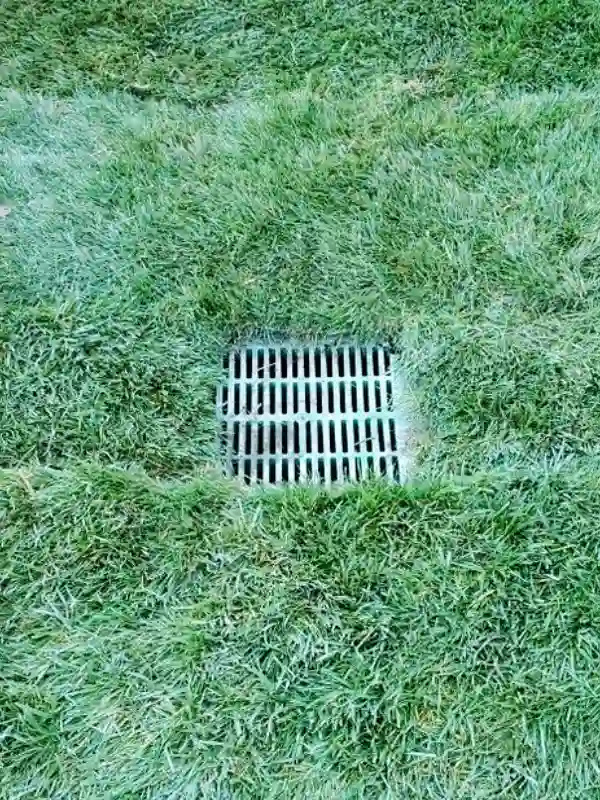
Dry well installation systems capture and infiltrate stormwater underground, eliminating pooling, foundation pressure, and erosion when surface drainage alone isn’t enough.
High-Capacity Underground Drainage for Saturated Yards
Many properties across the Mid-Atlantic region suffer from dense clay soil and compacted fill layers that prevent water from naturally soaking into the ground.
When heavy rain falls, runoff collects near foundations, patios, and low lawn areas.
If your property has heavy roof runoff, clay soil, standing water, or clogged surface drains, dry well installation may be needed when other drainage solutions can’t handle the volume or space limits.
Confirm It’s the Right Solution
You’re a good candidate for a dry well system if extensions only move water, trenches won’t fit, runoff increased after construction, or local codes require onsite stormwater management.
During dry well drainage operation, water flows from gutters or drains into an underground chamber where debris is filtered and runoff is contained safely below ground.
Natural Soil Absorption Process
The dry well installation system slowly releases stored water into surrounding soil, allowing natural infiltration and permanently removing excess surface water instead of redirecting it elsewhere.
Site Engineering & Planning
Every successful dry well installation starts with a technical evaluation of your property’s soil, runoff volume, and safe placement zones.
What we analyze:
Perc test to measure soil absorption rate
Utility marking and clearance verification
Hydraulic sizing calculations
Strategic placement for safety and effectiveness
This planning phase ensures the system is properly sized, code-compliant, and built for long-term performance.
Get Your Free Drainage Quote
Free Quote Request
"*" indicates required fields
Most of our work is backed by our unmatched 3-year quality craftsmanship guarantee.
Professional System Construction
Your dry well drainage system installation is based on proven engineering standards and materials designed for durability, filtration, and structural integrity.
Installation includes:
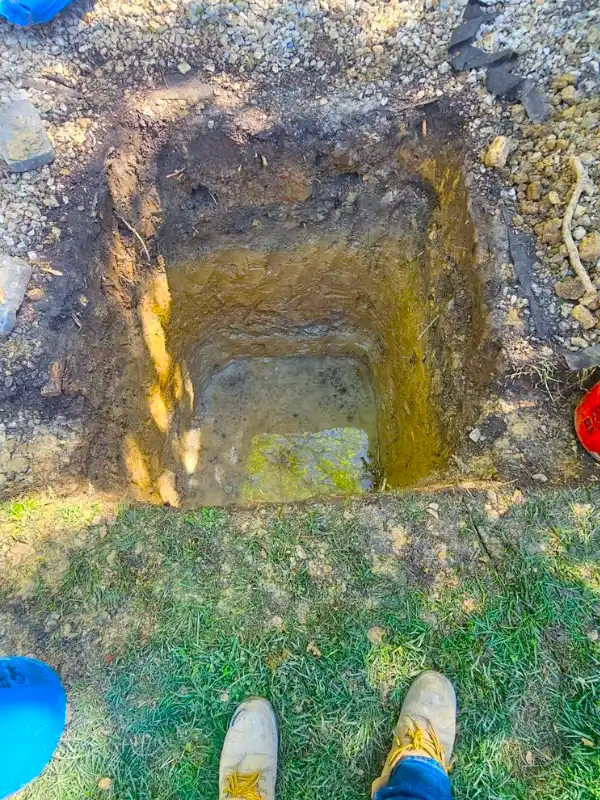
Precision excavation to correct depth
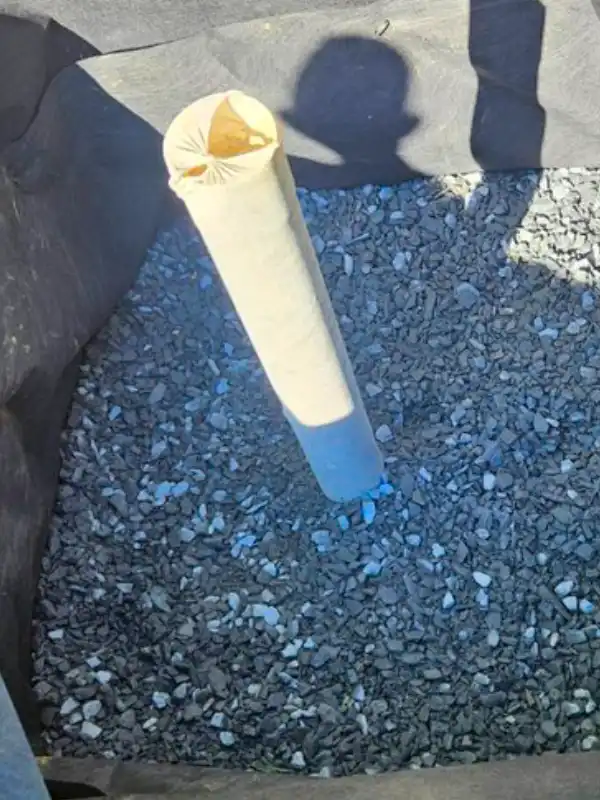
Commercial-grade geotextile lining
Clean drainage stone or modular chamber system
Solid PVC inlet piping (not corrugated)
Debris pre-filtration components
Overflow safety emitter
Surface restoration and grading
The installation time depends on depth and soil conditions.
Once installed, your dry well system immediately begins capturing and dispersing stormwater underground, protecting your foundation, landscaping, and soil structure.
You receive:
System location record
Inspection guidelines
Maintenance schedule
Performance expectations
With proper installation and basic maintenance, your drainage system will manage runoff efficiently for decades, keeping your property dry even during heavy storms.
When runoff has nowhere to discharge, like low-elevation yards or properties surrounded by higher grades, a dry well installation becomes the only effective solution.
By excavating deep underground storage, lining it for stability, and connecting it to collection systems such as French drains or channel drains, excess water is captured and dispersed safely below the surface instead of pooling around your home.
For properties that need more than one solution, dry wells can integrate with other yard drainage systems to manage volume, control flow, and protect foundations long-term.
Frequently Asked Questions About Downspout Extensions
Have questions about how dry wells work, when you need one, or what installation involves? Below are quick, expert answers to the most common homeowner questions about dry well installation, costs, performance, and maintenance so you can make informed drainage decisions.
What is a dry well and when do you need one?
A dry well is an underground drainage system that collects and disperses excess water into the soil to prevent pooling, erosion, and foundation damage. Homeowners typically need a dry well installation when downspouts, sump pumps, or low yard areas cause standing water problems.
How does a dry well drainage system work?
A professionally installed dry well works by channeling water through pipes into a gravel-filled chamber where it slowly infiltrates the surrounding soil. Proper dry well installation ensures correct sizing, depth, and soil compatibility so the system drains efficiently instead of backing up.
How deep should a dry well be installed?
The depth of a dry well installation depends on soil type, water volume, and local drainage conditions, but most residential systems range from 3–6 feet deep. A drainage contractor evaluates runoff levels and percolation rates to determine the exact depth needed for long-term performance.
How much does dry well installation cost?
Dry well installation costs vary based on excavation difficulty, system size, soil conditions, and whether piping or grading is required. The most accurate way to determine price is a site evaluation, since drainage solutions must be customized to your property’s water flow patterns.
Can I install a dry well myself or should I hire a contractor?
While DIY guides exist, dry well installation requires proper grading calculations, drainage mapping, and soil testing to prevent failure. Hiring a professional ensures the system is correctly sized, positioned, and integrated with your existing drainage so it actually solves the water problem.
Solving Drainage Problems in Maryland, DC, & VirginiaSince 2008
Each landscape manages excess water in its own way. The perfect solution depends on variables such as soil composition, slope, drainage flow, and structural layout.
A professional assessment helps determine whether a rain garden is the most effective option for your property’s specific conditions.
Quality
We’re proud to be rated with nearly 5 stars across the internet
Experience
Our craftsmen go through a rigorous vetting process to ensure you get the best of the best
Guaranteed
Most of our work is backed by our unbeatable 3 year craftsmanship guarantee
Customer Satisfaction
We pride ourselves on having a customer satisfaction rate of over 90%
Licensed and Insured
You recognize authority by their badge & we’ve got the badges to prove it
Financing Available
Most of our projects qualify for low to 0% intrest financing through our partners