

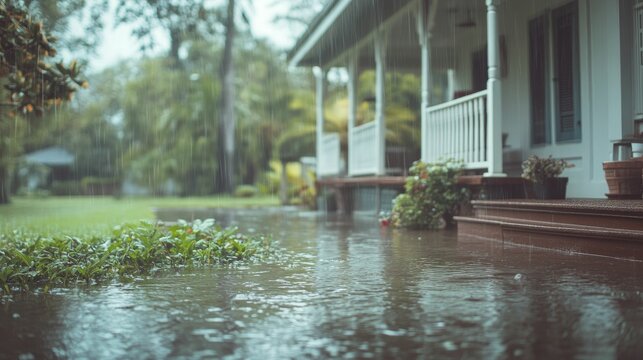
The weather forecast says “there is a chance of rain.” You don’t think much of it—until the sky turns dark, the wind picks up, and the rain starts coming down rapidly. Within an hour, water surrounds your house, gutters are spilling over, and that one spot in your basement feels damp again.
If you have ever searched “yard drainage near me” or “yard drainage contractors near me,” then you already have experienced the dangers that come with storms in the Maryland, DC, or Northern Virginia area. You should know that storms here don’t play around and can overwhelm a property fast. The question isn’t if another one will come—it’s when. And when it does, the strength of your yard drainage system will determine whether your home stays safe or faces expensive water damage costs. Before anything can happen, your home will need effective drainage solutions to be well-prepared and ready.
Think of your home like a tower defense game—you are the commander, your home is the castle, and the storm is the final boss. Yard drainage solutions are your defense towers, barricades, and traps. Poor drainage — or poor defense measures — can lead to standing water, erosion, foundation damage, and even mosquito infestations. At Blue Collar Scholars, we will make the defense plans for you, helping you conquer drainage issues and ward off those expensive repair costs.
Why Yard Drainage Matters in the DMV
In the mid-Atlantic region, Maryland has an average rainfall of 43.6 inches per year, Washington, D.C. averages about 41.8 inches, and Northern Virginia gets around 38.29 inches. That’s still a significant amount of water—and some months deliver over 4 inches in just a few days.
When a heavy storm hits, gallons of water fall onto your roof and yard. If that water isn’t guided away properly, it can overwhelm the ground’s ability to absorb it, leading to serious damage.
The three most common and most expensive problems caused by poor yard drainage are:
- Flooded basements – Stormwater seeps or flows inside, damaging your home’s interior and belongings.
- Cracked foundations – Hydrostatic pressure from saturated soil creates fractures that let in even more water.
- Yard and soil erosion – Fast-moving runoff strips away topsoil and damages both the landscape and hardscape.
Let’s break each one down.
Flooded Basements
A flooded basement happens when stormwater pushes against your foundation walls (this is called hydrostatic pressure) until it finds a way in—through cracks, gaps around windows, or even the seam where the wall meets the floor. Once inside, water can ruin flooring, drywall, furniture, and stored belongings in hours.
How It Happens:
- Poor grading causes water to flow toward, not away from, the house.
- Clogged gutters or short downspouts dump roof water right at the foundation.
- Yard drainage systems are missing or undersized, so water pools near the house instead of flowing away.
How to Fix It:
- Install or improve yard drainage systems like French drains, swales, and catch basins to intercept water before it reaches the foundation.
- Apply waterproof coatings to the basement walls to block seepage.
- Install a sump pump with a battery backup to automatically remove water if it gets inside.
Cracked Foundations
When stormwater builds up in the soil around your home, the weight and pressure (hydrostatic pressure) push against your foundation walls. Over time, this constant force can cause the concrete to crack. At first, the cracks might seem harmless—but each one is an open door for water to seep in, making the problem worse.
How It Happens
- Heavy rain saturates the soil, creating immense pressure against basement walls.
- Seasonal freeze-thaw cycles cause wet soil to expand, pushing harder on the foundation.
- Poor drainage leaves water pooling against the house for days after a storm.
How to Fix It
- Install exterior drainage systems (French drains, grading fixes) to keep water away from the foundation.
- Seal cracks with epoxy injections or hydraulic cement to block water entry.
- In severe cases, add foundation reinforcement such as wall anchors or carbon fiber straps.
Yard and Soil Erosion
Stormwater isn’t only a threat to your basement—it can destroy your yard too. When rain rushes across your property without proper drainage, it washes away the topsoil, digs trenches through the lawn, and undermines landscaping features like patios, retaining walls, and walkways.
How It Happens
- Lack of proper yard drainage allows water to flow uncontrolled across the surface.
- Slopes or hills direct water toward fragile areas like gardens or retaining walls.
- Overflowing gutters and downspouts dump concentrated streams that carve through soil.
How to Fix It
- Regrade problem areas for drainage so water flows away from vulnerable spots.
- Install swales or dry creek beds to slow and direct runoff.
- Use retaining walls with drainage systems to hold soil in place on slopes.
Flooded basements, cracked foundations, and yard erosion aren’t just storm side effects—they’re major threats to your home’s safety, value, and comfort. The good news? Every one of these problems can be prevented with the right yard drainage strategy.
Step 1: Build Your First Towers – Move Water Away from Your Home
The first—and most important—move is to stop stormwater before it gets close.
In tower defense terms, this is placing your strongest defenses at the start of the path.
Proper grading is your first tower. By reshaping your yard so it slopes away from your foundation, gravity becomes your ally. Water naturally moves downhill, and if your grade is correct, that “downhill” is away from your home, not toward it.
Next, French drains work like hidden underground tunnels for water. These gravel-filled trenches with perforated pipes collect excess water and carry it far from your foundation. They’re perfect for spots in your yard that always seem soggy after rain.
If your roof’s gutters are your water collectors, downspout extensions are the messengers carrying that water away from the base. Without them, all that roof runoff drops right at your foundation—a major weak spot in your defenses. Extensions move the water 6–10 feet away or connect to underground drainage pipes.
Step 2: Reinforce the Core – Waterproof Key Areas
Your basement and crawlspace are the “final base” in the game. If stormwater gets this far, the battle becomes much harder.
Start with waterproof coatings on your foundation walls. This creates a physical barrier so water can’t seep in. Add a sump pump—your ultimate emergency tower—to remove water before it floods inside. For even stronger defense, install a battery backup so the pump works even during power outages.
Small but critical upgrades like sealing basement windows and exterior doors can be the difference between staying dry or mopping for hours.
Step 3: Protect Outdoor Features and Yard Design
Not all stormwater charges are directed straight at your foundation. Some take side routes through patios, decks, or garden slopes.
Swales—shallow, grass-lined channels—are like open trenches that guide water along safe paths, preventing it from spilling into problem areas. Catch basins are quick-response traps that pull water underground the moment it pools, carrying it away before it can cause erosion or flooding.
For hardscape areas like driveways and walkways, permeable pavers let water pass through instead of running across the surface toward your home. Retaining walls with proper drainage weep holes also keep soil (and the water in it) from pushing against your house.
Step 4: Your Storm Plan – Preparing for the Next Wave
In a tower defense game, you prepare before the next wave, not during it.
Storm defense works the same way.
Before the storm:
- Check and clear gutters, yard drains, and catch basins
- Test your sump pump and make sure the discharge pipe sends water away from the yard
- Move furniture, planters, or equipment that block water flow
During the storm:
- Monitor known trouble spots—low yard areas, basement corners, door thresholds
- Check that downspouts are still connected and flowing
After the storm:
- Inspect for soil erosion, new puddling areas, or leaks
- Fix small problems immediately to avoid bigger failures in the next wave
However, if you do notice that your flooding problems are made worse by water coming from other properties, here’s how to block water drainage from a neighbor’s yard.
Step 5: Why Local Experts Win the Game
You can learn a lot from guides, but some levels require expert help and knowledge.
Local yard drainage contractors can help you find pros who know:
- Which DMV neighborhoods flood first
- What soil and grading issues are common in the area
- How to navigate county drainage and permit rules
It’s like hiring someone who’s played—and won—this exact level before.
The Benefit of Yard Drainage Done Right
Strong yard drainage isn’t just about surviving one storm—it’s about protecting your home for decades. When your defenses are in place:
- Your foundation stays solid without cracks or leaks
- Your basement stays dry even during record rainfall
- Your yard stays usable instead of turning into a muddy swamp
- Your peace of mind grows knowing your home can handle whatever is to come
Every drain, slope, and swale is another tower in your defense grid, keeping stormwater exactly where it belongs—away from your home.
The Bottom Line
You can’t stop the rain, but you can fight the storm.
With the right yard drainage solutions and expert installations, your home stands ready—its defenses are layered, its weak points are reinforced, and every drop of rainwater is sent safely away.
Here at Blue Collar Scholars, we make it happen. Schedule a consultation today where we’ll visit your property, find vulnerabilities, and design a storm defense plan so your home can win every battle—rain or shine.