

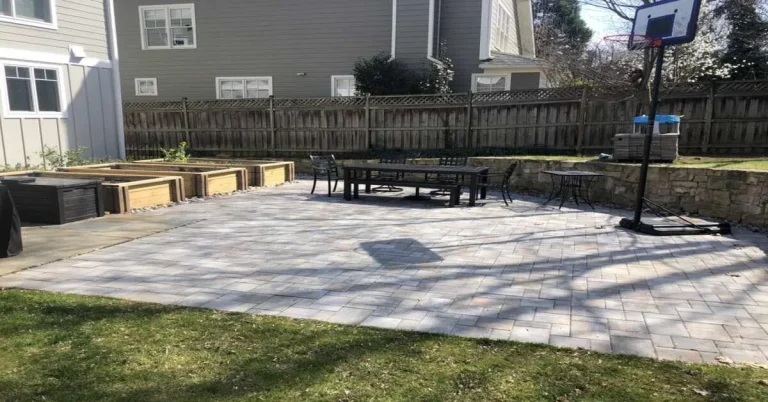
Last spring, a family in Silver Spring called us about their cracked concrete patio. They wanted something more welcoming, a backyard that felt like an outdoor extension of their living room. We replaced the slab with a warm-toned herringbone paver patio bordered in charcoal gray. When we returned that fall, the father was grilling, the kids were drawing chalk mosaics between the joints, and the mother smiled: “It feels like we added another room.”
Sound like the kind of outdoor space you want?
That’s the magic of pavers: timeless design meets practical durability. Whether you’re revamping an old backyard or starting fresh, this 2025 guide covers everything you need to know about design options, installation, maintenance, and local performance tips for Maryland, DC, and Northern Virginia. By the end, you’ll know exactly how to build a patio that lasts for decades and feels like home.
What is a Paver Patio?
A paver patio is made from many individual blocks (concrete, brick, or natural stone) arranged over a compacted gravel and sand base. Each block, called a paver, interlocks with its neighbors, creating a surface that’s incredibly strong yet flexible. Unlike a poured concrete slab, which is a single solid piece that can crack as the ground moves, pavers adjust slightly to pressure and temperature changes because of their separate interlocking design.
That’s what makes them perfect for DMV soils, which expand and contract with moisture. A well-built paver patio can outlast nearly every other hardscape material while staying easy to repair, clean, and customize.
Think of it this way: you’re building something that adapts instead of breaks.
Why Paver Patios Matter
Think of your patio as the foundation of your outdoor living area. It’s more than just flooring. It brings structure, comfort, and usability to your yard all year long. Pavers offer a balance of beauty and strength. Their modular design also means easy expansion. You can start small this year and add a walkway, fire pit, or retaining wall later without worrying about color mismatch.
And because individual units can be lifted and replaced, you never worry about a crack ruining the whole surface. In a climate that sees both August heat and January frost, that adaptability is priceless.
If you’ve ever dealt with a cracked concrete slab, you know exactly what we mean.
Types of Pavers
Homeowners often think “pavers” just means bricks, but there’s a world of styles, materials, and price points to explore. While there are numerous paver materials available, like travertine, porcelain, rubber, and specialty permeable options, the four types covered below represent the most common requests from DMV homeowners. From budget-friendly basics to luxury finishes, these popular choices offer the best balance of aesthetics, durability, and value for Maryland, DC, and Northern Virginia conditions.
Below we will explore each type so you can find the perfect fit for your outdoor space.
Concrete Pavers
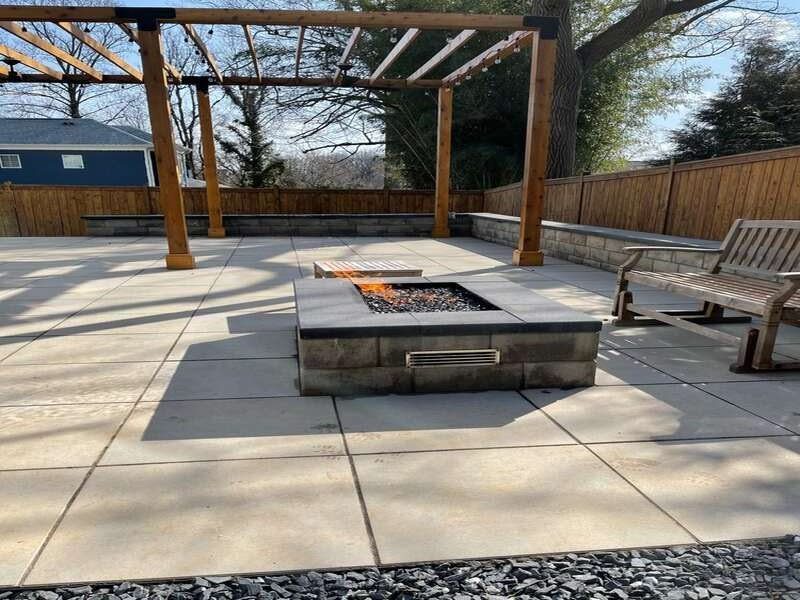
Concrete pavers are composed of a cement and aggregate mixture that is molded, then air-dried to form strong, uniform units. Durable and weather-resistant, concrete pavers are ideal for several outdoor areas, such as driveways, patios, and walkways. They can mimic the look of brick or stone while maintaining consistent sizing for easier installation.
Concrete pavers create long-lasting, versatile surfaces for both foot and light vehicle traffic, durability, and flexible design options.
Ideal for:
- Patios and terraces
- Driveways and walkways
- Pool decks and outdoor living areas
- Homeowners seeking an affordable, durable solution
Advantages:
- It is strong and weather-resistant when properly installed
- Wide range of styles, colors, and patterns available
- It is easy to replace individual pavers if one becomes damaged
- Performs well in Maryland’s freeze-thaw climate
- Simple maintenance and long lifespan
Disadvantages / Considerations:
- It can fade slightly over time without sealing
- May shift or settle if the base isn’t properly compacted
- Requires resealing every few years to preserve color
- Doesn’t have the one-of-a-kind appearance of natural stone
Brick Pavers

For centuries, clay has been the oldest known construction material, and it’s the material from which brick pavers are made. Brick pavers are molded from a natural clay blend, fired in a kiln, and finished in warm tones of red, brown, or tan. Their solid color runs through each unit, making them resistant to fading.
Brick pavers help build enduring outdoor spaces with a classic warmth that complements any home design and stands up to decades of use.
Ideal for:
- Patios and courtyards with a classic aesthetic
- Garden walkways and front entry paths
- Driveways with lighter vehicle use
- Homes with traditional or colonial architecture
Advantages:
- Naturally rich color that won’t fade or peel
- Non-slip texture ideal for high-traffic areas
- Eco-friendly and made from natural clay materials
- Extremely durable when installed on a stable base
Disadvantages / Considerations:
- Limited color range (reds, browns, and earth tones)
- Can chip or crack in harsh freeze-thaw cycles if not installed correctly
- Slight variations in size may slow down installation
- Typically higher cost than standard concrete pavers
Natural Stone Pavers
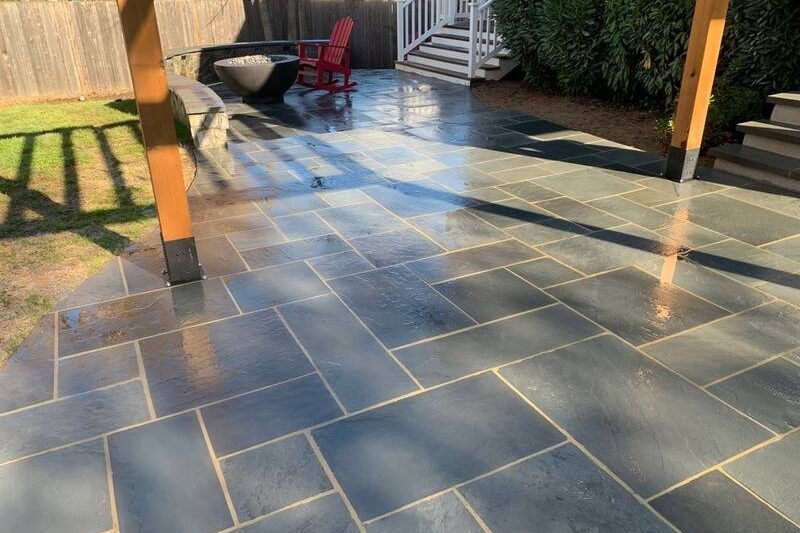
Natural stone pavers are durable slabs cut from quarried rock such as granite, slate, or limestone. Each piece has unique colors and textures, creating a timeless, natural look that enhances patios, walkways, and driveways. A commonly used natural stone is flagstone, known for its non-slip surface and organic shapes. While long-lasting and eco-friendly, natural stone pavers can be more expensive and may need occasional sealing to prevent stains and weathering.
Natural stone pavers create durable, elegant outdoor areas, with varied textures ideal for a custom, upscale look.
Ideal for:
- Patios, pool decks, and terraces
- Garden paths and walkways
- Outdoor kitchens and fire pit areas
Advantages:
- Unique color and texture — no two stones are the same
- Naturally slip-resistant surface
- Long-lasting and weather-resistant
- Enhances curb appeal and property value
Disadvantages / Considerations:
- Higher material and installation costs
- Natural thickness variations make installation more complex
- May require sealing to prevent stains or flaking
- It can become hot in direct sunlight
Permeable Pavers
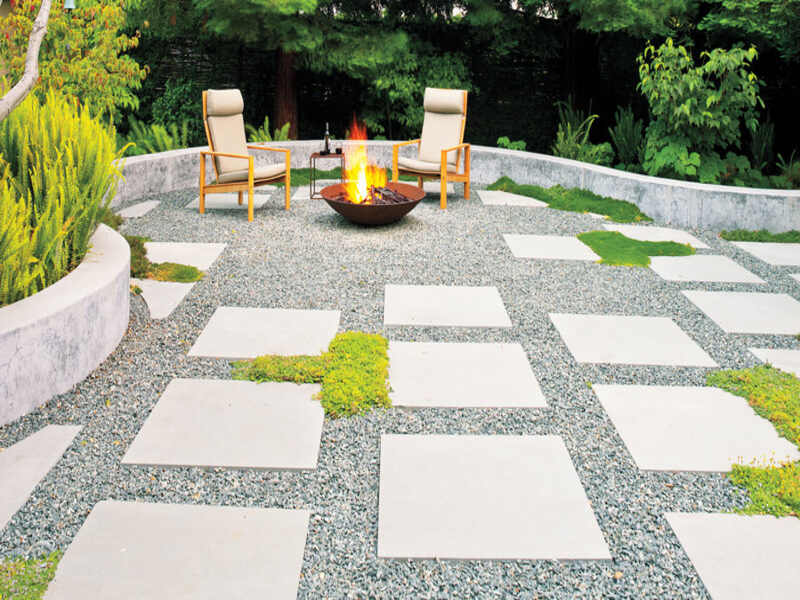
Permeable pavers are specially designed interlocking units made from concrete or natural stone that allow water to pass through the joints and filter into the ground below. This reduces stormwater runoff and helps manage drainage naturally.
Permeable pavers support environmental performance and manage stormwater, reducing flooding and erosion while offering a customizable design.
Ideal for:
- Driveways, parking areas, and patios with drainage concerns
- Properties prone to pooling or soil saturation
- Sustainable landscapes aiming for local green certification
- Homeowners looking for low-impact, eco-friendly hardscape
Advantages:
- Allows rainwater to soak into the ground, reducing runoff and erosion
- Helps recharge groundwater and filters out pollutants
- May qualify for local stormwater management incentives or tax credits
- This material is as durable as standard pavers when installed with the proper base
- Can reduce standing water and ice buildup in winter
Disadvantages / Considerations:
- More expensive initial installation compared to traditional systems
- Requires regular cleaning to keep joints clear of debris and maintain permeability
- Not ideal for heavy clay soils that drain slowly
- Fewer design options compared to decorative concrete or natural stone styles
Mixing Materials
Many DMV homeowners combine materials to create visual interest and maximize value. Popular combinations include concrete paver fields with natural stone borders, brick walkways leading to bluestone patios, or permeable pavers in high-drainage areas with standard pavers elsewhere.
It’s like creating your own custom design palette.
Popular Paver Patio Designs
Patterns are where function meets artistry. Each one changes how your space feels.
| Patterns | Description | Best For |
| Herringbone | Diagonal zigzag layout | High-traffic areas, driveways |
| Running Bond | Simple brick-style rows | Narrow patios or walkways |
| Basket Weave | Alternating pairs of pavers | Classic or cottage-style homes |
| Random Stone/Flagstone | Irregular shapes | Natural gardens or shaded yards |
| Circular/Fan | Curved layout | Fire pits and courtyards |
Imagine walking across a herringbone patio at sunset; shadows from the pattern dancing beneath string lights. That’s the kind of detail that elevates a backyard from ordinary to elegant.
In Montgomery and Fairfax counties, herringbone and random stone remain the most popular patterns, sought after for both aesthetic appeal and structural strength.
Notice how each pattern changes the entire feel of your space?
How a Paver Patio Is Built
Behind every smooth patio lies a series of carefully engineered layers. Each one serves a specific purpose: drainage, stability, and long-term durability.
Here’s what happens:
- Excavation: The crew removes 8–12 inches of soil to make room for the base.
- Base Layer: 4–8 inches of crushed stone (typically CR-6) is compacted in layers.
- Bedding Layer: About 1 inch of coarse sand provides a level surface for pavers.
- Laying the Pavers: Each piece is set in a chosen pattern and cut to fit edges precisely.
- Edge Restraints: Plastic or concrete edging holds everything tightly in place.
- Joint Sand & Compaction: Polymeric sand is swept into gaps, locking the system solid.
When done correctly, a paver patio acts like a single unit. It’s firm underfoot yet naturally draining. You can think of it as a puzzle that never comes apart, even through freezing winters and humid summers.
Installation Timeline
Building a paver patio is a multi-day process, but because it doesn’t need curing time like concrete, it’s usable almost immediately.
| Phase | Time Frame | Details |
| Site Prep & Excavation | 1 – 2 days | Mark utilities, remove soil |
| Base & Compaction | 1 – 2 days | Add gravel, compact in layers |
| Laying Pavers & Edging | 2 – 3 days | Pattern layout and trimming |
| Finishing & Sealing | 1 day | Sweep sand, clean, seal |
“How long does paver patio installation take overall?” Most DMV projects take five to seven days, depending on weather and size. No curing time is needed, so you can use your patio immediately.
Yes, you read that right. No need to wait around for curing like you would with a concrete patio.
Pros & Cons of Paver Patios
Paver patios deliver serious benefits for homeowners.
Here’s what makes them stand out:
Advantages:
Beyond their good looks, pavers excel in practicality.
- Durability: They handle heavy traffic, patio furniture, and even parked cars.
- Reparability: Replace one piece, not the whole surface.
- Design Options: Thousands of shapes, colors, and borders to choose from.
- Drainage: Joints allow water through, preventing puddles.
- Temperature Comfort: Cooler to the touch in summer heat.
- Value: Consistent top ROI for outdoor upgrades.
If you’ve ever stepped onto a hot concrete slab barefoot, you’ll appreciate that last benefit since pavers stay noticeably cooler under the midday sun.
Pretty compelling, right?
Now let’s look at the other side.
Drawbacks:
- Weed Growth: Unsealed joints may sprout weeds over the years.
- Settling: Individual pavers can shift without proper edge restraints.
- Color Fading: UV exposure causes fading when the sealant is neglected.
- Maintenance Required: Pavers require periodic sealing and sand refilling to maintain appearance.
The good news?
With professional installation and basic upkeep, these issues are easy to manage, and you can avoid a headache.
Paver Patios Performance in DMV Conditions
The landscape and climate of the DMV throw everything at patios: dense clay soil, steep slopes, and brutal freeze-thaw cycles.
Pavers handle it all:
Excellent Drainage: Sand joints and a gravel base allow water to pass through instead of pooling. In Silver Spring and Bowie, this prevents foundation erosion. In Fairfax and Arlington, it controls runoff on sloped lots.
Soil Movement: Unlike concrete slabs that crack when clay soil expands and contracts, pavers flex with the ground.
County Specific Needs
- Montgomery & Bethesda: Thicker bases (10 to 12 inches) for heavy clay soil and moisture control.
- Arlington and DC: Creative grading for tight urban yards with limited drainage space.
- Fairfax & Alexandria: Sloped lot solutions with retaining edges and terraced steps.
- Annapolis: Coastal considerations with elevated bases to handle higher water tables.
Chances are your property deals with at least one of these issues.
Here’s why hiring locally matters:
You wouldn’t want someone from Florida or California doing your patio when they’ve never dealt with our clay soil and freeze-thaw cycles. Local expertise isn’t just nice to have, it’s essential.
Maintenance and Longevity
Following these maintenance tips can increase the lifespan of your paver patio:
- Sweep every week or two to remove leaves and dirt.
- Rinse the surface each season to prevent mildew buildup.
- Every few years, refill the polymeric sand and apply sealant to keep colors vibrant.
- If a section settles, lift and relevel it. No demolition is needed.
By sticking to this simple routine, a paver patio can last 40 to 50 years. However, when built with natural stone, it can last even longer.
That’s potentially the last patio you’ll ever need to install.
Common Paver Patio Mistakes to Avoid
Before building your paver patio, brush up on these common mistakes:
- Skipping proper compaction leads to uneven settling over time.
- Using play sand instead of polymeric sand allows weeds and ants to invade the joints.
- Forgetting edge restraints causes the borders to spread apart.
- Ignoring the proper slope creates puddles near the house.
- Not sealing the surface results in stains and faster color fading.
The reality:
These mistakes happen more often than you’d think. They waste money, ruin your investment, and leave you starting over. Don’t let your project become one of them.
ROI & Home Value
Outdoor living spaces rank among the most desired upgrades for DMV homebuyers, and national studies like HomeLight’s 2025 guide on backyard improvements show patios can deliver a 60 – 70 % return on investment.
Here’s what you can expect for ROI (Return On Investment) by material type.
| Materials | Expected Life | ROI Potential |
| Concrete Pavers | 40 to 50 years | 60 to 90% |
| Brick Pavers | 35 to 45 years | 50 to 75% |
| Natural Stone | 50+ years | 60 to 90% |
A thoughtfully designed paver patio instantly signals quality and care. It becomes the stage for family dinners, graduation parties, and quiet coffee mornings, all while raising resale value and neighborhood appeal.
Your future buyer will thank you!
When to Call a Pro
If you notice sinking corners, pooling water, or cracks near your foundation, it’s time to bring in an expert.
At Blue Collar Scholars, we engineer complete systems. Every patio we build includes soil stabilization, proper slope, and integrated drainage solutions tailored to DMV conditions.
From Maryland to DC to Virginia, our team has experience with every soil type and slope. We design patios that look great and perform reliably year after year.
Ready to move forward?
Get Started With Your Paver Patio
We bring real paver samples (concrete, brick, natural stone) to your home. See how each color and texture looks in your actual lighting and landscape before deciding.
Whether you want a classic brick courtyard in DC, a flagstone terrace in Potomac, or a sleek concrete paver design in Arlington, Blue Collar Scholars brings craftsmanship and local expertise to every project.
Schedule your free paver patio consultation today.
FAQs
How long do paver patios last?
Properly installed pavers last 50 years or more. That’s double the lifespan of concrete patios. With natural stone pavers, you can expect even longer performance, often exceeding 60 to 70 years with proper maintenance.
Do pavers need sealing?
Yes. Seal every 2 to 3 years to preserve color, prevent staining, and lock sand joints in place. Sealing also protects against UV damage and makes routine cleaning easier. Think of it as sunscreen for your patio.
Can pavers handle vehicle weight?
Yes. With a deeper base (8 to 12 inches), they’re ideal for driveways or parking pads. The interlocking design distributes weight evenly across multiple pavers instead of stressing a single slab. This makes them more durable than concrete for high-traffic areas.
Will weeds grow between pavers?
Not when polymeric sand and proper edging are used correctly. Polymeric sand hardens when wet, creating a barrier that prevents weed seeds from taking root. Regular sweeping and occasional sand refills keep joints weed-free for years.
How soon can I use my patio?
Immediately. Pavers require no curing time. Unlike concrete patios that need 7 to 28 days to cure fully, you can walk on pavers, place furniture, and host guests the same day installation is complete.
Do I need a permit?
Usually not for patios under 150 sq ft, but Montgomery and Fairfax counties may require permits when grading affects water runoff. It’s always smart to check with your local building department before starting. Permit requirements also depend on setback distances from property lines and whether you’re near protected wetlands or slopes.