

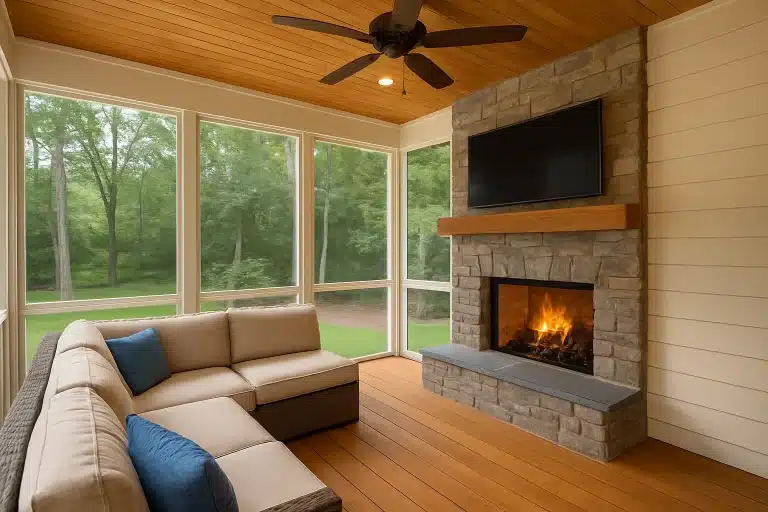
Yes, you can absolutely put a fireplace in a screened porch, and it’s one of the smartest upgrades homeowners can make. Whether you’re considering a gas fireplace, electric unit, or even a wood-burning option, screened porches can accommodate fireplaces with proper planning and installation.
We’ve seen countless beautiful screened porches in the Washington DC area transform from seasonal spaces into year-round retreats once homeowners add a fireplace. Instead of letting your porch sit empty when temperatures drop into the 30s each winter, a fireplace creates a cozy gathering space your family will use throughout the colder months.
Adding a screened porch already boosts your home value, but adding a fireplace takes it to the next level. From design ideas to practical installation considerations, this guide covers everything you need to know about this popular home improvement project.
Key Takeaways:
- Fireplaces work well in screened porches with proper ventilation and installation
- Gas fireplaces are the most popular choice (no chimney required)
- Electric fireplaces offer another option, just ensure they’re outdoor-rated
- Professional installation ensures safety and local building code compliance
What Types of Fireplaces Work Best for Screened Porches?
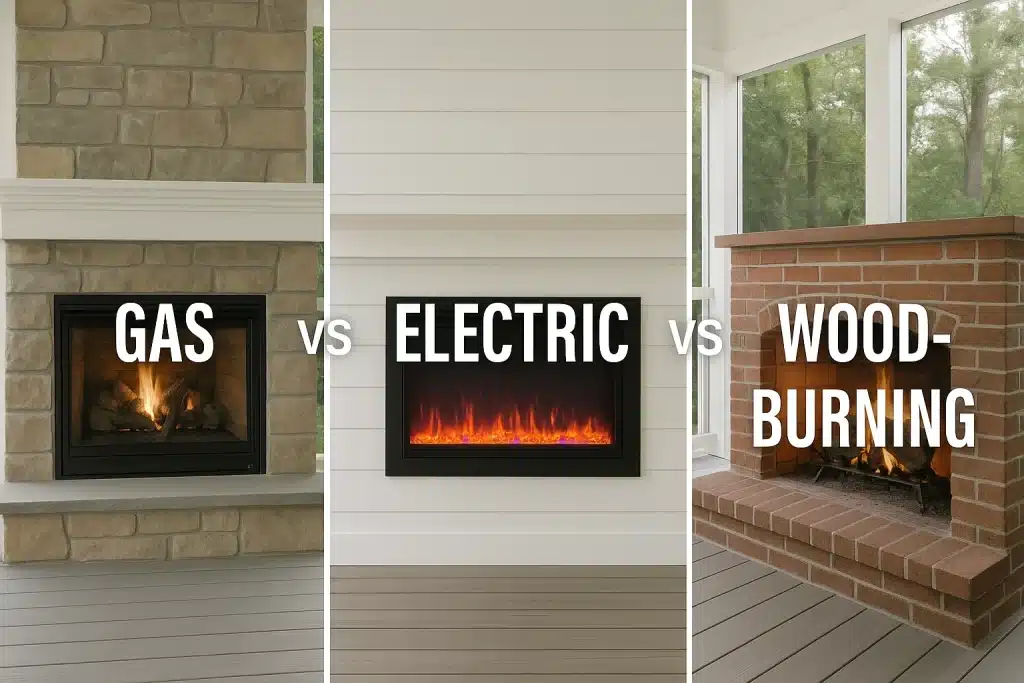
When choosing a fireplace for your screened porch, you have three main options: gas, electric, and wood-burning. Based on our experience installing all three types, they’re not equally suited for porch environments. The key factors are ventilation requirements, installation complexity, and long-term maintenance.
Gas Fireplaces: The Most Practical Choice
Gas fireplaces consistently rank as the top choice for screened porch installations. They offer significant advantages: no chimney requirements, no direct vent systems, and instant operation with remote control convenience.
These units operate on either natural gas or propane, with propane providing more installation flexibility since it doesn’t require existing gas lines. For safe operation, you’ll need at least two screened walls for proper ventilation, a requirement most porches easily meet. Gas units deliver immediate heat, work perfectly for extending your outdoor living season, and include modern safety features like automatic shut-off systems.
Electric Options: Convenient With Considerations
Electric fireplaces offer another viable option, but proper selection is crucial. Outdoor-rated units are non-negotiable since indoor models simply can’t withstand moisture, temperature fluctuations, and UV exposure that porch environments present.
Installation requires positioning at least three feet from combustible materials like furniture, fabric, or wooden structures. While upfront costs are typically lower, electric units will increase your utility expenses during extended use periods.
Wood-Burning: Traditional Appeal, Complex Installation
Wood-burning fireplaces provide unmatched ambiance and authentic appeal. However, they require the most extensive installation process: full chimney systems, substantial foundation support, and comprehensive permits. The masonry work and structural requirements make them the most complex option for most porch projects.
Safety Requirements for Screened Porch Fireplaces
Installing a fireplace in your screened porch isn’t just about choosing the right type. We’ve learned that safety requirements and building codes often surprise homeowners who assume they can simply add a fireplace anywhere they want.
Ventilation and Clearance Requirements
Here’s what many people don’t realize when they ask “can you put a fireplace in a screened porch”: ventilation is everything. For gas fireplaces, you need at least two opposing walls with screens to ensure adequate airflow. This cross-ventilation prevents dangerous gas buildup while keeping that cozy enclosed feeling.
We always tell clients that clearance requirements aren’t suggestions, they’re requirements. Gas fireplaces typically need 6 to 12 inches from walls and ceiling, while electric units require at least 3 feet from furniture and decorative elements. Safety first, aesthetics second, problems never.
Building Codes and Permits
Most homeowners are shocked to learn they need permits for outdoor fireplace installations. Why? Because the Washington DC region takes safety seriously. Montgomery County, Fairfax County, and DC’s Department of Consumer and Regulatory Affairs each have specific requirements that can make or break your project.
We handle the permit process because honestly, it’s complicated. Local codes must align with International Residential Code standards, covering everything from electrical connections to structural support requirements.
Professional Installation Benefits
Look, DIY fireplace installation isn’t worth the risk. We’ve seen too many homeowner attempts that created safety hazards or voided insurance coverage. The question isn’t whether you can do it yourself, it’s whether you should.
Your homeowner’s insurance company will thank you for professional installation. Many require it for coverage of fireplace-related incidents, making the investment essential for long-term protection.
How Much Does It Cost to Add a Fireplace to a Screened Porch?
Cost is usually the first question homeowners ask after “can you put a fireplace in a screened porch.” We get it because nobody wants sticker shock halfway through a project. The answer depends on fireplace type, installation complexity, and whether your porch needs structural modifications. Here’s what we typically see in the Washington DC area.
Fireplace Options for Your Screened Porch
Gas and propane units offer a good balance of convenience and ambiance — propane is particularly popular because it eliminates the need to run new gas lines from the house. Electric fireplaces are the simplest to install, requiring only a standard outlet, though operating costs during heavy winter use are worth factoring in. Wood-burning fireplaces deliver unmatched authenticity but require the most extensive installation: full chimney systems, substantial foundation support, and comprehensive permits.
Screened Porch Fireplace Ideas and Design Tips
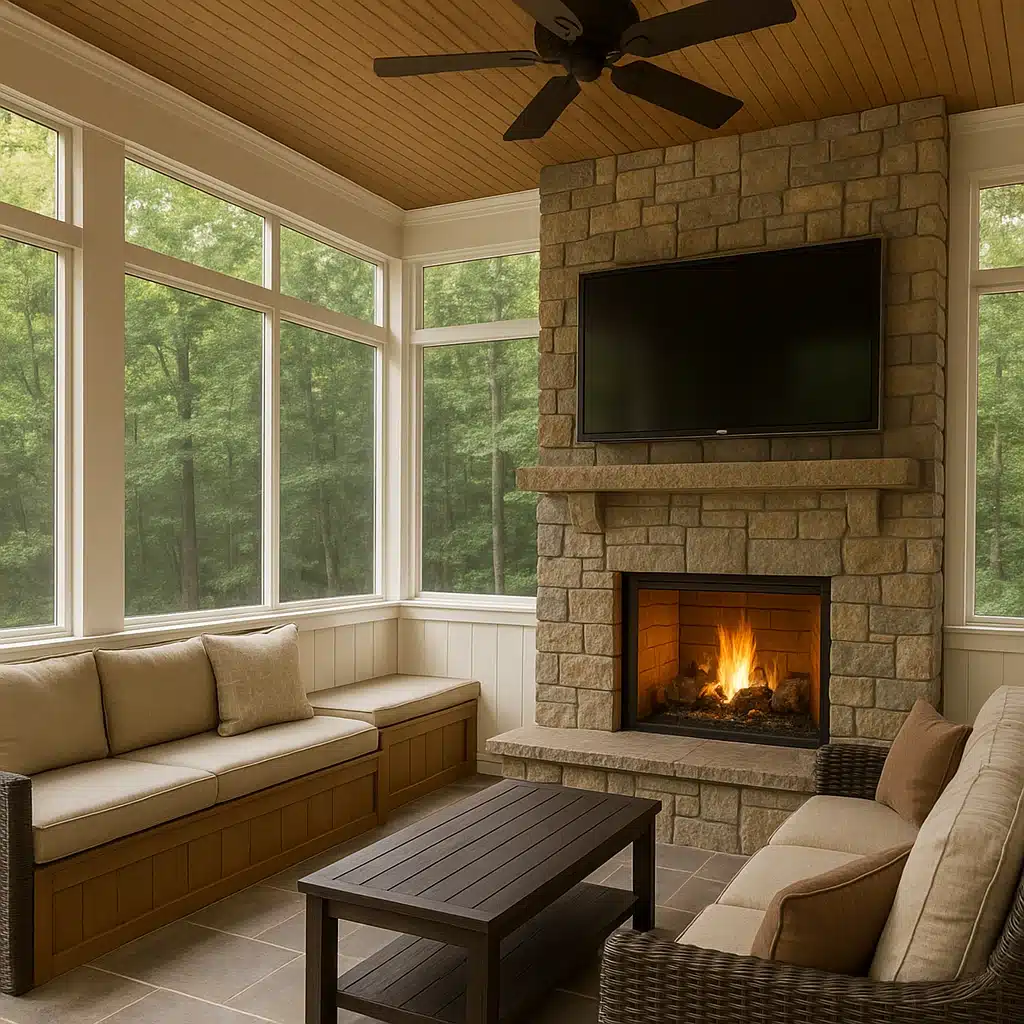
Choosing the right fireplace design can make or break your screened porch project. We’ve seen gorgeous porches ruined by poor fireplace placement and stunning transformations when everything clicks perfectly. The best screen porch fireplace ideas balance three things: functionality, visual appeal, and your family’s lifestyle.
Fireplace Placement and Layout Options
Here’s what we tell every client: corner placement is usually the smart choice for screen porch with fireplace designs. Why? It maximizes open floor space, improves heat circulation, and creates natural conversation areas around the fire. It’s especially perfect for smaller porches where every square foot counts.
Center wall placement looks more formal and traditional, but it’s honestly trickier to pull off. We recommend this mainly for larger porches where the fireplace becomes the star of the show.
Design Styles That Work Best
Stone wins, hands down. We’ve installed every type of surround imaginable, and natural stone consistently delivers the best results for outdoor fireplace screened in porch projects:
- Natural stone: Fieldstone or stacked stone for unbeatable durability
- Brick: Classic choice that never goes out of style
- Metal surrounds: Sleek and contemporary, but can look cold
- Tile work: Endless options, but maintenance can be challenging
The golden rule? Match your fireplace style to your home’s architecture. Fight this rule, and you’ll regret it later.
Combining Fireplaces with Other Features
Can you add a TV to your screened in porch with fireplace setup? Absolutely. Should you? That depends on how you plan to use the space. Wall-mounted TVs work great above fireplaces for game nights, while L-shaped built-in seating hugs corner installations beautifully. Hidden storage and layered lighting complete the package.
The key is planning these features together, not adding them as afterthoughts.
Installation Process and What to Expect
Now that you know the answer to “can you put a fireplace in a screened porch” is yes, here’s what the installation process looks like. We’ve guided hundreds of homeowners through this journey, and the key to success is proper planning, realistic expectations, and knowing what to prepare for before work begins.
Pre-Installation Planning and Assessment
Before any work starts, we evaluate three critical factors: space, structure, and systems. Your screened porch needs adequate size and height clearances for safe fireplace installation. We typically recommend at least 8-foot ceilings and sufficient floor space to meet code requirements.
The fireplace you choose should be appropriately sized to heat your entire porch without overwhelming the space. Too small, and you’ll be disappointed on cold evenings. Too large, and it dominates the room while creating safety concerns. Getting this balance right makes all the difference.
Consider how the fireplace fits into your overall screened porch design vision before finalizing placement and style decisions.
Timeline and Installation Steps
Here’s what homeowners can expect during a typical gas fireplace for screened porch installation:
- Week 1: Permit applications and final design approval
- Week 2: Material delivery and site preparation
- Week 3: Gas line installation and electrical work
- Week 4: Fireplace installation and final inspections
Electric installations move faster since they skip gas line work, while wood-burning projects extend significantly longer due to masonry and chimney requirements.
What You Need to Prepare
Smart homeowners prepare their space before we arrive. Clear the porch of furniture, decorations, and anything that might interfere with installation work. Protect nearby plants or outdoor features that could be affected by construction activity.
Most importantly, plan for temporary porch disruption. You won’t be able to use your covered porch with fireplace space during active installation, so consider alternative outdoor areas for entertaining during the project timeline.
Why Professional Installation Matters
We can’t stress this enough: fireplace installation isn’t a DIY project. We’ve cleaned up enough homeowner attempts gone wrong to know that gas lines, electrical connections, and structural modifications require licensed professionals who understand local codes and safety requirements.
The design should complement your existing outdoor space seamlessly, not stick out like a sore thumb. Professional installers ensure your outdoor fireplace for screened porch integrates beautifully with your home’s architecture while meeting all safety standards.
Why Choose Professional Installation
Adding a fireplace to your screened porch isn’t just about picking the right unit and hoping for the best. We’ve seen too many DIY attempts that created safety hazards, code violations, or simply didn’t work as expected. Professional installation ensures your investment delivers the results you’re dreaming of.
Experience That Matters
At Blue Collar Scholar Landscapes, we’ve installed fireplaces in hundreds of screened porches throughout the Washington DC area. Every project teaches us something new, whether it’s navigating Montgomery County’s specific permit requirements or finding creative solutions for challenging porch layouts.
Our expertise covers the unique challenges of screened porch installations:
- Managing ventilation requirements for safe operation
- Integrating gas lines without disrupting existing systems
- Ensuring fireplace design complements your outdoor space
- Navigating local building codes and permit processes
Experience matters when you’re dealing with gas lines, electrical work, and structural modifications.
Guaranteed Quality and Safety
We stand behind every installation with comprehensive warranties and insurance coverage. When you choose professional installation, you’re not just getting a fireplace, you’re getting peace of mind that everything was done correctly the first time.
Our installations meet all local building codes, pass inspections consistently, and integrate seamlessly with your home’s existing systems. We handle permits, coordinate inspections, and ensure your project meets insurance requirements for coverage.
Ready to Transform Your Screened Porch?
Don’t spend another winter watching your beautiful screened porch sit empty while you bundle up inside. A professionally installed fireplace transforms your porch into a year-round gathering space where your family will create lasting memories.
As experienced screened porch builders, we understand how fireplaces integrate with overall porch design and construction. Whether you’re working with existing porch space or considering broader screened porch design updates, we’ll guide you through every step of the process.
Contact us today for a free consultation and discover how a fireplace can extend your outdoor living season throughout the year.