

A few summers ago, we were called to a Rockville home after an unexpected storm disrupted a backyard cookout. The homeowner’s wooden deck had become slick and unsafe, forcing everyone to pack up early. Just next door, the neighbors stayed comfortable under an umbrella on a newly installed concrete patio that drained quickly and stayed dry.
We see this situation all the time across Maryland, Washington D.C., and Northern Virginia. When outdoor spaces fail during rain, homeowners lose usable space and peace of mind. In this guide, we’ll explain how we help homeowners solve these problems with durable, low-maintenance patio solutions, including what they are, why they matter, design options, and cost considerations.
What is a Concrete Patio?
A concrete patio is a durable, versatile outdoor living surface created by pouring a reinforced slab made from cement, sand, gravel, and water. It provides a stable, cost-effective foundation for outdoor dining, entertaining, and relaxation. These patios are valued for their strength, low maintenance needs, and long service life compared to wood or individual pavers. With modern finishing options like staining or stamping, this patio can also deliver visual appeal alongside long-term performance.
Why Should You Get a Concrete Patio
A well designed concrete patio design offers long-term value that goes beyond appearance. They are known for their durability, low maintenance needs, and ability to increase home value. According to homedigest, installing a concrete patio delivers a return on investment (ROI) of between 50% and 100%. With flexible design options and reliable performance in all weather conditions, this upgrade is both practical and a smart investment for homeowners.
Signs You Need a Patio Upgrade
If your outdoor space feels more frustrating than functional, it may be time for an upgrade. Homeowners often overlook these common warning signs:
- High-traffic areas require constant yard repairs
- Outdoor furniture sinks or tilts on uneven ground
- Grass near the home stays muddy after rainstorms
- Entertaining feels cramped due to limited flat surfaces
- An existing deck feels wobbly, unsafe, or shows signs of rot
When these issues add up, a concrete patio is often the most practical long-term solution.
Benefits of a Concrete Patio
A well-executed concrete patio design provides more than a clean surface. It delivers lasting performance, flexibility, and measurable value:
- Minimal upkeep with basic cleaning and periodic sealing
- Design versatility for modern, traditional, or rustic homes
- Customization options including stamping, coloring, and borders
- Strong weather resistance in wet springs, humid summers, and cold winters
- Increased home value through functional, low-maintenance outdoor living space
Different Types of Concrete Patios
These popular patio styles double as practical upgrades and proven concrete patio ideas for homeowners who want durability without sacrificing design. While many concrete patio finishes exist, including polished, salt-finished, spray-textured, and colored options, the four types below are the most commonly requested, ranging from budget-friendly basics to designer finishes that balance appearance, performance, and overall value.
Standard Broom-Finished Patio
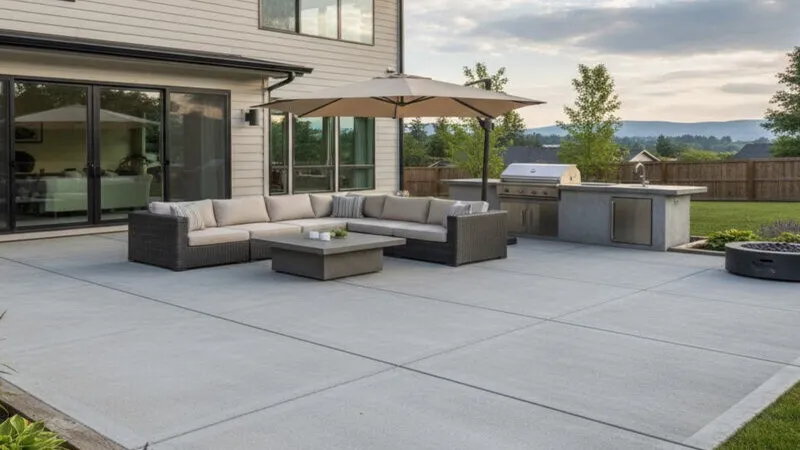
A standard broom-finished patio is created by dragging a broom across freshly poured concrete to add surface texture. This finish increases traction and reduces slipping during rain, snow, or freeze-thaw cycles. It matters because it delivers long-term safety and durability at the lowest possible cost.
Homeowners love this patio style for its simplicity and dependability. It is ideal for families with kids or pets, rental properties, walkways, and backyards where function matters more than decorative detail.
Benefits:
- Reliable traction
- Budget-friendly install
- Withstands heavy foot traffic
- Performs well in rain and snow
- Lowest maintenance concrete option for long-term everyday use
Stamped Concrete Patio
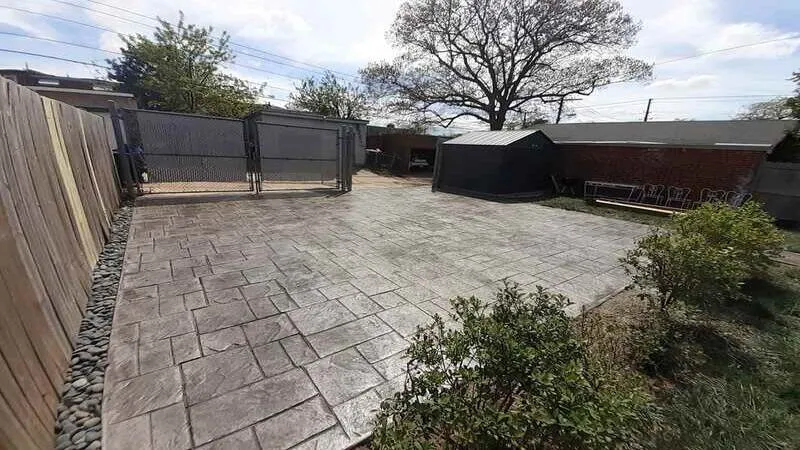
A stamped patio uses patterned mats pressed into the surface before curing to replicate stone, brick, slate, or wood. This matters because it delivers the visual impact of high-end materials while maintaining the strength of poured concrete. The result is a decorative yet durable outdoor surface.
Homeowners choose this patio style for its versatility and upscale appearance. It is ideal for entertaining spaces, front-facing patios, and homes where curb appeal plays a major role in property value.
Benefits:
- Custom visual appeal
- Continuous slab strength
- Mimics premium materials
- Elevates outdoor entertaining spaces
- High-end curb appeal without the cost or shifting issues of pavers
Stained Concrete Patio
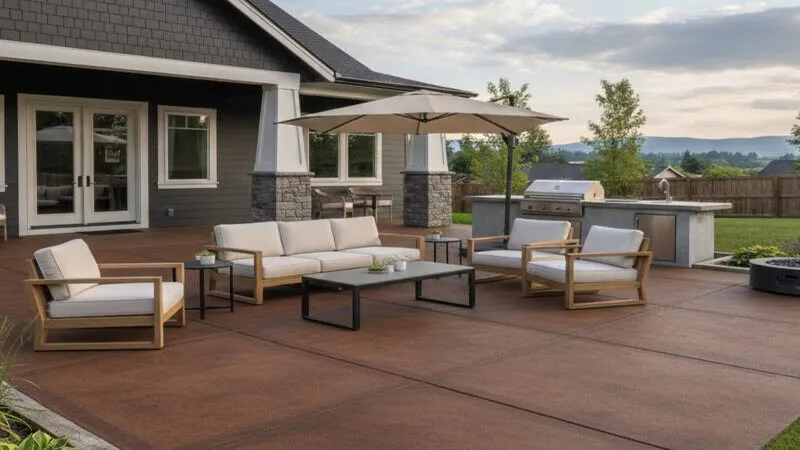
A stained patio uses acid-based or water-based stains that permanently penetrate the concrete surface. This matters because the color becomes part of the slab instead of sitting on top like paint. The result is a refined, long-lasting finish with natural variation.
Homeowners love this patio style for its modern look and creative flexibility. It is ideal for contemporary homes, minimalist landscapes, and outdoor spaces that visually connect to interior flooring.
Benefits:
- No peeling or flaking
- Permanent color finish
- Endless color customization
- Smooth, modern appearance
- Integrates great with indoor flooring and contemporary landscapes
Exposed Aggregate Patio
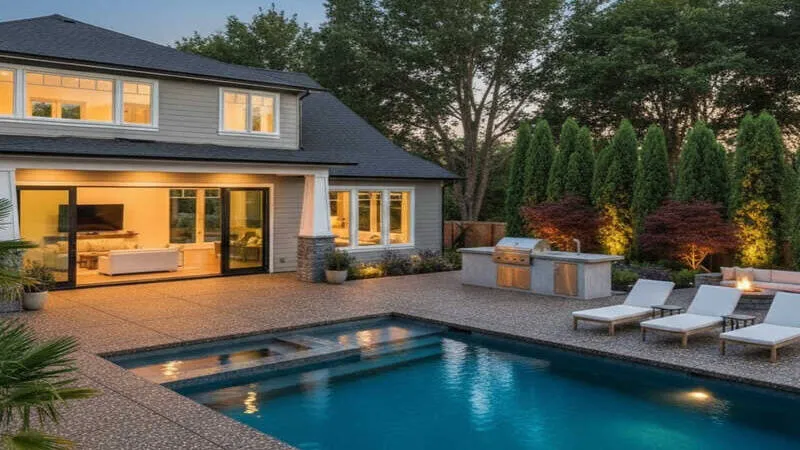
An exposed aggregate patio reveals decorative stones by washing away surface cement after pouring. This matters because it creates a naturally textured surface with excellent traction and visual depth. The finish balances safety, durability, and organic style.
Homeowners favor this patio option for its grip and natural appearance. It is ideal for pool decks, sloped yards, walkways, and homes with landscape-forward designs.
Benefits:
- Natural stone texture
- Superior slip resistance
- Excellent drainage performance
- Stays cooler than smooth concrete
- Ideal for pool decks and high-traffic areas where safety matters most
Choosing the Right Concrete Patio for Your Home
Choosing between the four types of concrete patios ultimately comes down to what you want from the space and how much you plan to invest. Some homeowners prioritize a lower upfront cost and simple function, while others want a design that makes a visual statement or improves traction and safety. Each option offers a different balance of appearance, durability, and maintenance, so there’s no single “right” choice for every yard. By thinking through how you’ll use the patio and what matters most to you, you can select a patio design that fits your goals and budget.
Concrete Patio Cost
Concrete patio cost depends on several factors, including size, finish type, site conditions, and preparation work. Basic broom-finished typically start lower, while stamped, stained, or exposed aggregate finishes increase the overall investment. Sloped yards, drainage needs, and permit requirements can also affect pricing. Overall, a concrete patio remains one of the most cost-effective and durable outdoor upgrades homeowners can make.
Concrete Patio Installation Process
Installing a concrete patio involves careful planning and multiple steps to ensure long-term performance. The process begins with permits and site preparation, followed by excavation and a properly compacted gravel base for drainage. Forms and reinforcement are installed before the concrete is poured and finished in a single session. Proper curing is essential, as these patios require time to gain strength and resist cracking.
Common Concrete Patio Mistakes to Avoid
Concrete patios are low-stress once installed correctly, but mistakes during installation can lead to premature cracking, drainage issues, or surface damage. Being aware of these common errors helps protect your investment and ensures your patio lasts for decades.
- Skipping reinforcement like rebar or wire mesh
- Forgetting proper slope for drainage away from the home
- Walking on or using the concrete patio before it has fully cured
- Using the wrong sealer for stamped or stained concrete patio finishes
- Pouring the concrete patio less than 4 inches, which increases the risk of cracking
Concrete Patio Maintenance Tips
Concrete patios are low-maintenance by design, but routine care helps preserve their appearance and extend their lifespan. Simple steps like sweeping, rinsing with a hose, avoiding harsh chemicals, and resealing every 2–3 years protect the surface from staining, moisture, and freeze-thaw damage. When buildup or stains appear, following a proper concrete cleaning process makes all the difference in maintaining the patio’s strength and long-term visual appeal.
When to Hire a Concrete Patio Contractor
Many DIY enthusiasts turn to YouTube tutorials that make concrete patio installation look approachable, breaking the process into simple steps that feel manageable at first glance. While small projects may be possible, concrete work leaves no room for error, and mistakes with grading, reinforcement, or finishing are permanent once the slab is poured.
In the Maryland, Washington D.C., and Northern Virginia area, factors like clay-heavy soils, heavy rain, and local permit requirements often demand professional planning and execution to avoid costly failures. For homeowners who want a concrete patio done right the first time, working with an experienced concrete patio contractor like Blue Collar Scholars ensures expert guidance and professional installation tailored to local conditions.
Ready to Cement Your Outdoor Space?
At Blue Collar Scholars, we bring over 15 years of hands-on experience serving homeowners across Maryland, Washington D.C., and Northern Virginia. Our team designs and installs concrete patios that are solid from the ground up and built for local soils, weather, and code requirements. From planning to final finish, we focus on long-lasting results that fit how you actually use your outdoor space.
Schedule your free concrete patio consultation today and let’s cement a backyard you’ll enjoy for years to come.
Frequently Asked Questions About Concrete Patios
Is it cheaper to do a concrete patio?
Yes, in most cases a concrete patio is cheaper than alternatives like wood decks, pavers, or natural stone because it requires fewer materials and a simpler installation process. It also costs less over time thanks to minimal maintenance and a longer lifespan, making it one of the most budget-friendly outdoor upgrades.
How long does a concrete patio last?
When properly installed, these patios can last 30 years or more, especially with basic maintenance like sealing and cleaning. In regions with clay soils and freeze-thaw cycles, professional installation makes a big difference in longevity.
Will a concrete patio crack?
All concrete can crack over time, but proper reinforcement, correct thickness, and control joints greatly reduce the risk. Most cracks are cosmetic, and serious structural cracking is uncommon when the patio is installed correctly.
How long does it take to build a concrete patio?
Most concrete patios take 2 to 5 days to install, depending on size, site conditions, and finish type. While the patio can usually handle light foot traffic after about a week, full curing takes around 28 days for maximum strength.
Is a concrete patio better than pavers?
When homeowners compare a concrete vs paver patio, concrete is often the better choice due to its lower upfront cost, minimal maintenance, and long-term durability in clay-heavy soils. Unlike pavers, concrete creates a continuous, stable surface that resists shifting, weed growth, and settling over time, especially in areas with heavy rain and freeze-thaw cycles.
Is it better to have a deck or a concrete patio?
Decks and concrete patios offer similar returns, with an average ROI of around 70%, but the long-term costs tell a different story. Because decks often cost nearly twice as much, require frequent maintenance, and last only 10 to 15 years, a concrete patio is usually the smarter investment thanks to its lower upfront cost, minimal upkeep, and longer lifespan.