

In 2015, Bloomberg.com found that houses with patios were hot sellers. Roughly 96,000 houses with patios were sold in 2014, up from 59,000 in 2010. The trend has only accelerated since then, with the National Association of REALTORS reporting that a well-designed concrete patio can provide up to 80% return on investment.
Adding a patio to your Maryland home is a quick way to add to your house’s value while creating functional outdoor living space that your family can enjoy for years to come. When choosing materials, concrete stands out for its durability, versatility, and cost-effectiveness, particularly in our region’s variable climate.
In this guide, we’ll explore nine stunning concrete patio ideas that go far beyond basic gray slabs. From fire features to creative color techniques, these designs will help you reimagine what’s possible with concrete patios.
Why Choose Concrete for Your Patio?
Before diving into specific design ideas, let’s consider why concrete makes an excellent choice for Maryland homeowners:
- Durability: Concrete withstands Maryland’s freeze-thaw cycles, heavy rains, and summer heat without warping or rotting
- Versatility: Can be stamped, stained, colored, or textured to mimic more expensive materials like stone or brick
- Cost-effective: Typically 30% less expensive than natural stone or pavers for comparable square footage
- Low maintenance: Requires minimal upkeep compared to wood decks or paver patios
- Longevity: When properly installed and maintained, concrete patios can last 30+ years
- Design flexibility: Can be formed into virtually any shape to fit your yard’s unique contours
9 Creative Concrete Patio Ideas for Your Home
1. Concrete Patio with Fire Pit: The Perfect Gathering Spot
Adding a fire pit is a classic way to liven up your concrete patio. These features create an instant focal point while providing both light and warmth that extend your outdoor season in Maryland’s climate.
Design considerations:
- Circular fire pits create a natural gathering space with seating around the perimeter
- Built-in concrete fire pits can be designed to match your patio’s finish
- Gas-powered options offer convenience while wood-burning designs provide ambiance
- Consider local regulations regarding fire features before installation
- Safety tip: Place fire pits at least 10 feet from your home and any combustible structures
Fire pits are especially practical in Maryland where spring and fall evenings have that cooler chill. They transform your patio into a three-season space where family and friends can gather year-round.
2. Under-Deck Concrete Patio: Maximize Your Space
Does your second floor have a deck outside? If so, consider building a concrete patio underneath it to maximize your outdoor living area.
Design considerations:
- Upstairs decks provide a textured ceiling that shelters your patio from the elements
- Install proper drainage systems to prevent water damage
- Add outdoor lighting to brighten the naturally shaded area
- Weather-resistant furniture works best in these spaces
- Consider ceiling fans to improve air circulation in summer months
This design effectively doubles your outdoor living space by utilizing previously unused area beneath your existing deck. It creates a natural zone for intimate gatherings or quiet relaxation.
3. Colored Concrete Patios: Beyond Basic Gray
One of the most impactful ways to enhance a concrete patio is through color. Modern coloring techniques allow for virtually unlimited options, from subtle earth tones to vibrant statement hues.
Design considerations:
- Integral color (mixed into concrete before pouring) provides the most consistent, fade-resistant results
- Concrete stains penetrate the surface for translucent, variegated effects
- Concrete dyes offer the boldest, most vibrant color options
- Consider your home’s exterior colors when choosing complementary or contrasting patio colors
- Lighter colors reflect heat, making them more comfortable in summer
Try painting your walls one shade while using a contrasting shade for the floor. This visual interest makes your outdoor space feel more intentionally designed and connected to your home’s color palette.
4. Stylish Furniture for Concrete Patios
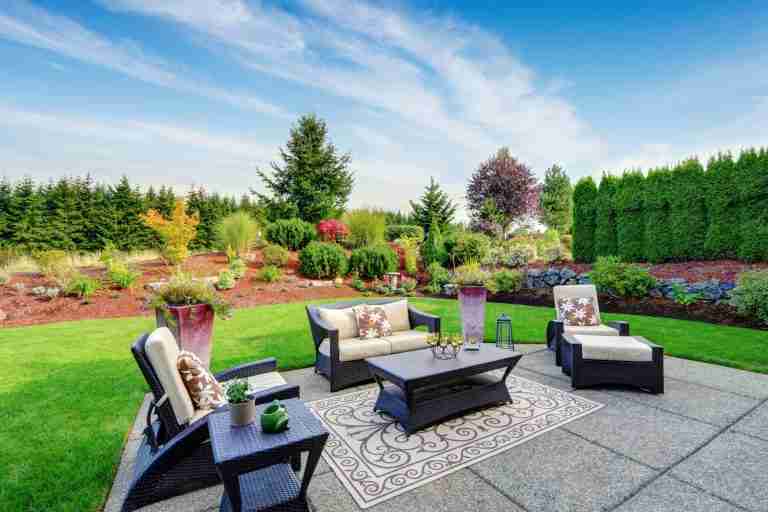
Concrete generally comes in various shades of gray, but you can brighten up your space with carefully selected furniture and accessories.
Design considerations:
- Bright, warm colors like vivid reds and oranges light up the area and make it more cheerful
- Blues and greens create a calming, refreshing atmosphere
- Weather-resistant fabrics designed for outdoor use will maintain their vibrancy longer
- Consider furniture scale—oversized pieces can make a small patio feel cramped
- Mix materials like metal, wood, and wicker for textural interest
Your furniture selection can dramatically change the feel of your concrete patio without requiring any permanent modifications to the surface itself.
5. Covered Patio Ceiling Ideas
Adding a cover to your concrete patio extends its usability and provides opportunities for additional design elements overhead.
Design considerations:
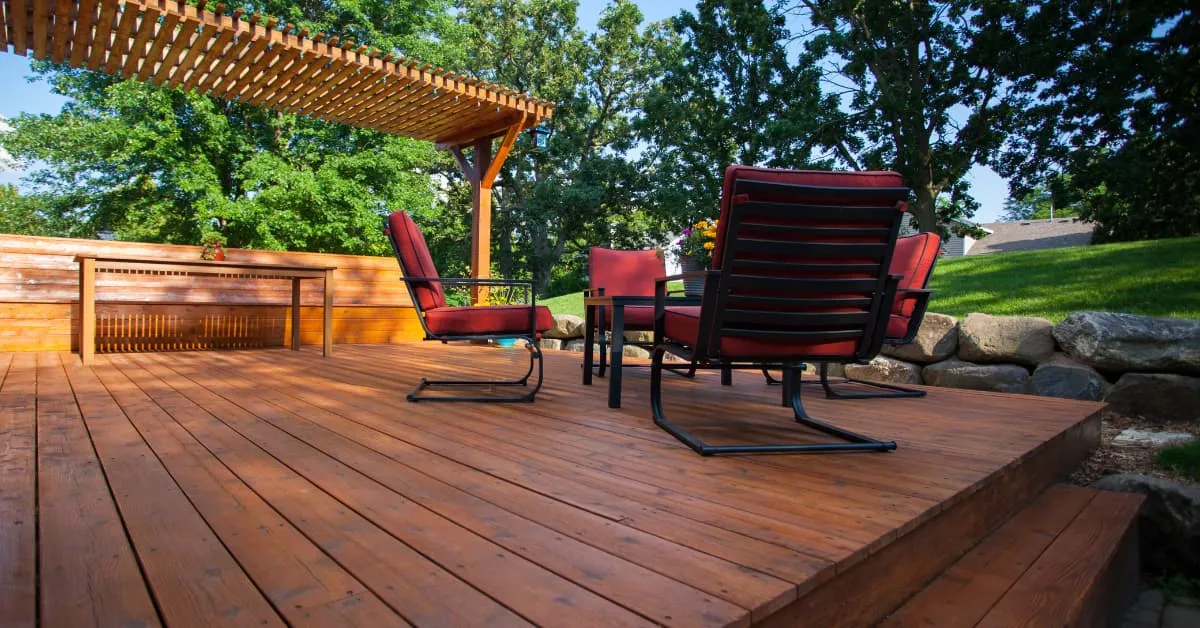
- Wooden pergolas add architectural interest and filtered shade
- Solid covers provide full protection from rain and UV exposure
- Consider retractable awnings for flexibility in different weather conditions
- Add string lights, fans, or even outdoor speakers to your overhead structure
- Use warm, natural tones to balance concrete’s cooler aesthetic
A well-designed ceiling treatment helps define your outdoor room while adding vertical interest to the space. It can also significantly extend the seasons during which you can comfortably use your patio.
6. Incorporating Wicker and Wood: Natural Elements
Wicker and wood furnishings add a natural touch to any concrete patio. Their warmer aesthetics make the space feel homely, while the concrete provides structural security.
Design considerations:
- Choose weather-resistant woods like teak, cedar, or treated pine
- Modern “all-weather wicker” made from resin offers the look of natural wicker with superior durability
- Wooden pergolas or privacy screens create vertical interest
- Consider incorporating wooden planters to introduce greenery
- A wooden dining table creates a natural gathering spot for meals
The contrast between natural materials and concrete creates visual interest and softens the overall appearance of your patio. Just remember to keep wood furniture away from fire features!
7. Warm-Toned Concrete Designs
Another approach to making your concrete patio feel more inviting is to incorporate warm colors through staining, integral coloring, or stamping techniques.
Design considerations:
- Beiges, tans, and terracotta tones create a sun-drenched Mediterranean feel
- Consider exposed aggregate finishes that incorporate warm-colored stones
- Stamped concrete patterns can mimic warm materials like brick or wood
- These colors work especially well with natural sunlight
- Pair with complementary furniture in similar warm tones
Warm-toned concrete transforms the typically cool, industrial feel of standard concrete into something that feels more natural and inviting for your outdoor living space.
8. Concrete Pathway Integration
One way to draw the eye to your patio is to install a concrete walkway that connects it to other areas of your landscape.
Design considerations:
- Matching the pathway finish to your patio creates a cohesive look
- Consider stamped concrete for added texture and visual interest
- Incorporate lighting along the path for both safety and ambiance
- Curved pathways create a more natural, flowing feel
- Straight paths provide a more formal, structured appearance
A thoughtfully designed pathway makes your patio feel like a natural destination within your landscape, drawing the eye and inviting exploration.
9. Incorporating Plants and Greenery
Plants can do wonders for your hardscaping. They blur the line between natural and man-made elements while adding color, texture, and life to your outdoor space.
Design considerations:
- Built-in planters along the patio edge create a seamless transition to your yard
- Container gardens allow for flexibility and seasonal changes
- Consider vertical gardens or trellises for smaller patios
- Select plants suited to Maryland’s climate for easier maintenance
- Include a mix of perennials and annuals for year-round interest
Beyond aesthetics, plant exposure and other natural features can benefit your mental health, making your patio a true wellness retreat.
Popular Concrete Patio Trends for 2025
As we look ahead to 2025, several exciting trends are emerging in concrete patio design:
Stamped Concrete Patterns
Stamped concrete continues to evolve with more realistic textures and innovative patterns. Current trends include:
- Large-format stone impressions for fewer joint lines
- Geometric and custom patterns for modern homes
- Wood plank stamps that realistically mimic expensive hardwoods
- Seamless texture skins for subtle texture without defined patterns
Indoor-Outdoor Integration
More homeowners are creating seamless transitions between indoor and outdoor spaces:
- Using the same or similar flooring materials inside and out
- Installing large sliding or folding doors that open to the patio
- Matching color schemes between indoor and outdoor spaces
- Continuing design elements from interior to exterior
Outdoor Kitchens and Living Rooms
Concrete patios are increasingly becoming true extensions of the home:
- Built-in concrete counters for outdoor kitchens
- Integrated seating and dining areas
- Weather-resistant entertainment centers
- Complete outdoor rooms with cooking, dining, and lounging zones
Sustainable Concrete Options
Eco-friendly concrete alternatives are gaining popularity:
- Permeable concrete that allows water to return to the soil
- Concrete mixes incorporating recycled materials
- Solar-reflective concrete finishes that reduce heat absorption
- Local sourcing of materials to reduce transportation emissions
How to Choose the Right Concrete Patio Design for Your Space
Selecting the best concrete patio design involves considering several factors specific to your property and lifestyle:
Consider Your Home’s Architecture
Your patio should complement your home’s existing style:
- Traditional homes pair well with classic stamped concrete patterns like brick or stone
- Contemporary homes look best with sleek, minimalist concrete designs
- Craftsman-style homes benefit from warm-toned concrete with natural elements
Evaluate Your Landscape
Work with your property’s natural features:
- Sloped yards may require retaining walls or multi-level patios
- Consider views you want to highlight or eyesores you want to screen
- Note sun patterns throughout the day to plan for shade needs
- Account for existing trees and their root systems
Assess Your Lifestyle Needs
Design for how you’ll actually use the space:
- Frequent entertainers need more space and seating options
- Families with children benefit from open areas for play
- Outdoor chefs should prioritize space for grills and prep areas
- Consider traffic patterns between your home, patio, and yard
Concrete Patio Installation: DIY vs. Professional
While some homeowners consider DIY concrete patios, there are important factors to consider before deciding:
DIY Considerations
- Basic concrete patios can be DIY projects for experienced homeowners
- Requires proper substrate preparation and formwork
- Needs multiple people for the concrete pour
- Limited design options compared to professional installation
- Mistakes can be costly and difficult to correct
Professional Installation Benefits
- Access to specialized equipment for proper site preparation
- Experience with complex designs, stamps, and coloring techniques
- Knowledge of proper curing and sealing procedures
- Understanding of local building codes and permit requirements
- Typically includes warranties on both materials and workmanship
For most decorative concrete patios, professional installation provides the best results and long-term value.
Maintaining Your Concrete Patio
With proper care, your concrete patio can remain beautiful for decades:
Seasonal Maintenance Tips
- Spring: Thoroughly clean the surface and inspect for winter damage
- Summer: Rinse regularly to prevent staining from outdoor activities
- Fall: Remove leaves and debris that could cause staining
- Winter: Avoid using deicing chemicals; use sand for traction instead
Cleaning Recommendations
- Sweep regularly to remove debris
- Use a garden hose or pressure washer on low setting for deeper cleaning
- For stains, use concrete-specific cleaners that won’t damage the surface
- Avoid harsh chemicals that can damage sealer or concrete coloring
Sealing Information
- Most concrete patios should be resealed every 2-3 years
- Look for signs of water absorption as an indicator that resealing is needed
- Choose sealers appropriate for your specific concrete finish
- Consider professional resealing for the best results
Find a Contractor to Make Your Concrete Patio Ideas a Reality
These 9 concrete patio ideas can enhance your landscape tremendously. If you don’t want to go at it alone, give us a call. Our team of pros will help you design and create the perfect outdoor patio.
We have years of experience building concrete patios that our customers love throughout Maryland, DC, and Northern Virginia. Contact us today to plan out your hardscaping project or request a free quote to get started!
Frequently Asked Questions About Concrete Patios
How long does a concrete patio last? With proper installation and maintenance, a concrete patio can last 30+ years in Maryland’s climate. Regular sealing (every 2-3 years) helps extend its lifespan.
Can existing concrete patios be updated or refreshed? Yes! Existing concrete can be refreshed with staining, concrete overlays, or decorative coatings without replacing the entire patio.
What’s the difference between stamped and stained concrete? Stamped concrete is textured to resemble other materials like stone or brick, while stained concrete maintains its original texture but changes in color. Both can be used together for unique effects.
Is concrete better than pavers for patios? Concrete offers a seamless surface with fewer places for weeds to grow and generally costs less than pavers. However, pavers allow for easier repairs if damage occurs. Both are excellent choices depending on your priorities and budget.