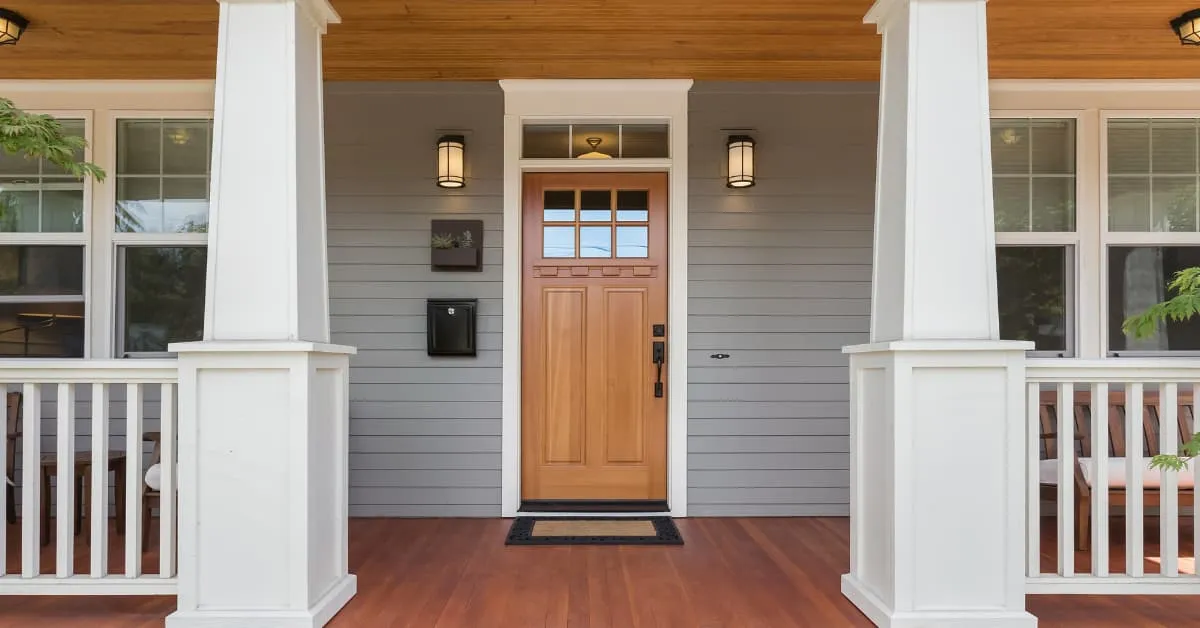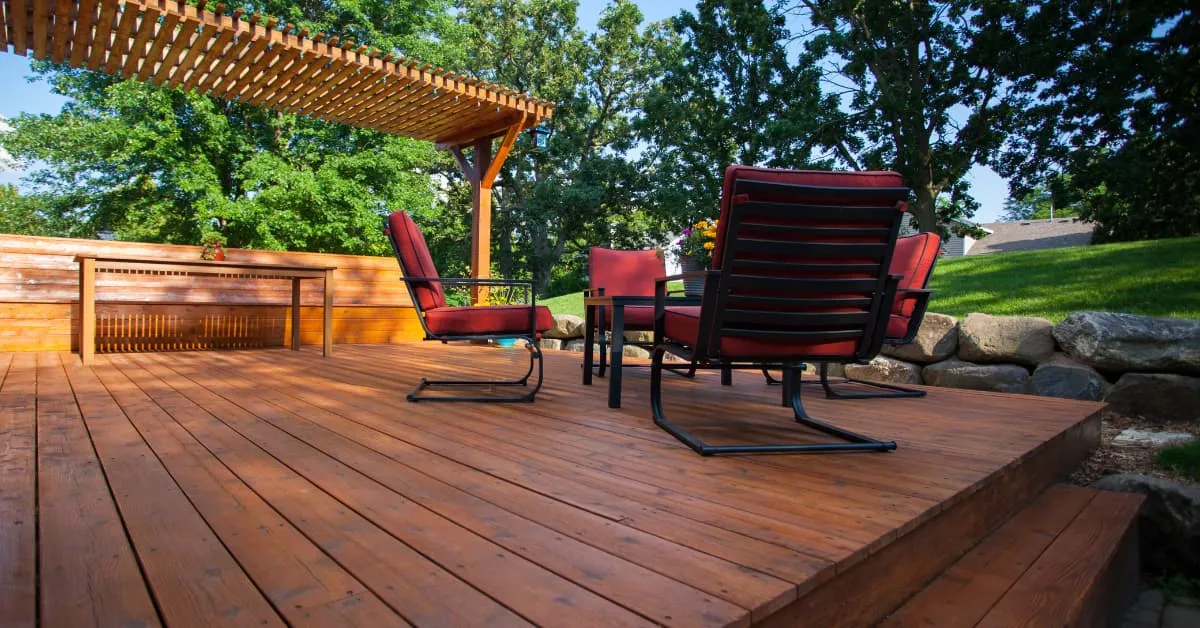



Your living room stays pristine and untouched. The den is cluttered because it’s the only space big enough for everyone. And the basement doesn’t feel inviting. What your home really needs is a true family room — a space designed for how people actually live.
A family room is a specific type of addition that creates an everyday gathering space. Not a showroom for guests, but a comfortable room where your family naturally congregates. When the family room is design well, the new room becomes the heart of the home. If the design misses the mark, the room becomes an expensive space no one uses.
What separates a great family room from an unused one comes down to thoughtful layout, window placement, natural light, and how well the space connects to the rooms you already use daily. These aren’t aesthetic choices — they’re functional decisions that determine long-term value.
Why Most Homes Need a Functional Family Room (But Don’t Have One)
Builders often focus on formal living and dining rooms because they photograph well and help sell houses. But families rarely spend time in those rooms. Older homes in Bethesda, Chevy Chase, and similar neighborhoods were built without a casual gathering space, leaving residents with formal rooms that don’t fit modern lifestyles.
Even newer homes fall short. They maximize bedroom count or formal spaces, squeezing the family area into whatever square footage remains. As a result, many households have 2,500–4,000 square feet on paper but lack the 300–400 square feet of usable space they truly need.
A well-planned family room addition solves this by creating a dedicated space for relaxing, watching TV, playing games, and spending time together — without the pressure of keeping everything perfect.
What Makes a Family Room Different From a Living Room
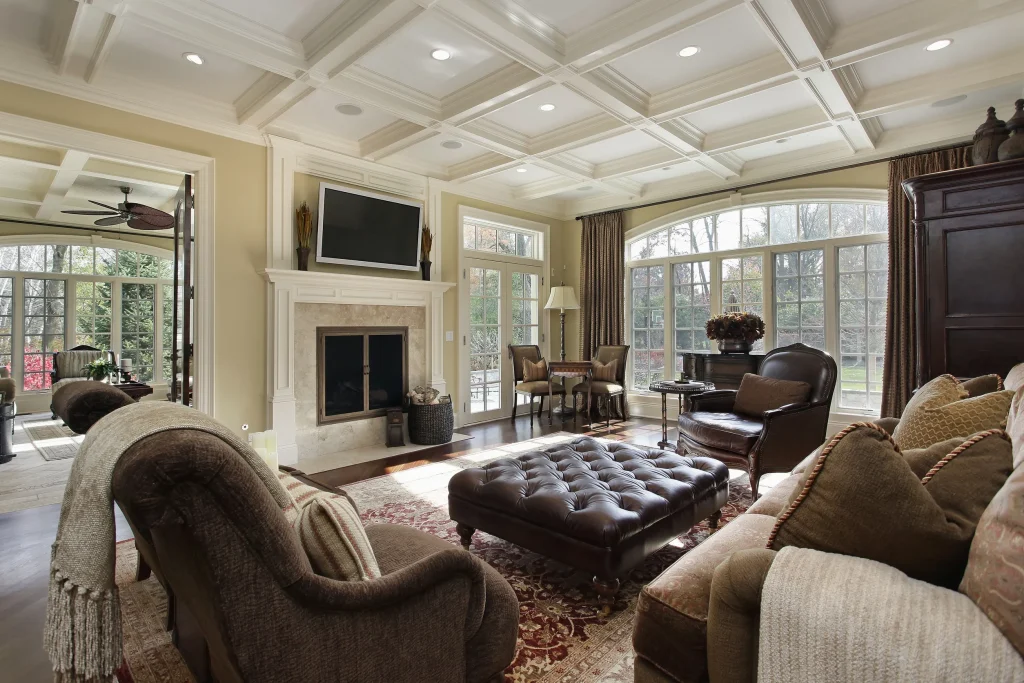
Living rooms are designed for appearance. A family room is designed for life. Blankets stay out, kids’ toys end up on the floor, and the sofa holds up to movie nights, dogs, and everyday use. This comfort and flexibility are what make a family room the natural center of the home.
The location reinforces this difference. Living rooms often sit near formal entries, while a family room connects to the kitchen or other informal spaces. Family room design prioritizes durable fabrics, practical layouts, and integrated storage instead of formal arrangements.
Technology also plays a bigger role. While a living room might hide its TV, a family room is intentionally built around good viewing angles and media storage. And because it’s used daily, a family room benefits from plenty of built-in storage for blankets, games, electronics, and everyday clutter.
Reston Colonial Gets 380-Square-Foot Family Room That Connects Kitchen to Backyard
We added a family room to a 1980s colonial in Reston that had a formal living room near the front entry and a kitchen that felt isolated from the rest of the house. The homeowners wanted a casual space where the family could watch TV, play games, and stay connected to the kitchen without walking through the dining room. We built a 16×24-foot single-story addition off the back with a full basement foundation, 2×6 exterior walls for better insulation, and a gable roof that matched the existing pitch and overhang.
The new room includes a 12-foot opening to the kitchen, built-in cabinets with drawers for blankets and board games, and four windows positioned to avoid afternoon glare on the TV screen.
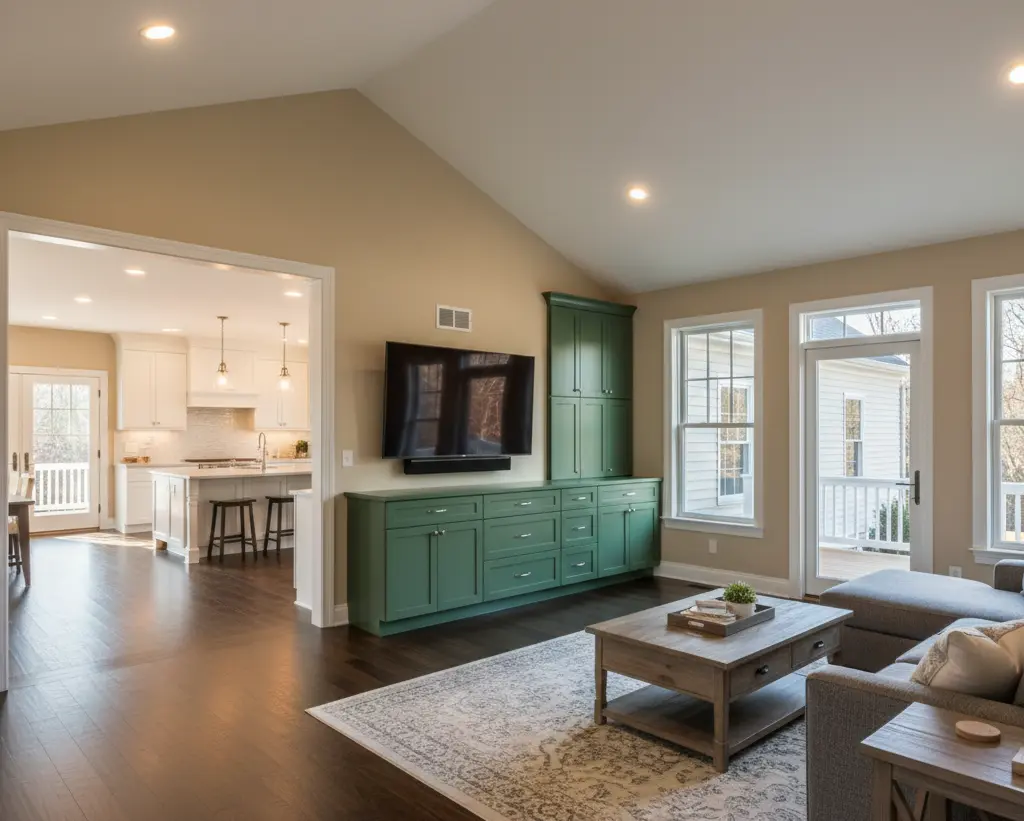
We matched the existing vinyl siding and trim profile on all sides so the addition reads as original construction. The family room connects directly to a new deck through French doors, creating indoor-outdoor flow the home previously lacked. You end up with a gathering space that gets used every day, keeps the kitchen visible from the seating area, and adds function the formal rooms never provided.
Key Elements of Effective Family Room Design
A successful family room design blends comfort, function, and flow. While size matters, how the room works day-to-day matters far more. A well-designed family room addition supports conversation, relaxation, TV viewing, and family gatherings without feeling crowded or isolated.
Below are the core design elements that determine whether your new space becomes your home’s favorite room:
Optimal Size & Layout for a Family Room Addition
Square footage affects how flexible and comfortable your future family room feels. A functional family room starts at around 250 square feet, but most households benefit from 300–400 square feet. This allows for:
- A central seating area
- Clear walking paths
- Multiple activity zones (reading, play, TV viewing)
Rooms over 500 square feet can lose the cozy feel that makes family spaces inviting, especially if ceilings are high.
Ceiling Height & Proportion in Family Room Design
The ideal ceiling height for a family room addition is typically 9–10 feet. This height adds openness without making the room feel cavernous or cold. Vaulted ceilings look dramatic but often work better in great rooms than in dedicated family rooms, which benefit from a sense of intimacy.
Natural Light & Window Placement in a Family Room
Windows make a family room feel bright and livable, but placement matters more than window size. Well-planned family room design avoids the common problems of:
- Excessive glare on TV screens
- Overheated rooms from direct afternoon sun
- Privacy concerns that require constant blinds or curtains
East or west-facing windows usually provide the best balance of natural light and comfort.
Connection to the Kitchen & Everyday Traffic Flow
One of the strongest predictors of how often a family room addition gets used is how easily it connects to the kitchen. Families naturally move between cooking, relaxing, and grabbing snacks. When the family room is visually or physically disconnected, it often sits unused.
Connection doesn’t have to mean full open-concept. Even a widened doorway, cased opening, or pass-through creates the feeling of togetherness.
Built-In Storage as a Must-Have in Family Room Additions
Without planned storage, a family room quickly becomes cluttered. That’s why family room design should include 20–30 linear feet of built-in storage whenever possible. Popular options include:
- Cabinets flanking the TV wall
- Window seats with hidden storage
- Floor-to-ceiling shelving
- Drawers for games, blankets, and kids’ items
Built-ins not only keep the family room organized — they free up valuable floor space.
Flooring Choices for Everyday Durability
Family rooms take more wear than formal spaces. The best flooring options include:
- Hardwood or engineered hardwood
- Luxury vinyl plank (LVP)
- Hardwood with soft area rugs
Delicate materials (marble, limestone, high-polish flooring) are better suited for formal areas. A family room addition should favor comfort and durability that holds up to daily life.
Choosing the Best Family Room Configuration For Your Home
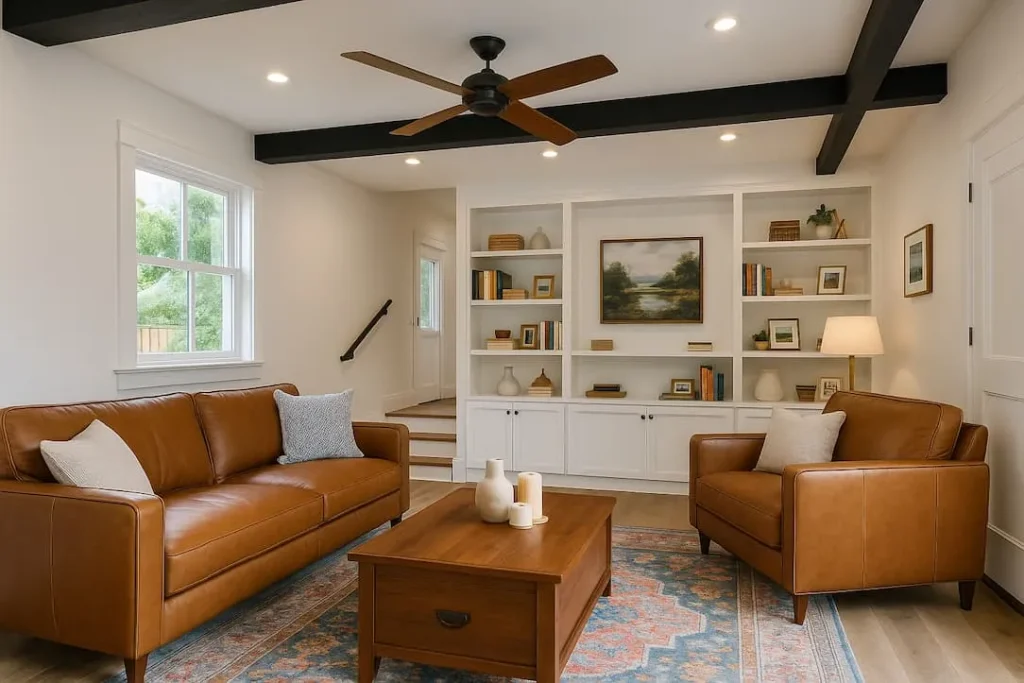
Once you know you need more livable space, the next step is deciding which family room addition approach fits your home, your budget, and your property. There are a lot of ideas out there, and not every type works for every layout. But understanding the main options helps you choose the right path with confidence.
Below are the most common types of family room additions, how they work, and when they make the most sense.
Single-Story Rear Family Room Addition
This is the most popular and practical option for many homes. A single-story rear addition extends the back of your house and typically connects directly to the kitchen or an existing family space — the ideal placement for frequent use.
Why homeowners choose this design:
- Creates strong flow between kitchen and family room
- Avoids disturbing second-floor rooms
- Works well on most lot types
- Provides the most natural layout for modern living
Two-Story Family Room Addition with Bonus Space Above
If you need more than just a family room, a two-story addition maximizes value by adding rooms above the new space — often a bedroom, office, or flexible bonus room.
When it makes sense:
- You need additional rooms as well as a family room
- Your lot is small and can’t accommodate spreading out
- You want the best long-term return on investment
While two-story additions require more structural support, they often provide twice the space for only 60–70% more cost than a single-story footprint.
Bump-Out Additions to Expand an Existing Room
A bump-out extends an existing living room or den by 4–8 feet. It’s not a full family room addition, but it can transform a nearly functional room into a truly comfortable one.
Best for:
- Homes needing small increases in square footage
- Tight budgets where a full addition isn’t feasible
- Spaces that are just shy of fitting a sectional or a proper seating layout
Bump-outs usually cost less because they use the home’s existing walls and roofline, but they add limited square footage.
Garage Conversion Family Room
A garage conversion can create a sizeable family room without building an entirely new structure. However, it requires upgrades like insulation, HVAC, windows, and sometimes a raised ceiling.
Good choice when:
- You have unused or extra garage space
- Your budget is moderate
- Your driveway or outdoor parking makes losing a garage realistic
Costs vary widely depending on structural changes, but conversions are often still more affordable than a new addition.
Sunroom-Style Family Room Additions
Sunrooms — especially four-season versions — offer abundant natural light and a strong connection to the outdoors. They can make beautiful family rooms, but they come with limitations.
Ideal when:
- You want maximum natural light and a relaxed retreat
- TV viewing isn’t the room’s main purpose
- You’re comfortable with less wall space for storage
Three-season sunrooms are less expensive but not comfortable year-round. Four-season sunrooms cost more but behave more like traditional additions.
Family Room Design Mistakes That Reduce Comfort and Usability
A beautifully built family room addition can still fall short if the design overlooks the details that affect daily comfort. Many homeowners focus on square footage or finishes and miss the functional elements that determine whether the room actually gets used. Thoughtful Family Room Design prevents frustration, improves flow, and ensures the new space becomes a true gathering place.
Below are the most common design and layout mistakes that limit how well a family room works.
Designing a Family Room Addition That’s Too Small
A room that feels generous on paper can become cramped in practice. A 12×12 room may fit a couch and TV, but once you add side tables, walking space, and a sectional, the area becomes tight.
A well-planned family room addition typically needs at least 250–300 square feet, with 300–400 square feet offering the right balance of comfort and flexibility. Anything smaller often becomes an occasional-use room rather than a daily gathering spot.
Poor Placement Within the Home’s Layout
Even the most beautifully designed family room loses value if it’s isolated from everyday living spaces. A big mistake is placing the new room where it requires walking through formal dining rooms or down long hallways.
In most homes, a family room should:
- Connect directly or visually to the kitchen
- Align with existing high-traffic areas
- Avoid routing daily activity through formal or private spaces
When the family room sits on the “casual” side of the home, families naturally gravitate toward it.
Ignoring Sightlines and Visibility
A family room becomes less functional when parents can’t supervise kids, watch over the kitchen, or feel connected to the rest of the home. Overly closed-off spaces create a sense of separation rather than togetherness.
Good Family Room Design supports visibility through:
- Widened openings
- Cased openings or partial walls
- Pass-throughs to the kitchen
- Clear views from key cooking or working zones
When the family room maintains sightlines, it stays integrated with daily life.
Underestimating Natural Light and Window Placement
Light makes a huge difference in how a family room feels. Many additions include large windows but ignore orientation, glare, or privacy. Poorly placed windows can wash out TV screens or make a room too bright or too hot during peak sun hours.
Strong family room design includes:
- multiple medium-sized windows rather than one large window wall
- east or west orientation to reduce glare
- planned window treatments for privacy and comfort
Light should enhance the space — not create constant adjustments or discomfort.
Not Planning Storage Into the Design
Clutter quickly reduces the comfort and usability of a family room. One of the most overlooked mistakes is assuming that furniture alone will handle storage needs.
A good family room addition incorporates built-ins from the start, such as:
- cabinets around the TV
- window seats with hidden storage
- shelving for books, games, and decor
- concealed storage for remotes, devices, and blankets
Homes that skip built-ins end up buying bulky standalone furniture that eats into floor space.
Choosing Flooring That Doesn’t Match Daily Use
Family rooms handle more foot traffic, pets, spills, and everyday activity than formal spaces. While delicate materials may look beautiful, they rarely hold up to the realities of daily life.
Better choices include:
- Hardwood or engineered hardwood
- Luxury vinyl plank
- Hardwood with soft area rugs for comfort
Durability should outweigh formality in a room designed for constant use.
Foundation and Structural Considerations for a Family Room Addition
Every family room addition relies on a solid structural foundation. Without proper footing, framing, and roof integration, even the best family room design can develop long-term issues. Because a family room becomes one of the most-used areas of the home, its structure must be built to last and integrate seamlessly with the existing house.
A well-planned foundation protects your investment, supports the new square footage, and ensures the addition feels like it has always been part of your home.
Foundation Requirements for a Family Room Addition
A new family room addition must be built on a full foundation that extends below the frost line—about 30 inches in Maryland and 24 inches in Northern Virginia. Building below frost depth prevents shifting, cracking, and long-term structural movement.
Most additions use one of the following foundation types:
- Full basement foundation — Adds valuable lower-level space, but increases cost.
- Crawl space foundation — Ideal when you want utility access without a full lower level.
- Slab-on-grade — Most affordable option but limits future plumbing or HVAC access.
Whatever foundation type you choose, it must integrate correctly with your existing home’s foundation to avoid moisture issues and structural separation.
Connecting the New Structure to the Existing Home
Creating a seamless transition between your house and the family room addition requires careful planning. The new foundation ties into the existing one, and new framing integrates with current walls and floors.
Key connection points include:
- Aligning floor heights
- Ensuring consistent framing depth
- Integrating new load-bearing beams
- Securing proper waterproofing where old and new structures meet
These details determine whether the addition feels like a natural extension or an obvious “add-on.”
Wall and Floor Framing Standards
Residential code typically requires 2×10 floor joists spaced 16 inches on center. Longer spans may need engineered lumber for added strength. Your existing first-floor height usually determines the framing depth required.
Exterior walls are often framed with 2×6 studs to accommodate thicker insulation, while interior partitions can be built with 2×4 studs. Good framing improves energy efficiency, durability, and the overall comfort of the new family room.
Roof Integration and Design
The roof of a family room addition must integrate cleanly with the existing roofline. A well-matched roof prevents leaks, reduces structural strain, and makes the addition look like part of the original home.
Common roof approaches include:
- Shed roofs — Simple, cost-effective, and ideal when building below existing eaves.
- Gable roofs — Provide architectural symmetry but often require more complex framing.
Roof pitch, overhangs, materials, and water-drainage patterns must align with your existing home to avoid future maintenance issues.
Why Proper Structure Matters in Family Room Additions
Cutting corners on structure can lead to:
- cracking walls or floors
- roof leaks
- inconsistent floor levels
- difficult HVAC integration
- long-term moisture issues
Because your family room will likely become one of the most heavily used rooms in your home, investing in proper structure ensures comfort, safety, and longevity.
Matching the Addition to Your Home’s Architecture
A well-built family room addition should look like it has always belonged to your home. When rooflines, materials, and architectural details align, the new space blends seamlessly with the original structure. When they don’t, the addition stands out—and not in a good way. Strong family room design protects curb appeal, maintains resale value, and ensures your home feels unified rather than patched together.
Below are the key elements that help your family room addition integrate beautifully with your existing architecture.
Rooflines That Create Visual Continuity
The roof structure often makes the biggest impact on whether an addition blends naturally with your home. Pitch, overhangs, and style must harmonize with your existing roof.
Common roof approaches include:
- Shed roofs: Clean and simple, ideal when the new room tucks under existing eaves.
- Gable roofs: Match many traditional homes but require careful alignment to avoid awkward transitions.
A mismatched roof pitch is one of the most obvious signs of a poorly integrated addition. Matching or intentionally complementing the pitch ensures visual balance from the street and backyard alike.
Siding, Brick, and Exterior Material Matching
The exterior of your family room addition should use the same—or very close—materials as the original home. While perfect matches aren’t always available (especially for older brick or discontinued siding colors), skilled blending still creates a cohesive look.
Effective strategies include:
- Matching siding or brick on the most visible elevations
- Using complementary materials only on less visible sides
- Coordinating color, texture, and panel direction
Even small inconsistencies in materials become noticeable over time. Prioritizing continuity ensures the addition looks like part of the original construction rather than an afterthought.
Window Styles and Placement That Fit Your Home
Windows strongly influence the architectural character of a home. For a seamless family room addition, match the style, proportions, and patterns of your existing windows.
Important considerations:
- Grid patterns: match existing muntins
- Proportions: align with nearby windows whenever possible
- Placement: position windows in a way that feels deliberate, not random
- Size relationships: larger windows belong where there is design logic, not simply because they “fit”
Thoughtful window placement also enhances interior function—balancing natural light, reducing glare, and preserving privacy.
Trim, Fascia, and Architectural Details
Small details make a big difference. Trim, corner boards, soffits, columns, railings, and other exterior features should reflect your home’s existing style.
Examples include:
- Simple trim for Colonial homes
- Exposed rafter tails for Craftsman homes
- Minimalist trim profiles for Modern homes
Replicating these architectural cues creates an addition that feels intentional and harmonious.
Why Architectural Integration Matters
A Family Room Addition that blends well:
- preserves curb appeal
- protects property value
- avoids the “tacked-on” look
- creates emotional comfort and visual flow
- enhances your home’s long-term character
Because a family room is such a central part of daily life, its exterior presence should be just as thoughtfully crafted as its interior layout.
HVAC, Electrical, and Plumbing Requirements for a Family Room Addition

Family room additions need heating and cooling, so the first question is whether your existing HVAC system can handle the added load. Systems with room to spare can expand through new ductwork and registers. Undersized systems need upgrading or a ductless mini-split, which provides independent climate control without tying into existing ductwork.
Electrical planning should cover:
- Recessed lighting or ceiling fixtures
- Wall outlets every 12 feet per code
- Dedicated 20-amp circuit for media equipment
- Ceiling fan wiring if you want that option later
- Cable and ethernet at the TV wall
Older homes with 100-amp service frequently need a panel upgrade to 200-amp when adding square footage, so check that early. Plumbing typically isn’t part of a family room unless you’re adding a wet bar or bathroom, but if you are, know that running lines through a concrete slab costs significantly more than through a basement or crawl space.
Permit Requirements and Timeline Expectations for a Family Room Addition
Building a family room addition in Maryland, Virginia, or DC requires detailed planning, proper permitting, and realistic expectations about how long each phase will take. Every jurisdiction has its own process, but most follow a similar sequence: zoning review, building permit approval, inspections, and final sign-off. Understanding these steps early helps you avoid delays and keeps your project on track.
Permit Requirements for a Family Room Addition
Local building departments require permits to ensure safety, structural integrity, and code compliance. A typical family room addition permit application includes:
- Architectural drawings
- Structural plans
- Framing details
- HVAC, electrical, and plumbing layouts (if applicable)
- Site plan showing setbacks and lot coverage
Every county has specific requirements:
- Montgomery County (MD): Reviews typically take 4–6 weeks and require detailed structural, zoning, and mechanical documentation. Revisions can add 2–3 more weeks.
- Fairfax County (VA): Similar requirements with 3–5 week review times. Homes in historic or environmental overlay districts may need additional review.
- Arlington County & Washington, DC: Expect 4–6 weeks for review, plus added time for complex architectural or zoning conditions.
HOA Requirements
If your neighborhood has an HOA, architectural approval almost always comes before any permit applications. HOA review often adds 4–8 weeks, depending on meeting schedules.
Zoning and Setback Rules
Before moving forward, zoning must confirm that your property can support a family room addition. Key considerations include:
- Setbacks: typically 5–10 feet from side and rear property lines
- Lot coverage: limits the percentage of your lot that can be built on
- Height restrictions: especially relevant for two-story additions
- Historic district regulations: may require additional review or specific materials
A zoning conflict can delay or reshape the project, so understanding these rules early is essential.
Construction Timeline for a Family Room Addition
Once your permits are approved, construction can begin. Most family room additions take 3–5 months, depending on size, complexity, and weather. Below is a typical timeline:
Weeks 1–2 — Site Prep & Foundation:
Excavation, footings, and foundation walls.
Weeks 3–4 — Framing:
Floor system, walls, and roof framing take shape.
Weeks 5–7 — Exterior Shell:
Roofing, windows, doors, and exterior sheathing installed.
Weeks 8–10 — Rough-Ins:
Electrical, HVAC, and insulation installed and inspected.
Weeks 11–14 — Drywall & Interior Finishes:
Drywall, trim, paint, and built-ins.
Weeks 15–16 — Flooring & Final Touches:
Flooring installed, fixtures set, final inspections scheduled.
Weather can extend the timeline. Rain delays roofing, freezing temperatures slow foundation work, and extreme heat can push exterior tasks back.
Living Through Construction
A family room addition is a major project, and it will cause some disruption. Expect:
- Construction noise
- Dust during drywall work
- Daily contractor access
- Temporary changes to traffic flow inside your home
With proper planning — including scheduling work hours, closing off work areas, and protecting belongings — the disruption is manageable. Once completed, most families say the improved space is well worth it.
Interior Design Considerations for a Family Room
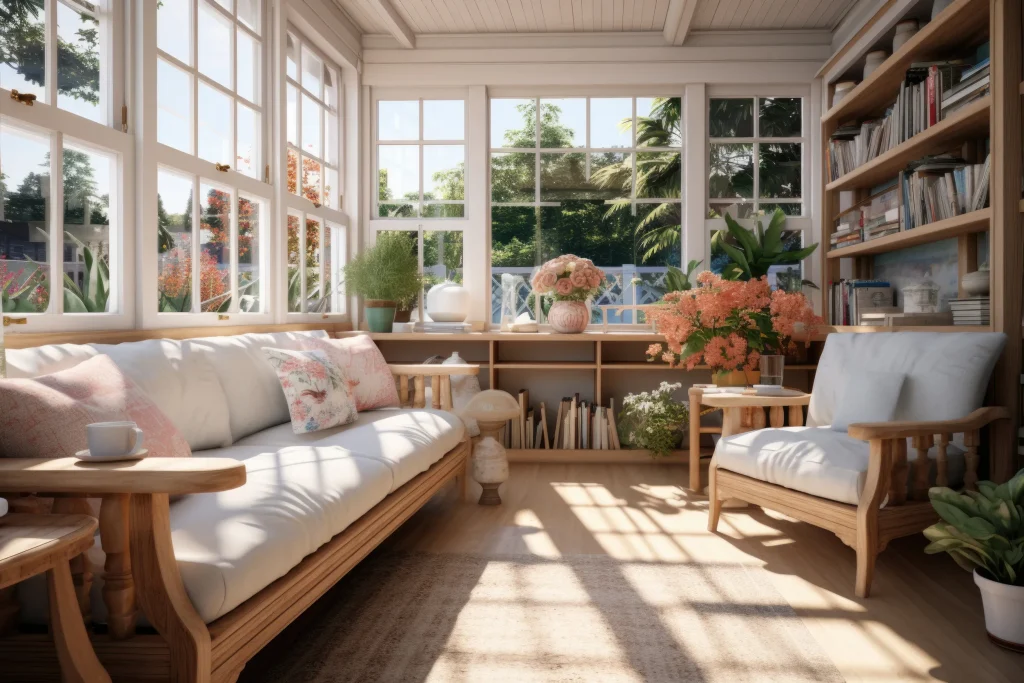
Once the structural work is complete, interior design brings your family room addition to life. The right combination of layout, lighting, storage, and finishes transforms the room from “new square footage” into a space your family naturally gravitates toward every day. Good family room design supports comfort, flexibility, and function — without feeling cluttered or overdecorated.
Designing the Right Furniture Layout
Most family rooms are centered around everyday activities: relaxing, watching TV, playing games, or gathering with friends and family. Because of this, the furniture layout should start with the main focal point — usually the TV wall.
A strong layout includes:
- Seating positioned for comfortable viewing
- 3–4 feet of walkway around major furniture pieces
- Enough room to move between the kitchen and family room
- Flexible seating (sectional + chairs or sofa + swivel chairs)
Avoid placing all furniture against the walls. Bringing seating inward creates a more welcoming and intimate feel.
TV Placement and Viewing Distances
The TV is often the anchor of a family room addition, so its placement determines where seating should go. Ideal distance varies by screen size:
- 8–12 feet for a 55–65 inch screen
- 10–15 feet for 75 inches or larger
Choose a wall that avoids glare from windows and offers space for media components or built-ins on either side. This creates a visually balanced layout and minimizes awkward furniture arrangements.
Layered Lighting for a Comfortable Family Room
Lighting sets the tone in a family room. A combination of overhead, task, and accent lighting makes the room adaptable for movie nights, reading, entertaining, or quiet evenings.
Strong family room lighting plans include:
- Recessed lighting for general illumination
- Table and floor lamps for reading or ambiance
- Dimmer switches to adjust brightness
- Accent lighting for shelves or artwork
Dimmers, in particular, make the room feel cozy at night without sacrificing daytime brightness.
Built-In Storage That Prevents Clutter
Clutter is the fastest way to make a family room feel smaller and less inviting. Thoughtful family room design builds storage directly into the room.
Useful built-in options include:
- Cabinets flanking the TV wall
- Window seats with hidden storage
- Floor-to-ceiling shelving
- Drawers for games, blankets, and remote controls
Built-ins eliminate the need for bulky standalone furniture while maximizing every inch of space.
Choosing Colors and Materials That Support Daily Use
Family rooms see more wear than formal spaces, so finishes should be durable and easy to maintain.
Recommended choices include:
- Warm neutrals like soft grays, beiges, and muted blues
- Scrubbable, high-quality wall paint
- Hardwood or luxury vinyl plank flooring with area rugs
- Fabrics that resist stains and fading
Neutral walls provide a calm backdrop, while accent colors can be added through pillows, artwork, or decor.
Window Treatments for Light Control and Privacy
Large windows are beautiful but can create glare issues or nighttime privacy challenges. Plan window treatments early — don’t treat them as an afterthought.
Popular options for family rooms:
- Cellular shades (great insulation + light control)
- Plantation shutters (clean lines + adjustable privacy)
- Simple roller shades (minimalist and practical)
Motorized treatments are helpful for hard-to-reach windows or large window banks.
Adding Value Through Family Room Addition Construction

Family room additions in the DMV typically return 50-70% of their cost at resale. A $100,000 addition increases home value by roughly $50,000-$70,000, which isn’t full recovery, but the added space and market appeal also helps homes sell faster.
How much value you recover depends on your neighborhood. Additions that bring your home in line with local square footage norms return more than those that push it above them. Adding 800 square feet in a neighborhood of 3,000-square-foot homes risks over-improvement.
A few factors that affect value:
- Construction quality matters more than size
- Homes with family rooms sell faster, especially to buyers with children
- Daily use over years adds quality of life no ROI calculation captures
Alternatives When a Family Room Addition Doesn’t Make Sense
A family room addition is a powerful way to create functional, everyday living space — but it’s not always the right solution. Budget, lot size, local regulations, or your home’s layout may limit what’s possible. Fortunately, there are effective alternatives that still give you the comfort, flexibility, and added living area a traditional family room provides. The best option depends on your home’s structure, your goals, and how much space you truly need.
Finishing or Improving an Existing Basement
Finishing a basement is often the most cost-effective alternative to a family room addition.
Pros:
- Significantly less expensive
- No exterior construction required
- Opportunities for flexible layouts
Cons:
- Limited natural light
- “Underground” feel some families don’t prefer
- Must manage ceiling height and egress codes
Reconfiguring Existing First-Floor Rooms
Sometimes the space you need already exists — it’s just divided inefficiently. Older homes often have small, compartmentalized rooms that don’t support modern living. Removing walls or rethinking the first-floor layout can create an open, comfortable space without expanding your home’s footprint.
Common reconfigurations include:
- Combining a formal living room and dining room
- Removing a wall between a kitchen and den
- Converting an unused dining room into a family room
- Expanding an existing living room to create better flow
Adding a Bump-Out Instead of a Full Family Room Addition
If your existing room is close to functional but slightly undersized, a bump-out can add 80–200 square feet without the cost of a full foundation and roof structure.
Bump-outs work best when:
- You need just a bit more room for seating or circulation
- An existing living room is almost large enough
- Your budget doesn’t allow for a full-size family room addition
Converting an Attached Garage Into a Family Room
When garage space is underused, a conversion can create a generous, above-grade family room without altering your home’s footprint.
Benefits:
- Avoids exterior construction
- Adds usable, bright space
- Ideal for one-car households or homes with ample driveway space
Challenges:
- Raising ceiling height
- Adding insulation and HVAC
- Integrating the converted space seamlessly with the main house
When These Alternatives Are the Better Choice
You may want to pursue an alternative instead of a full family room addition if:
- your yard is too small for new construction
- zoning or setbacks limit buildable area
- your budget doesn’t support addition-level costs
- your home’s layout makes integration difficult
- you plan to move within 1–3 years
- your needs are modest and can be met within the existing footprint
Each option has trade-offs, but all can dramatically improve comfort and flow without the investment or complexity of a full addition.
How We Approach Family Room Addition Projects
At Blue Collar Scholar, successful family room additions begin with understanding how your family actually lives. Every household uses space differently, so our approach focuses on daily patterns, natural movement through the home, and the specific activities that matter most to you. By starting with function first, we ensure your new family room feels seamless and genuinely useful from day one.
Understanding Your Family’s Daily Needs
We begin by asking questions about how you use your home. How many people gather regularly? Do you watch TV together, play games, read, or host guests? These details shape your family room design far more than aesthetics alone.
We also walk your property with you. This helps us evaluate where an addition can go, how light enters your home, and how the new space will connect to existing rooms. A family room addition works best when it enhances the natural flow already present in your house.
Designing a Family Room That Fits Your Home
Every home has limitations, and good design works with them rather than against them. We review your home’s structure, rooflines, mechanical systems, and yard space to identify the most practical ways to expand.
From there, we create a design that includes:
- A layout that supports daily use
- Window placement that captures light without glare
- Connection points that improve flow
- Built-in storage for long-term organization
This approach produces a family room that feels like it has always been part of your home.
Building For Long-Term Durability and Comfort
We prioritize quality materials, proper structural work, and long-term weather protection. Additions are only as strong as their foundations and framing, so we build to code—and often beyond it—to ensure the space lasts for decades.
Our construction process includes:
- Foundations that extend below frost lines
- Framing that matches or exceeds existing structure
- Roof tie-ins that prevent leaks
- HVAC planning that ensures year-round comfort
We aim for durability, efficiency, and safety in every step.
Managing Permits, Inspections, and Communication
Navigating permits in the DMV area can be overwhelming, but we handle the entire process for you. We coordinate with building departments, submit plans, schedule inspections, and ensure all work meets local requirements.
Throughout construction, we maintain consistent communication so you always know what phase the project is in, who will be on-site, and what to expect each week.
Ensuring a Positive Construction Experience
Construction is disruptive, but good planning minimizes stress. We protect living areas, maintain predictable work hours, and keep the site organized. Our crews respect your home and clean up daily to maintain safety and comfort.
We also stand behind our work with clear warranties and responsive follow-up should anything need adjustment after the project is complete.
Questions to Ask Before Starting a Family Room Addition
Before beginning a family room addition, it helps to clarify your goals, budget, and expectations. Asking the right questions early ensures the project supports your lifestyle and fits your home’s layout and long-term plans.
Here are the most important questions to consider.
- How will we use this space daily? Consider how the space will function every day. Will it be used for TV viewing, reading, kids’ activities, entertaining, or all of the above? Clear purpose leads to clearer family room design choices.
- Where should it connect to the existing house? Connection to the kitchen or informal living areas typically creates the best flow. Additions placed in isolated locations often feel disconnected and get less use.
- How long can we tolerate construction? Most additions take three to five months to complete. Consider whether your family can manage the noise, dust, and routine disruptions during that time.
- Do we need other rooms besides the family room? If you also need bedrooms, an office, or a bathroom, a two-story addition may be more efficient and cost-effective than building a single room.
- Will this addition make our home the largest on the street? Over-improving for your neighborhood limits resale value. If surrounding homes are 3,000 square feet, adding 500 square feet to create a 3,500-square-foot home works. Creating a 4,500-square-foot home risks over-improvement.
- What’s our timeline including planning and permits? From initial design to completion typically takes 6-9 months. Plan reviews and permit approvals consume 6-10 weeks. Design development takes 4-8 weeks. Construction requires 3-5 months. Starting in spring for fall completion works well.
- How will this affect our yard space? Additions consume yard area. A 20×20 addition occupies 400 square feet of yard. Add 10 feet around the perimeter for construction access and landscaping restoration. Are you willing to lose this space to gain interior space?
When Family Room Additions Aren’t the Right Choice
Additions don’t make sense in every situation. A few scenarios where another approach is worth considering:
- Limited yard space. You need room for the addition plus construction access and code setbacks. Some lots simply can’t accommodate it.
- Difficult connection points. If tying in requires cutting through load-bearing walls or creates awkward traffic flow, the addition may not function well regardless of quality.
- Tight budget. Below $60,000, you’ll face real compromises on size or quality. Finishing a basement or reconfiguring existing space often delivers more per dollar.
- Short timeline. If you’re moving within 2-3 years, the cost and disruption rarely justify the investment. You may be better off finding a home that already has the space you need.
The Real Impact of a Well-Designed Family Room Addition
A well-planned family room changes how your home feels and functions. It becomes the space everyone gravitates to naturally, whether that’s unwinding after work, watching TV, or keeping the family together without crowding the kitchen.
It also improves how the rest of your home works. There’s finally a place for louder activities, kids have room to spread out, and the formal spaces stay functional. Traffic flow improves throughout the house.
Most families say the same thing once they settle in: they wish they had done it sooner. The construction disruption fades quickly. The space becomes part of daily life, and that’s exactly the point.
Making the Decision That Works for Your Family
A family room addition makes sense when you plan to stay long term and know you’ll use the space every day. If the current layout feels crowded and your family lacks a real gathering space, an addition can reshape how you live at home.
That said, it’s worth considering alternatives if your yard is small, your budget is tight, or your home’s structure makes integration difficult. Reconfiguring existing rooms or finishing a basement sometimes solves the problem more efficiently.
The best decision balances your practical constraints with how you want your home to feel. When you’re ready to figure out which direction makes sense, we’re happy to walk your property and give you an honest assessment.
Book your free estimate today!
Frequently Asked Questions: Family Room Addition Guide
What is the purpose of a family room addition?
A family room addition creates a comfortable, everyday gathering space designed for real life—not a formal living room you rarely use. It becomes the natural hub of the home.
How large should a family room addition be?
Most functional family rooms require 250–400 square feet. The layout and connection to the kitchen matter just as much as the size.
What are the most important family room design elements?
Key features include natural light, durable flooring, built-in storage, proper HVAC sizing, and easy flow from the kitchen or informal living spaces.
What addition configurations work best for family rooms?
Common setups include single-story rear additions, two-story additions, bump-outs, garage conversions, and four-season sunrooms—each with different costs and benefits.
Does a family room addition increase home value?
Yes—most family room additions return 50–70% of their cost at resale and significantly improve everyday livability and buyer appeal.