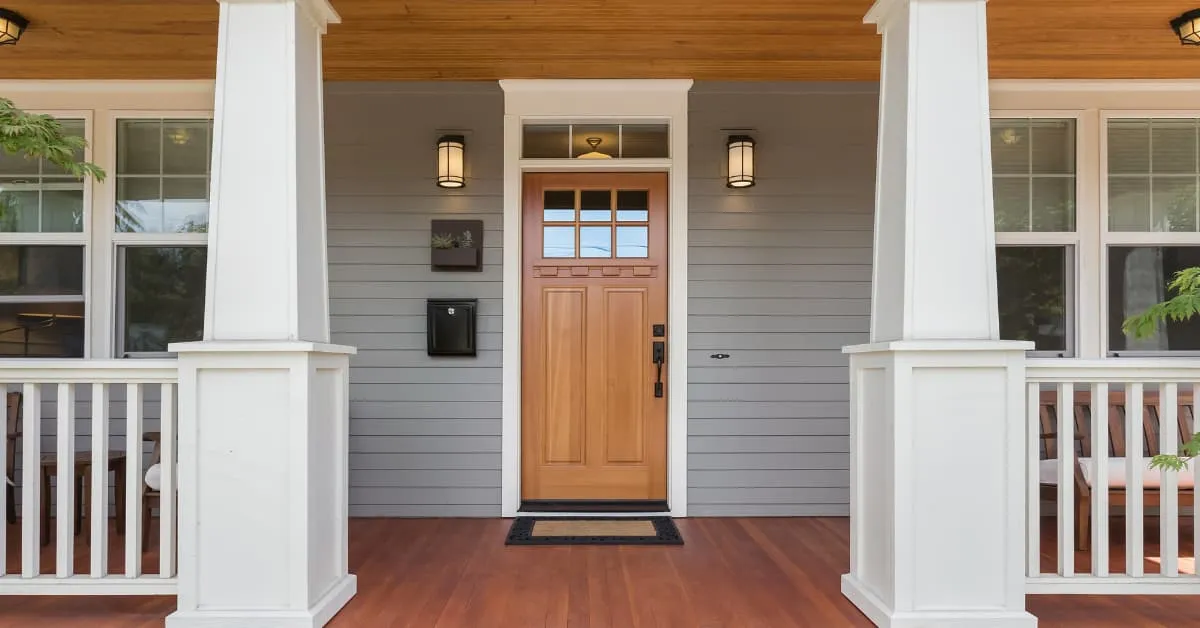


Your Bethesda Colonial sits back from the street with a small stoop at the front door. No covered entry, no place to pause before going inside, nothing that makes visitors stop and notice the house. A front porch roof design changes that. The right architectural design adds dimension to a flat facade, protects the entry from weather, and makes your home look finished instead of bare.
Germantown split-levels gain curb appeal. Potomac Tudor homes get architectural detail that matches the style. The roof design you pick determines whether the porch looks like it belongs or like an afterthought tacked on years later. This is especially important when planning a screened porch, where the roof structure needs to integrate seamlessly with the enclosure system.
Roof style affects function too. Gable roofs shed rain and snow effectively. Hip roofs cover wider porches from multiple angles. Shed roofs work for narrow entries without blocking windows. Each design handles water differently, creates different headroom inside, and costs different amounts to build.
McLean homeowners with deep porches need more coverage than Rockville families adding a small entry overhang. The structure attaches to your house, matches existing rooflines, and holds up to Maryland and Virginia weather for decades.
Gable Roofs Add Traditional Character
A gable roof forms a triangle with two sloped sides meeting at a center ridge. The peaked shape looks familiar on Colonials, Cape Cods, and farmhouses. Ashton homes built in the 1960s and 1970s often have gable roofs on the main house. Adding a gable porch roof creates visual harmony. The new roof echoes the existing roofline. Damascus Tudor homes use smaller gable peaks over entries. The repetition ties the porch to the house instead of making it look separate.
Height under the peak gives you headroom and space for ceiling fans or hanging lights. Clarksville split-levels with tall entries benefit from the vertical clearance. The slope sheds water quickly. Rain runs down both sides away from the door. Snow slides off instead of piling up. Montgomery County winters with heavy wet snow require roof pitch that handles the load. Gable designs naturally create that slope.
The open triangle ends need finishing. Soffits cover the underside where rafters show. Fascia boards run along the edges. Burtonsville Colonials match porch trim to existing house trim. White fascia on a white house. Cedar accents where the house uses cedar. The gable ends become spots for architectural details. Decorative brackets, exposed beam ends, or simple flat boards. Kensington families restoring older homes add period-appropriate gable trim that matches the original construction.
Hip Roofs Cover Wider Spaces
Hip roofs slope on all four sides down to the porch walls. No vertical gable ends. The pyramid shape creates a compact, finished look. Olney ranch homes with hip roofs on the main structure pair well with hip porch roofs. The consistent style flows from house to porch. North Potomac executive homes use hip roofs for substantial front porches that span the full width of the house. All sides get coverage and drainage.
Construction requires more framing than gable roofs. The four slopes need more rafters and more complex connections. Building costs run higher. Silver Spring contractors charge more for hip roof labor. The trade-off comes in wind resistance. Hip roofs handle high winds better than gable roofs because the slopes on all sides create lower wind pressure. Gaithersburg homes in open areas benefit from that stability during spring and summer storms.
Hip roofs work better on square or nearly square porches. Poolesville Colonials with 12 by 14 foot porches get even coverage from a hip design. Long narrow porches lose the advantage because the shape becomes more rectangular. Darnestown farmhouses with 8 by 20 foot porches use shed or gable roofs instead. The hip design shines when width and depth stay relatively balanced. Laytonsville contemporary homes with modern square entries use low-slope hip roofs for clean geometric lines.
Shed Roofs Handle Narrow Entries
A shed roof slopes in one direction from high to low. Simple, functional, cost-effective. The single slope attaches to the house wall at the high end and runs down to posts at the low end. Germantown townhouses with limited front space use shed roofs over entry doors. The roof extends just far enough to cover the stoop. No wasted space, no excess materials. Columbia split-levels with side entries add shed roofs that don’t interfere with windows on the main facade.
Water runoff happens in one direction. Position the slope so water drains away from the entry or to the side. Rockville contractors pitch the roof to direct rain toward yard areas, not walkways. The single slope needs less framing than multi-plane roofs. Two support posts, a ledger board mounted to the house, and rafters running between. Bethesda families on tight budgets choose shed roofs for the lower material and labor costs.
Modern homes pair naturally with shed roofs. The clean angled line suits contemporary architecture. Ashton homes built in the past ten years with flat or minimally pitched roofs use shed porch roofs to maintain the modern aesthetic. Traditional homes work too if the pitch and proportion match the existing style. Burtonsville Cape Cods add shallow shed roofs over side doors. The understated design doesn’t compete with the main roofline but still provides weather protection and visual interest.
Flat Roofs Suit Contemporary Design
Flat roofs run nearly level with minimal slope for drainage. The horizontal lines create a modern look. Kensington homes with mid-century or contemporary architecture use flat porch roofs to keep the clean geometric aesthetic. The slight pitch – typically one-quarter inch per foot – stays invisible from the street but moves water to drainage points. Silver Spring modern builds incorporate flat roofs over entry porches that align with the main structure’s flat or low-slope sections.
Construction differs from pitched roofs. The surface needs weatherproof membranes instead of traditional shingles. EPDM rubber, TPO, or modified bitumen covers the decking. North Bethesda contractors install proper drainage to prevent pooling. Scuppers or internal drains move water off the surface. The lack of visible pitch means any standing water shows problems immediately. Maintenance requires checking drains and seals regularly.
Flat roofs allow rooftop features that sloped roofs can’t accommodate. Chevy Chase families add rooftop gardens over porches. Planters with native grasses and sedums create green space visible from second floor windows. Damascus contemporary homes install solar panels on flat porch roofs where the panels stay out of view from the street. The flat surface provides mounting options that pitched roofs complicate. Lighting installations, HVAC equipment, and decorative elements find stable mounting surfaces on level roofs.
Metal Roofing Lasts Decades
Standing seam metal roofs on porches resist weather and require minimal maintenance. Vertical panels with raised seams shed water effectively. Potomac Colonials with metal roofs on the main house extend that material to front porches. The consistency looks intentional. Olney farmhouses use metal porch roofs to match barn-style metal roofing on garages or outbuildings. The material handles Maryland humidity without rotting or growing mold.
Metal roofs come in multiple finishes and colors. Painted steel in colors that match siding or trim. Copper that develops patina over time. Aluminum that stays lightweight and corrosion-resistant. Germantown homeowners match metal roof colors to existing architectural details. Dark bronze on a house with bronze gutters. Forest green where shutters use that color. The metal reflects heat instead of absorbing it. Summer sun hits the roof and bounces back. The porch stays cooler underneath compared to dark asphalt shingles.
Installation requires specialized skills. Panels need proper fastening and seaming. Rockville contractors experienced with metal roofing get the details right. Incorrect installation causes leaks at seams or around penetrations. The upfront cost runs higher than asphalt shingles. Montgomery Village families pay more initially but avoid replacement costs for decades. Metal roofs last 50 years or longer with basic maintenance. Asphalt shingles need replacement every 20 to 30 years. The long-term math favors metal for homeowners staying in place.
Shingle Roofs Match Existing Materials
Asphalt shingles on porch roofs blend with existing house roofs when both use the same material. Clarksville split-levels with architectural shingles on the main house add matching shingles to new front porches. The color, texture, and style match perfectly. No visual disconnection between old and new. Burtonsville Cape Cods with three-tab shingles use the same product on porch additions. Consistency matters more than choosing a different material that might look newer or fancier.
Shingles come in hundreds of colors and styles. Homeowners replacing the main roof and adding a porch at the same time select materials once for both. Poolesville families avoid the challenge of matching discontinued products years later. The shingle warranty covers both roofs under one installation. Darnestown contractors coordinate timing so the main roof and porch roof get completed together. The labor efficiency saves money compared to two separate projects.
Architectural shingles add dimension with layered tabs that create shadow lines. Bethesda Colonials use dimensional shingles that look more substantial than flat three-tab products. The thickness and texture add visual weight to the porch roof. Designer shingles mimic wood shakes or slate at lower cost than authentic materials. Silver Spring homeowners get the high-end look without the high-end price or maintenance requirements. The shingles install the same way as standard products but deliver different aesthetic results.
Front Porch Roof Design Integration With Existing Structure
New porch roofs attach to the house at a ledger board mounted to the wall. The connection point needs proper flashing to prevent water infiltration. Ashton contractors install step flashing where the porch roof meets the house siding. The metal flashing diverts water down and away from the joint. Improper flashing causes rot in wall framing and creates interior water damage. Germantown split-levels require careful integration where porch roofs tie into existing window trim and siding details.
The porch roof slope should direct water away from the house. Gable and hip roofs naturally shed to the sides and front. Shed roofs need positioning so the low end faces away from the main structure. Kensington contractors pitch roofs to drop water into gutters or onto landscaping that handles drainage. Rockville homes with clay soil avoid directing roof runoff toward foundation areas where water pools. The pitch calculation accounts for local weather patterns and expected snow and rain loads.
Visual proportion matters as much as function. A massive porch roof on a small house looks wrong. A tiny roof on a large porch looks incomplete. Damascus Colonials balance porch roof size with the scale of the main structure. The porch roof height aligns with natural break points in the facade – between first and second floor windows, at the top of door trim, or coordinated with existing roof eaves. North Potomac architects design porch roofs that look like original construction rather than obvious additions from different eras.
Ceiling Details Add Character
The underside of porch roofs shows rafters, decking, or finished ceilings. Exposed beam construction leaves structural members visible. Olney farmhouses show rough-hewn beams and tongue-and-groove decking stained natural. Montgomery Village contemporary homes paint exposed rafters white or gray for modern looks.
Finished ceilings cover the framing. Beadboard panels create traditional porch ceilings. Bethesda Colonials use white or pale blue beadboard. Vinyl beadboard costs less and resists moisture better than wood. Drywall ceilings work for enclosed or screened porches with minimal weather exposure.
Recessed lighting installs in finished ceilings. Burtonsville split-levels add can lights for evening use. Exposed beam designs use pendant lights that hang from the structure. Ceiling fans require proper blocking in the framing for secure mounting.
Column Selection Matters
Porch roof support happens through columns or posts. Traditional round columns suit Colonial and Federal homes. Potomac properties use fluted columns with capitals. Square columns fit Craftsman and farmhouse styles. Germantown bungalows use tapered square columns that narrow toward the top.
Wood columns need regular painting. Composite columns resist rot and moisture. Rockville families choose composite materials that never need repainting. The initial cost runs higher than wood. Long-term savings balance out over decades.
Column spacing affects the porch feel. Wide spans create open sightlines. Kensington homes space columns 10 to 12 feet apart. Closer spacing adds formality. Damascus Colonials use 6 to 8 foot spacing. Engineers calculate loads to determine safe spans.
Permits Apply
Adding a porch roof requires building permits in Montgomery County and Northern Virginia. Germantown homeowners submit plans showing roof design and structural details. The permit process includes inspections during construction. Footer, framing, and final inspections verify code compliance.
HOA approvals come before permits. Bethesda neighborhoods with architectural review committees require design approval. Silver Spring associations restrict certain roof styles. Checking rules first prevents designing something that won’t get approved.
Code requirements cover structural loads and drainage. Maryland codes specify snow load capacity. Rockville contractors follow local amendments. Clarksville projects in Howard County follow different rules than Potomac projects in Montgomery County.
Cost Depends on Size and Details
Small porch roofs cost less than large roofs. A shed roof over a 6 by 8 foot stoop is generally less expensive than a gable roof over a 12 by 30 foot porch. As the material you choose affects the overall price. Asphalt shingles cost less than metal. Standard columns cost less than custom millwork. Ceiling details and lighting add to the total.
Labor represents significant cost. Framing, roofing, and electrical work require skilled trades. Complex roof designs take longer than simple shed roofs. Spring and summer book up fast. Fall and winter offer more scheduling flexibility.
The right investment changes how the home looks and functions at the entry. Homeowners who focused on traditional details will spend more. Keeping the design straightforward contains costs.
Professional Installation Delivers Results
Porch roof construction requires coordinating multiple systems. The roof attaches properly to house framing. Flashing prevents water intrusion. Roofing materials get installed to specifications. Electrical wiring follows code. Kensington contractors who build porches regularly understand how all pieces fit together.
Experience with local architecture matters. Germantown builders know how to integrate porch roofs with split-level construction. Potomac contractors understand what designs get approved in historic districts. That local knowledge prevents delays and expensive corrections.
Structural integrity affects safety and longevity. Properly sized rafters carry loads. Connections use appropriate fasteners. Clarksville homeowners with correctly built roofs avoid sagging and storm damage. Companies that provide warranties covering materials and installation give you recourse if issues develop.
Schedule Consultation for Your Porch Project
Your front entry could use a roof. Weather protection, visual appeal, architectural detail that suits your home’s style. Montgomery County houses gain presence with the right porch design. Northern Virginia Colonials look finished. The roof style needs to work with your house, handle local weather, and fit your budget for materials and construction.
Blue Collar Scholars builds front porch roofs across Maryland, Northern Virginia, and Washington DC. We match roof designs to existing architecture. Gable roofs for traditional homes. Shed roofs for contemporary builds. Hip roofs where the width requires full coverage. The structure attaches correctly to your house with proper flashing and drainage. Materials match or complement what you already have. The finished porch looks like it belongs there.
Call us to discuss what makes sense for your entry. We look at your house, explain which roof designs work with your architecture, and tell you what the project involves. You learn about permits, timing, and costs specific to your situation. The consultation costs nothing. You get information that helps you move forward or plan for next year. That understanding lets you make good decisions about adding a front porch roof that changes how people see your home.