



You’ve been thinking about that home addition for months, maybe years. The challenge isn’t wanting more space. It’s figuring out how to fund it without draining your savings or delaying the project for another decade.
A home equity loan lets you borrow against the value you’ve built up in your home. Most lenders will let you borrow roughly 80-85% of your available equity, which can give you access to serious capital for home additions or major renovations.
So how does this actually work when you’re planning a home addition? Let’s walk through the timeline, the approval process, and how to keep costs under control during construction.
What Makes Home Equity Loans Different From Other Financing
A home equity loan isn’t like a credit card that fluctuates monthly or a personal loan with a high rate because it’s unsecured. It’s a second mortgage with a fixed rate, fixed payment, and fixed term. That structure makes it one of the most predictable ways to finance a large project.
When you use a home equity loan to fund a room addition or kitchen expansion, the bank gives you the full amount upfront. You begin making monthly payments immediately, even if construction is just getting started.
That predictability matters when you’re planning a home addition. Knowing your exact payment from day one makes budgeting far more manageable, regardless of how fast or slow your contractor moves.
How Much You Can Borrow For the Cost of a Home Addition

Start with the right question. Instead of asking “How much will a bank give me?” ask “How much equity do I have, and what can I borrow without straining my budget?”
Banks typically cap home equity loans at 80-85% of your home’s current value, minus what you still owe on your first mortgage. That formula covers most major home addition projects, including second stories, in-law suites, and full kitchen and bathroom overhauls.
Here’s where homeowners get themselves into trouble: just because a bank approves you for a large amount doesn’t mean you should borrow it. Homeowners who handle this best borrow what the project actually costs, plus a 10-15% buffer for unexpected issues. That cushion matters when you discover outdated electrical or when material costs shift mid-project.
The Real Timeline For Getting A Home Equity Loan to Cover Home Addition Costs
Banks won’t tell you this upfront, but the approval process takes longer than most homeowners expect. You’re not getting approved in 48 hours. Count on 30-45 days from application to closing if everything goes smoothly.
Here’s what that timeline looks like:
- The bank orders a home appraisal, which typically takes 1-2 weeks to schedule and complete
- Underwriting reviews your financials, including pay stubs, tax returns, and debt-to-income ratios
- If you’re self-employed or have variable income, add another week or two
Plan for 6-8 weeks to give yourself realistic expectations. Start your loan process before you finalize your construction contract so you’re not scrambling to push timelines back.
What Lenders Actually Look At When You Apply For a Home Equity Loan

Your credit score matters, but it’s not the only thing banks examine. They want to see your complete financial picture, including how much you earn, how much debt you carry, and how reliable your income is.
Most lenders require a minimum credit score of 620 for home equity loans, but that’s the floor. To get competitive interest rates, you’re looking at 680 or higher.
Debt-to-income ratio is where homeowners often hit roadblocks. Banks typically want your total monthly debt payments, including your existing mortgage, car loans, credit cards, student loans, and your new home equity loan payment, to stay under 43% of your gross monthly income. If that number is already tight before you apply, you may need to pay down some debt first.
The Real Cost of Home Equity Loans: Interest Rates And What You’ll Actually Pay
Home equity loan rates vary based on your credit profile and the lender you choose. They’re higher than mortgage rates were a few years ago, but still considerably lower than personal loans or credit card financing.
It’s worth doing the math before you commit:
- Calculate your monthly payment across the full loan term
- Factor in total interest paid over the life of the loan
- Compare that to other financing options you’re considering
Working with a local lender can make a real difference. Regional lenders often have more flexibility on rates and terms than big national banks, and they understand what homes are actually worth in the DC metro market.
Tax Deductions – What Still Applies After Tax Law Changes

This is where homeowners get confused, and even some tax professionals give conflicting advice. Under current tax law, you can deduct interest on a home equity loan if you use the money to “buy, build, or substantially improve” the home securing the loan.
The IRS considers substantial improvement to mean any renovation that adds value, prolongs the home’s useful life, or adapts it to new uses. Examples include:
- Adding a second story or in-law suite
- Finishing a basement
- A full kitchen or bathroom renovation
- Replacing old siding with new materials
Keep detailed records of exactly how you spent the loan money. If any portion went toward non-home expenses, you can only deduct interest on the portion used for the improvement. Contractor invoices, materials receipts, and permit records are all fair game for documentation.
For the full official IRS guidelines, see Publication 936.
Home Equity Loan vs. Cash-Out Refinancing
People constantly ask which is better for funding a home addition. The answer depends on your current mortgage rate and how much you need to borrow.
Cash-out refinancing means replacing your existing mortgage with a new, larger one and taking the difference in cash. That made sense when rates were low. But if you’re sitting on a low-rate mortgage, refinancing it at today’s rates just to access equity is rarely the smart move.
A home equity loan lets you keep your low-rate first mortgage untouched and borrow only what you need at current rates. Yes, you’ll have two payments, but you’re only paying higher interest on the additional amount, not your entire mortgage balance. Run both scenarios with real numbers before you decide.
How Home Equity Loans Work During Construction
You get the full loan amount at closing, before construction starts. The money typically goes into your bank account, and you’re responsible for paying your contractor according to whatever draw schedule you’ve agreed on.
Most construction contracts use a draw schedule that looks something like this:
- 10% upfront as a deposit
- 25% when framing is complete
- 25% when rough-ins are done
- 25% at substantial completion
- 15% when everything passes inspection
Your home equity loan doesn’t follow that schedule. You’re making full payments from day one. Smart homeowners keep the loan money in a separate savings account and transfer contractor payments as each milestone is hit, which also creates clean documentation of how funds were spent.
What Happens If Your Project Goes Over Budget?
It happens often. You plan for one number, borrow a little extra, and still end up short. If that happens, you have three options:
- Apply for an additional home equity loan if you still have enough equity (this means a full new approval process)
- Cover the gap with savings, retirement funds, or a personal loan
- Scale back the project scope
This is exactly why the 10-15% contingency buffer matters. Old homes hide problems: outdated wiring, inadequate subflooring, HVAC systems that need replacement. You don’t find these until walls are open. Borrow enough to cover the estimated project cost plus a solid buffer, and pay down any unused principal immediately after the project wraps.
When Home Equity Loans Don’t Make Sense
Not every situation calls for a home equity loan. If you’re planning to sell within 5-7 years, a 15-year second mortgage may not align with your timeline. You’ll need to pay it off at closing, which eats into your sale proceeds.
If your credit score is below 640 or your debt-to-income ratio is already stretched, you may not qualify for terms that make financial sense. High interest rates can make other options more attractive.
Some homeowners are simply better off saving longer and paying cash. If you can wait 18-24 months and fund the project without borrowing, you avoid loan interest entirely. That’s not always realistic, but it’s worth considering, especially if the addition is more want than need.
Questions to Ask Your Lender Before You Apply
Don’t walk into a lender’s office without a clear list of questions. Here’s what to cover before you submit an application:
- What’s the current rate for a home equity loan based on my credit profile?
- Are there origination fees, and how much are they?
- How long does your typical approval process take?
- Are there prepayment penalties if I pay off the loan early?
Also ask about the appraisal process: who orders it, what it costs, and what happens if the appraised value comes in lower than expected. And ask about the lender’s experience with renovation financing specifically. A lender who regularly works with homeowners doing major projects will be far more informed and flexible than one who mostly handles auto loans.
Working with Contractors When You’re Using Financing
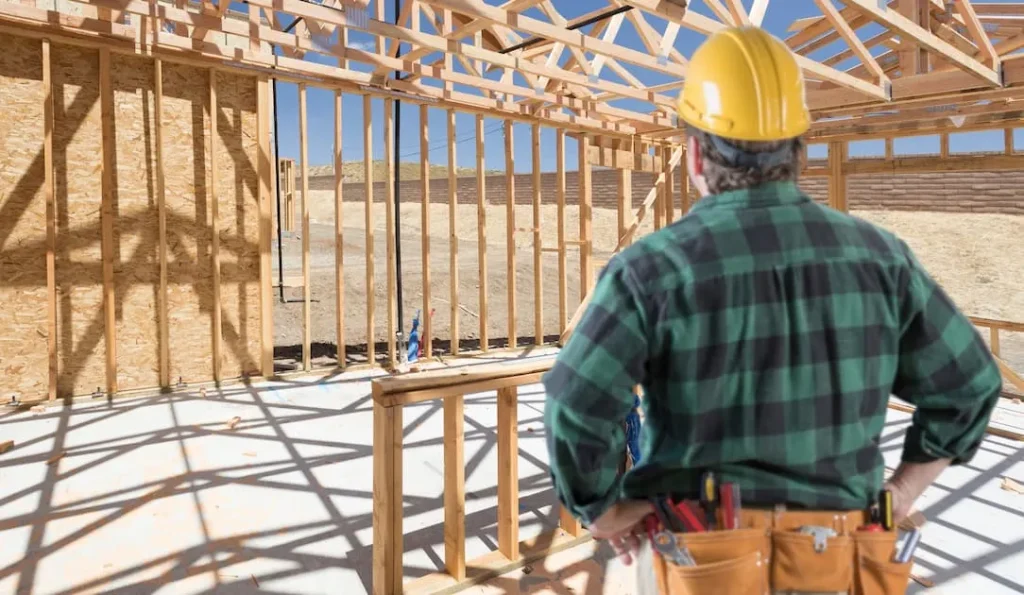
Tell your contractor upfront that you’re using a home equity loan. Good contractors appreciate the transparency because it affects their payment schedule and start date. If your loan takes six weeks to close, they need to know that before locking in a timeline.
Make sure your contractor’s payment schedule aligns with how quickly you can access and move your loan funds. Never pay a contractor the full amount upfront, even if the money is sitting in your account. Progress payments tied to completed work protect you if quality issues or delays arise.
Blue Collar Scholars structures payments around project milestones, which works well with home equity loan financing. You know exactly when each payment is due, can plan transfers accordingly, and maintain appropriate leverage to keep the project moving.
Making Your Home Addition Investment Work Long-Term
A home equity loan for a home addition is a 15 to 20-year commitment to increased monthly payments. Before you sign, think through your financial future honestly. Will you still be comfortable making these payments if your income changes, one spouse leaves the workforce, or property taxes go up?
Think about the value equation too. The best home additions add both daily livability and long-term resale value. A well-designed master suite or a second story that matches your home’s architecture can pay off significantly. A poorly integrated addition can actually hurt your property value.
This is where working with builders who know the Maryland, Virginia, and DC markets makes a real difference. Some additions increase property values by more than they cost to build. Others don’t. Design, quality, and how well the addition integrates with the existing home are what determine which side you land on.
Schedule Your Home Addition Consultation
If you’re ready to move forward, start with a clear plan. Know what you want to build, get accurate cost estimates, and understand your borrowing capacity before you apply for anything.
Blue Collar Scholars works with homeowners throughout Montgomery County, Northern Virginia, and Washington DC to plan home additions that fit your budget, timeline, and long-term goals. We can walk you through realistic project costs, help you understand what financing makes sense, and connect you with local lenders who specialize in home improvement loans.
We’re not here to push you into a project you’re not ready for. We’re here to help you figure out if a home addition works for your family, your home, and your finances. Schedule a consultation and let’s talk through your specific situation.
Frequently Asked Questions: Home Equity Loans for Home Additions
How does a home equity loan work for home additions?
A home equity loan lets you borrow against your home’s equity and receive the full amount upfront. You repay it with fixed monthly payments, which makes budgeting for home additions easier and more predictable.
How much can I borrow to cover the cost of home additions?
Most lenders allow you to borrow 80–85% of your home’s value minus your current mortgage balance. The exact amount depends on your equity, credit score, income, and debt.
How long does it take to get approved for a home equity loan?
Approval usually takes 30–45 days, but it can extend to 6–8 weeks during busy appraisal seasons or if the lender needs additional documentation.
Is interest on a home equity loan tax-deductible?
Interest may be deductible if the loan is used to “buy, build, or substantially improve” the home securing the loan. Documentation is essential, especially when part of the loan is used for non-home-related expenses.
Should I use a home equity loan or cash-out refinancing for home additions?
If your current mortgage rate is much lower than today’s market rates, a home equity loan is usually better. It allows you to keep your low first-mortgage rate while borrowing only the amount needed for the addition.
What if the cost of home additions exceeds my loan amount?
You may apply for another loan, use savings, or adjust the project scope. This is why most homeowners borrow the project cost plus a 10-15% contingency buffer.