

Small home addition ideas do not require hundreds of square feet or a six-figure budget to make a real difference in how your home functions. Even 60 to 100 square feet in the right place can dramatically improve daily life, often much more effectively than a large, expensive addition that does not solve your core problem.
The goal is not to add space for the sake of square footage. It is to add targeted, functional space that solves specific problems. Small additions like bump-outs, single-room expansions, and strategic extensions are far less expensive than full-scale projects and often deliver better results.
The challenge is identifying which small additions actually work. A 6-foot kitchen bump-out might solve your counter space problem completely, or it might leave you spending money without creating enough improvement to matter. That difference comes down to understanding where small additions provide real value versus where they are too limited to justify the investment.
When Small Home Addition Ideas Make More Sense Than Large Ones
Small additions work best when you have a specific, definable problem that targeted space can solve. Vague feelings of needing more room usually require larger reconfigurations, but a clear problem often has a surprisingly efficient solution.
Common scenarios where a small addition gets the job done:
- Kitchen counter space: an 80 to 100 sq ft addition creates room for an island without overbuilding
- Master bedroom storage: a small bump-out creates a proper walk-in closet and solves the problem directly
- Bathroom layout: a 3-foot extension adds a separate shower without rebuilding the entire bathroom
Small additions also have a major practical advantage: they typically complete in 4 to 8 weeks versus 3 to 5 months for major projects. Less disruption, less dust, and a faster return to normal life for your family.
Home Additions on a Budget: Small Bump-Outs That Actually Work
One of the most cost-effective ways to add space is with a bump-out. A kitchen counter bump-out extends one wall 3 to 6 feet, adding 40 to 80 square feet. A 4-foot bump-out on a 12-foot-wide kitchen adds 48 square feet, enough for a 3×6 island with seating, prep space, and storage.
Primary bedroom closet bump-outs add 40 to 80 square feet of dedicated storage, which is a common fix for older homes built before walk-in closets became standard.
Position the bump-out on the exterior wall where your current closet sits to minimize interior disruption. Bathroom shower bump-outs extend the room 2 to 4 feet to accommodate a walk-in shower while keeping the existing tub.
Other bump-out types that deliver strong value:
- Dining room bay window bump-outs: add 30 to 60 sq ft plus architectural interest
- Mudroom bump-outs: create 40 to 60 sq ft of entry organization at side or back doors
Keep in mind that you can only bump out 6 to 8 feet before you need posts or columns to support the cantilevered structure. Beyond that depth, you are looking at a full addition requiring separate foundation work.
Single-Room Strategies for Small Home Additions On a Budget
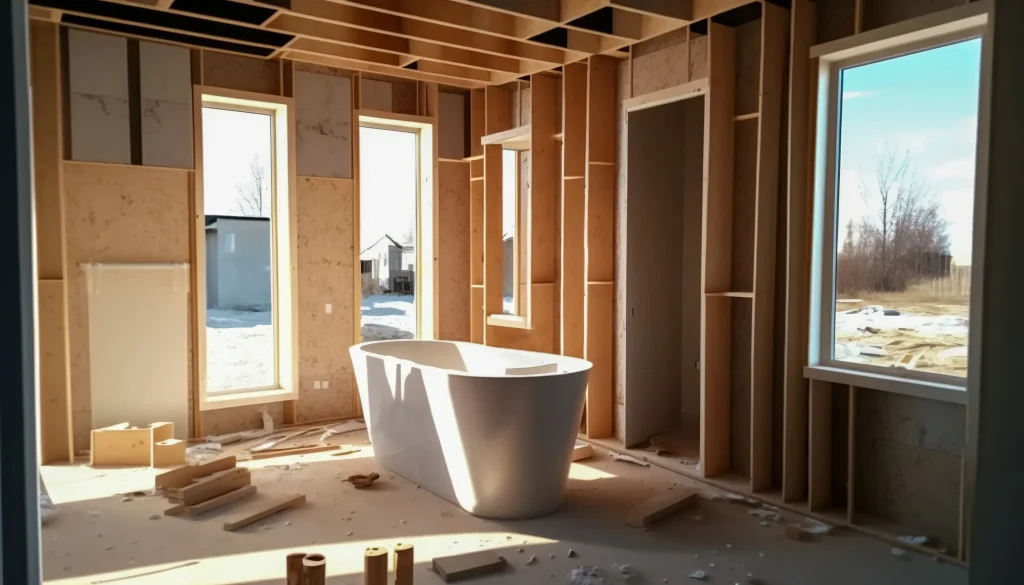
Focusing on one specific space can deliver a big improvement for a smaller investment. A home office addition of 100 to 150 square feet creates a dedicated workspace separate from living areas, which matters a lot now that remote work is permanent for many families. Position it to access via a hallway rather than through other rooms.
Other targeted single-room additions worth considering:
- Powder room: solves the single-bathroom problem; locate near living areas, away from the kitchen
- Laundry room: creates dedicated space for washer, dryer, folding counter, and storage
- Breakfast nook: extends the kitchen for casual dining without crowding
- Reading room or sunroom: creates a quiet retreat separate from main living areas
The key with any single-room addition is making sure it connects logically to your home’s existing circulation. An office you can only access through the master bedroom defeats the purpose.
Vertical Addition Possibilities for Home Additions On a Budget
Dormers expand attic spaces by extending the roofline upward and outward. They work well when you have unfinished attic space with an adequate floor structure but not enough headroom. Shed dormers add 60 to 150 square feet depending on length; gable dormers add less space but create more architectural interest.
Above-garage additions build new rooms over existing garages, adding 300 to 600 square feet while using space that already has a foundation and walls. The structure does require reinforcement since garage framing typically is not designed to support living space. These work especially well for teen bedrooms, home gyms, media rooms, or office spaces that benefit from some separation from the main house.
The limitation with dormers is the existing attic structure. If your roof framing does not allow dormers, or if the attic floor was not built to handle living loads, costs can escalate significantly. Get a structural assessment before planning either of these options.
Budget-Focused Small Home Addition Design Strategies

Simplicity saves money at every step. Rectangular additions cost less than those with angles or curves. Flat roofs or simple shed roofs cost less than complex hip or gable roofs. Every corner and architectural detail adds cost, so if budget is the priority, embrace straightforward design.
Additional strategies that keep costs down without sacrificing quality:
- Minimize foundation requirements: bump-outs that cantilever from existing structure can eliminate foundation work for small extensions
- Use standard materials and dimensions: windows, doors, and framing in standard sizes reduce waste and labor
- Match existing finishes exactly: vinyl matches vinyl, Hardiplank matches Hardiplank; this is not where you upgrade
- Limit built-in features: get the structural space built first and add custom details later if budget allows
- DIY finish work where capable: painting and basic trim can save 10 to 15% of total costs
Do not DIY structural work, roofing, electrical, or plumbing unless you have legitimate expertise. Mistakes in those areas cost more to repair than professional installation would have in the first place.
Common Small Home Addition Mistakes That Waste Money
Building too small to solve the problem is the most common mistake. A 2-foot kitchen bump-out adds space but not enough to function well. There is a threshold below which additions have no real value; you are just moving walls without gaining usability. If you are building a bump-out, make it at least 4 feet.
Other mistakes worth knowing before you start:
- Ignoring connection to existing space: a home office accessible only through a bedroom becomes inconvenient immediately
- Skipping permits: unpermitted additions complicate title transfers and can kill sales down the road
- Neglecting architectural style: a contemporary bump-out on a traditional colonial home stands out in the wrong way
- Underestimating HVAC requirements: 80 extra square feet can push an already-strained system past capacity
- Cheap windows that do not match: cutting corners on windows creates permanent visual problems
- Forgetting interior finishing: budget 25 to 30% of structural costs for paint, flooring, and trim
Most of these mistakes share a common thread: they happen when homeowners focus on minimizing upfront cost rather than maximizing long-term value. A slightly larger, properly finished addition almost always delivers better results than a cut-rate version of the same project.
Specific Problems Small Home Additions Solve Better Than Alternatives
The almost-big-enough kitchen: full renovations are expensive. A 4-foot bump-out adding 48 to 60 square feet costs a fraction of that and solves the space shortage without rebuilding the whole kitchen. You keep your existing cabinets and layout while gaining the specific space that was missing.
Other problems where small additions outperform the alternatives:
- Single-bathroom bottleneck: a powder room solves 70% of the problem a second full bath would address, at a fraction of the cost
- No home office: a dedicated 120 sq ft addition gives you a door that closes, sound containment, and space that does not need to convert back and forth
- Inadequate storage: a 60 sq ft walk-in closet bump-out preserves bedroom size while adding proper storage
- Entry clutter: a 48 sq ft mudroom with built-in benches and coat hooks keeps the mess contained without a major investment
Each of these works because the problem is specific and the addition is sized to solve it. The more clearly you can define what is missing, the more likely a small addition will deliver the result you need.
When Small Home Additions Don’t Make Sense
If you need multiple new rooms, small additions become inefficient. Adding a bedroom, bathroom, and office through three separate projects costs more and takes longer than a coordinated larger addition. At some point, comprehensive approaches beat incremental ones.
Very tight budgets make most small additions difficult to execute with quality. At the lower end of what these projects cost, interior reconfigurations or improvements to existing space often provide better value. If you are planning to move within 2 to 3 years, small additions rarely justify their cost either. You typically recover 40 to 60% of what you spend, so the financial math only works if you are staying longer.
If your home is already at the upper end of neighborhood values, avoid adding more square footage. Over-improvement limits your buyer pool and return on investment. And if your layout is fundamentally flawed, a small addition acts as a bandage rather than a solution.
How We Build Small Home Additions That Deliver Value
At Blue Collar Scholars, we start every small addition project by verifying that an addition actually solves the problem. Sometimes what looks like a space shortage is really a layout problem. We are honest about which scenario applies before any plans are drawn.
Our construction approach follows the same standards for small additions as large ones: footings below frost line, proper flashing and waterproofing, code-compliant framing and connections. We match your existing architecture carefully so the addition looks like it was always part of the house.
We handle all permits and inspections, provide realistic timelines, and back our work with a warranty on labor. Our work passes inspection the first time because we build to code from the start, not as an afterthought.
Return on Investment for Small Home Additions
Small additions typically return 40 to 60% of their cost at resale in Maryland, Virginia, and DC. But financial return understates total value. The daily functional improvement from a well-designed addition provides real benefits for years before you ever sell.
Returns by project type:
- Powder rooms in single-bathroom homes: often return more than cost by moving the home into a higher market segment
- Kitchen bump-outs: 50 to 70% return; buyers value workable kitchens
- Bedroom closet additions: 40 to 50% return, worthwhile when combined with improved daily usability
- Office additions: 50 to 60% in the DMV given the prevalence of remote and hybrid work
- Mudroom additions: 40 to 50% financially, but significant day-to-day organizational value
Using better-functioning spaces daily provides quality-of-life returns that appraisals miss. That is worth accounting for when you are evaluating whether an addition makes sense.
Questions to Ask Before Committing to Small Home Additions
Before you commit to any small home additions, it is worth pressure-testing the idea. Small additions work when they address definable issues. They do not work for vague desires to have more room.
Questions worth answering honestly before you start:
- Does this solve a specific problem or just add generic space? Small additions work when they address definable issues – inadequate counter space, missing bathroom, no home office. They don’t work for vague desires to have “more room.”
- Is this the minimum size that actually solves the problem? Too-small additions waste money without creating functional improvement. A 2-foot bump-out that doesn’t allow proper furniture placement costs money without delivering value. Make additions large enough to matter.
- Could interior reconfiguration solve this problem instead? Sometimes removing walls or repurposing rooms addresses space issues without additions. Consider alternatives before committing to construction.
- How long will we live in this house? Small additions make sense for homeowners staying 4+ years. Shorter timelines don’t provide enough use to justify costs, and resale recovery is limited. Consider whether your needs are better met by moving.
- Are there zoning or HOA restrictions? Check setback requirements and HOA rules before planning. Small additions still need to comply with regulations. An addition that violates setbacks won’t get permitted regardless of size.
- How will this affect our home’s value relative to the neighborhood? Small additions rarely create over-improvement problems, but verify your home won’t become significantly larger than surrounding properties. Stay within neighborhood norms.
If you can answer all of these confidently, you are probably looking at a project worth doing.
Alternatives Worth Considering Before Building Small Home Additions
Interior space reconfiguration sometimes solves problems without adding square footage. Removing walls between rooms creates larger, more functional spaces. Converting an underused formal dining room to an office or family room can cost significantly less than building an addition.
Other alternatives that may serve you better depending on your situation:
- Basement finishing: generally cheaper per square foot than an addition; works well for media rooms, gyms, and teen spaces
- Garage conversion: 300 to 500 sq ft of living space if you have more garage than you use
- Storage solutions: custom closet systems and built-in shelving can solve problems that feel like space shortages, at a fraction of the cost of an addition
Evaluate whether better organization or reallocation of existing space addresses your issues before assuming you need more square footage. Sometimes it does.
Small Home Addition Ideas – Frequently Asked Questions
What are the most cost-effective small home addition ideas?
Small bump-outs, kitchen extensions, closet additions, powder rooms, and small home offices offer high impact at lower cost. These targeted additions solve specific problems without requiring major construction.
Are small home additions worth it for resale value?
Most small additions return 40 to 60% of their cost at resale, with powder rooms and kitchen bump-outs offering some of the strongest returns. The biggest value, however, comes from daily functional improvements over the years you live there.
What types of problems do small additions solve best?
Small additions are ideal for issues like lack of counter space, inadequate storage, insufficient bathrooms, poor home office setups, or cluttered entryways.
What should homeowners consider before building a small addition?
Evaluate whether the addition solves a specific problem, complies with setback rules, fits your budget, and connects properly to existing spaces. Also check HVAC capacity and plan to match your existing architectural style.
Are there alternatives to building an addition?
Yes. Interior reconfigurations, basement finishing, garage conversions, and improved storage systems can sometimes fix space issues without adding square footage, often at lower cost.