

Yard drainage systems are one of the most important ways to protect your home from stormwater damage.
Heavy rain does not wait for the right time. Without proper drainage, water can pool in your yard, push against your foundation, and seep into your basement, causing expensive structural problems.
Water always finds the weakest point. A properly designed yard drainage system directs runoff away from your home, protects your landscaping, and prevents long term damage.
Understanding how the types of drainage systems will allow you a better comprehension of their roles and how they work together.
What is a Drainage System?
A drainage system is a structured solution that controls how water moves across and away from a property to prevent pooling, erosion, and structural damage. On residential properties, this usually means a yard drainage system designed to collect, redirect, and safely discharge rainwater using grading, swales, underground pipes, or extensions that guide water away from your foundation, basement, and landscaping before it becomes a costly problem.
Why Proper Drainage Systems Matter
Without proper drainage, water does more than make your yard soggy. It builds pressure against your foundation, causes erosion, cracks concrete, damages landscaping, and increases the risk of basement moisture and mold.
Standing water also creates mosquito breeding areas. The CDC identifies eliminating stagnant water as one of the most effective ways to reduce mosquito risk and diseases like West Nile virus.
Water problems rarely stay small. What begins as a puddle can trigger erosion, foundation cracks, interior leaks, and costly structural repairs. FEMA notes that even one inch of floodwater can cause thousands of dollars in damage. Addressing drainage early prevents this chain reaction and protects both your home and your budget.
Understanding Each Type of Drainage System
Before breaking down the five main yard drainage systems, understand this: no two properties handle water the same way. The right drainage solution depends on your soil type, slope, runoff source, foundation condition, landscaping, and budget.
In Maryland, DC, and Virginia, clay-heavy soil drains slowly, so water tends to sit instead of soak in. That is why flat lots often need surface drains and grading, heavy roof runoff may require gutter and downspout upgrades, and foundation pooling usually calls for a combined approach.
Drainage systems never one size fits all. What works for your neighbor can fail on your property, and quick patchwork fixes often break down during the next heavy storm. The best results come from a properly designed system tailored to your yard’s unique conditions, which is why many homeowners turn to professional yard drainage solutions to properly diagnose and fix the root cause.
Below are the five most essential drainage systems and how they work together to protect your home.
Surface Drainage Systems
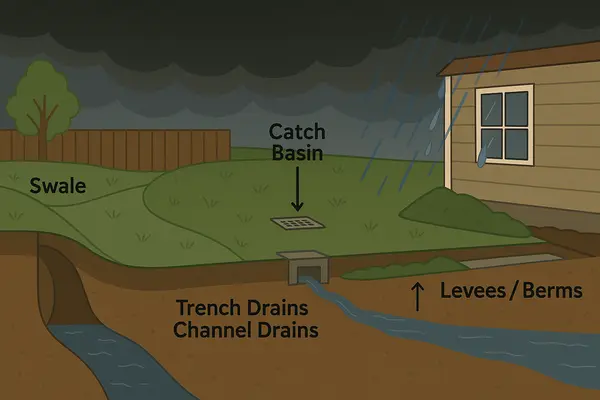
Surface drainage systems are designed to manage water before it soaks into the soil. These systems use swales, shallow trenches, catch basins, and graded slopes to collect runoff and guide it toward a controlled discharge point such as a storm drain or lower section of the property.
By reshaping how water moves across your yard, surface drainage systems prevent pooling, erosion, and foundation saturation. They are especially effective in flat yards and clay-rich soils common throughout Maryland, DC, and Virginia, where water tends to sit rather than absorb.

Subsurface Drainage Systems
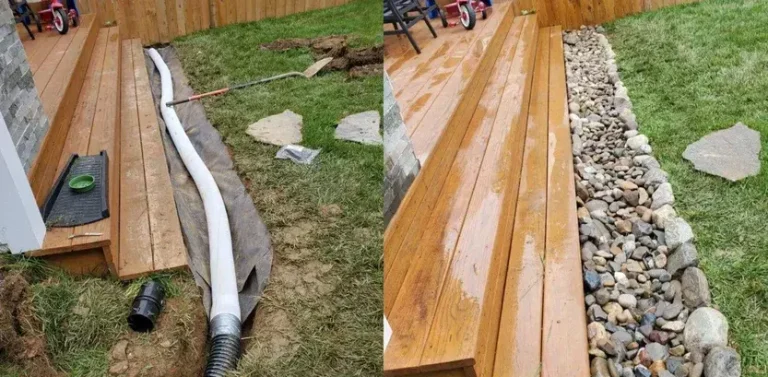
Subsurface drainage systems work underground to remove excess moisture that cannot be managed at the surface. These drainage systems use perforated pipes, typically installed in gravel trenches and wrapped in filter fabric, to capture groundwater and redirect it safely away from foundations and low-lying areas.
Often called as French drains, they are ideal for soggy lawns, high water tables, and basements at risk of seepage. By relieving the water pressure that builds up against your foundation walls, subsurface drainage systems protect structural integrity and help prevent basement leaks.
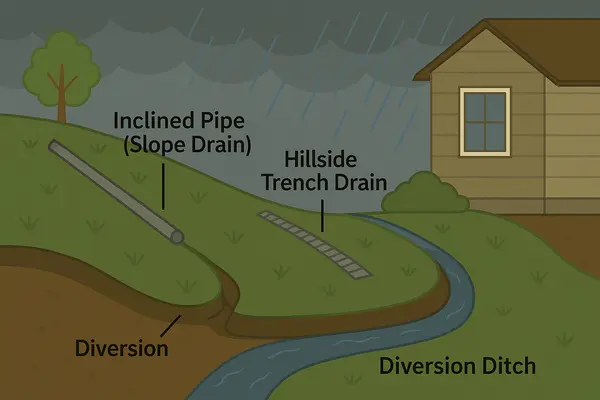
Sloped Drainage Systems
Sloped drainage systems rely on proper grading to direct water away from the home using gravity. By creating a controlled incline, typically around a 2–3% slope, runoff naturally flows away from the foundation instead of collecting near structural walls.
In some cases, pipes or concrete channels are added to strengthen the system on steep or erosion-prone properties. When grading is done correctly, sloped drainage systems remain one of the most effective and low-maintenance solutions available.
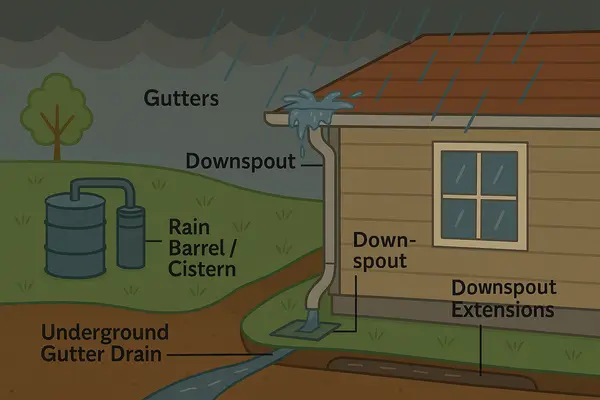
Gutters and Downspout Drainage Systems
Gutters and downspouts form the first stage of most residential drainage systems. Every storm begins at the roof, and without controlled collection, thousands of gallons of water can discharge directly at the foundation, increasing erosion and basement moisture risk.
A properly sized gutter system captures roof runoff, while extended or buried downspouts move water several feet away from the structure. However, clogged or undersized gutters can overflow and defeat the entire drainage system, which is why regular gutter cleaning and inspection are critical. When integrated with surface or subsurface drainage systems, roof runoff is controlled from top to ground.
Protect Your Home Before the Next Storm
Water does not fix itself. It spreads, erodes, seeps, and builds pressure until the damage becomes expensive. In the DMV, heavy rain is not a matter of if, but when. The only question is whether your drainage system is ready.
Since 2008, Blue Collar Scholars has designed and installed drainage systems built specifically for Maryland, Virginia, and D.C. soil conditions. We do not install quick patches or temporary fixes. We engineer long-term solutions that protect foundations, stabilize yards, and control water at the source.
Stop chasing puddles. Stop worrying every time the forecast turns gray. Schedule your drainage consultation today and let’s design a system that protects your home for the long run.
FAQs About Yard Drainage Systems
-
How do I know if I need yard drainage systems?
If water sits in your yard for more than 24–48 hours after rain, you likely need a drainage system. Persistent puddles, soggy soil, foundation moisture, or erosion are early warning signs. Addressing drainage problems early prevents costly structural damage later.
-
Will a yard drainage system increase my home’s value?
Yes. Proper yard drainage systems protect foundations, prevent basement moisture, and improve overall property condition. Buyers are far more confident in homes with visible water protection, which can support stronger resale value and faster sales.
-
What’s the most common yard drainage system?
There is no single solution that works for every home. Some properties only need gutter and downspout extensions, while others require surface drains, grading adjustments, or subsurface systems like French drains. The right drainage system depends on your soil, slope, and runoff patterns.
-
How much does a yard drainage system cost?
Cost depends on the type of drainage system and the complexity of your property. Simple extensions may start at a few hundred dollars, while full subsurface systems typically start at several thousand. Soil conditions, grading, and accessibility all influence final pricing.
-
Can I combine different types of yard drainage systems?
Yes, and in many cases they should be. Combining gutters, surface drainage, grading, and subsurface systems creates layered protection that manages water from the roof to below ground. Integrated drainage systems provide the most reliable long-term results.