

That old wooden deck, once the centerpiece of summer barbecues, may be starting to show its age. Fading boards, small cracks, and the idea of another season of sanding and staining can quickly drain the excitement out of outdoor living. Or maybe you are dreaming of building a new deck but feel overwhelmed by all the deck material options available today.
With so many choices on the market, choosing the right deck material can feel confusing. The best choice is not always the most traditional or the most expensive. It is the one that fits your budget, works with your lifestyle, and does not tie you to constant maintenance.
This guide breaks down the three most popular decking material options in a clear, practical way. You will learn how each material performs, what level of upkeep it requires, and which option suits your long-term goals. By the end, you will know exactly what kind of deck makes sense for your home and how to move forward with confidence.
Why Does the Deck Material Matter?
Whether you deal with high humidity, heavy snow, brutal sun, or constant rain, your local climate shapes how your deck holds up over time. In Maryland, DC, and Northern Virginia, we get all four seasons, and not every material is built to handle that kind of variation. Choosing the right deck material now leads to fewer repairs later and a deck that works for your home, not against it.
Not all decks are created equal. The material you choose directly affects how long your deck lasts, how it looks, how much maintenance it needs, and what it costs you over time. According to the 2025 Consumer Reports “Best Decking Buying Guide,” selecting the right material is critical because materials vary significantly in rigidity, slip resistance, and weather durability, directly impacting the deck’s long-term safety and value.
Most Popular Deck Material Options
Below are the three most common deck material options you will find across homes in Maryland, Washington D.C., and Northern Virginia. The most popular choices include wood decking, composite decking, and concrete decking, each offering a different mix of durability, appearance, and maintenance needs. The right material comes down to how you use your deck, how much upkeep you want to handle, and the long-term look you want for your space.
The deck layout you choose, whether it is elevated, multi-level, ground-level, or wraparound, plays a huge role in how each material performs and should always be considered before choosing your boards.
Wood Decking
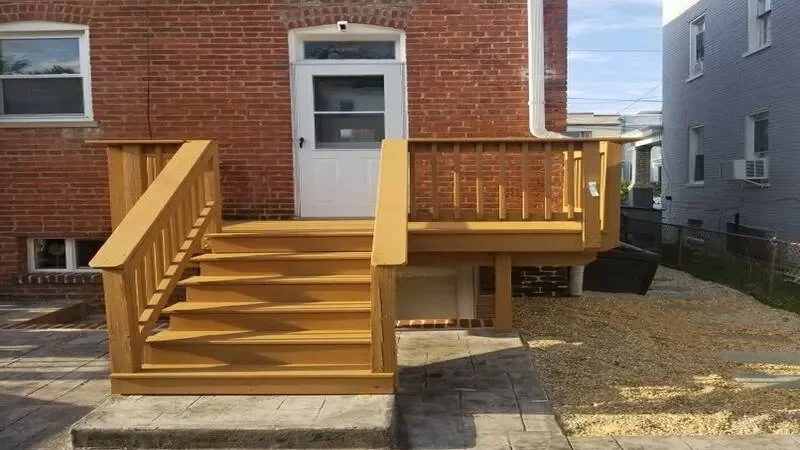
Wood has been the backbone of outdoor structures for centuries, and it remains the most commonly used decking material today. Homeowners continue to choose it for its natural appearance, versatility, and ability to fit almost any home style or budget. The most common wood decking options homeowners choose are pressure-treated lumber and hardwood, each offering a different balance of cost, appearance, and durability.
Pressure-treated wood is made from pine or fir infused with preservatives that resist rot, insects, and moisture. It’s one of the most popular decking materials in Maryland, Washington D.C., and Northern Virginia because it performs well in the area’s humid, unpredictable climate. While it does require regular sealing and staining, proper care helps it deliver dependable performance for many years.
Hardwood decking includes dense, tropical species such as teak, ipe, and mahogany that are known for their strength and natural resistance to moisture and insects. These woods are popular for their rich color, smooth finish, and upscale appearance that instantly elevates an outdoor space. They typically fall on the higher end of the budget spectrum, but the longevity and performance often justify the investment. While it is low maintenance, occasional oiling helps maintain color, and homeowners get exceptional durability that can last for decades when properly installed and cared for.
Composite Decking
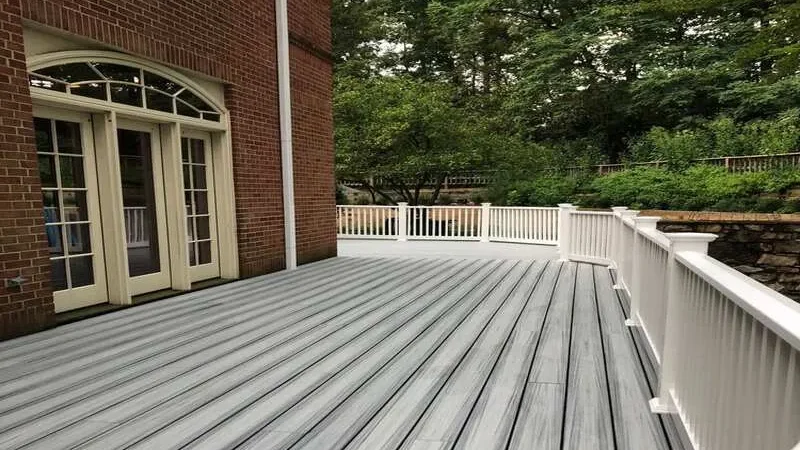
Composite decking is made from a blend of recycled wood fibers and plastic, engineered to feel and look like natural wood without the constant upkeep. Most brands use a higher percentage of plastic than wood, which helps the boards resist moisture, mold, and insect damage far better than traditional lumber. That durability, combined with consistent color and texture, is why composite has become one of the most popular deck materials for homeowners across Maryland, D.C., and Northern Virginia.
Homeowners choose it for its low maintenance, resistance to rot and splintering, and long-term savings, though it can cost more upfront and may hold heat on very hot days. Maintenance is minimal and usually limited to occasional washing with soap and water. When properly installed, composite decking can last 25 to 30 years or more with little visible wear.
Concrete/Stone Decking
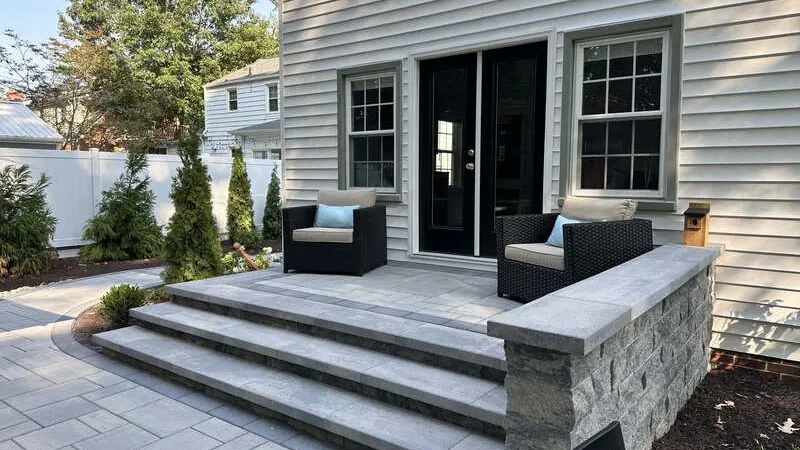
Concrete and stone decking remains a top choice for homeowners who want a permanent, high-end outdoor surface that blends seamlessly with patios, gardens, and walkways. These materials deliver a clean, architectural look that feels more like an extension of the home than a traditional deck. In Maryland’s wet summers and freeze-thaw winters, they continue to perform reliably where other materials can struggle. That long-term stability is a big reason they stay popular year after year.
Concrete and stone decking includes poured concrete slabs and natural or engineered stone surfaces built as a solid outdoor platform. Homeowners choose it for its strength, upscale appearance, and ability to match surrounding hardscaping. The main tradeoff is a higher upfront cost, but in return, you get decades of durability and low maintenance.
Choosing the Right Deck Material
Every decking material brings its own strengths, whether you want the warmth of real wood, the convenience of low-maintenance boards, or a surface that stands up to the DMV’s humidity and freeze-thaw cycles. Your local climate, lifestyle, and long-term plans matter just as much as looks when choosing the right deck. The goal is finding a material that performs well today and continues to hold up for years to come.
Before choosing a material, it helps to ask a few practical questions:
- Do you prefer a natural or modern look?
- How much maintenance are you willing to do each year?
- Does your yard get full sun, shade, or moisture exposure?
- What’s your budget, and how long do you plan to stay in your home?
If you love a traditional backyard feel, pressure-treated wood or hardwood may be the right fit depending on your budget and maintenance expectations. If you want durability with minimal upkeep, composite decking stands out as a long-term option. For homeowners who prioritize strength, stability, and a built-in look, concrete and stone offer unmatched longevity.
Deck Railing Materials
While materials like aluminum and PVC might not be the first choice for the main deck surface, they are excellent options for railings. Aluminum offers unmatched strength and a modern look, often lasting 50+ years, while PVC resists moisture and humidity far better than wood. At the same time, pressure-treated wood, composite, and other traditional railing options remain common for homeowners who prefer a classic or budget-friendly style.
All of these railing types are available in designs that balance safety, appearance, and long-term performance. Many homeowners mix materials, such as pairing a composite deck with aluminum railings or wood posts, to get the best of both worlds. This approach allows for more customization without sacrificing durability where it matters most.
Ready to Build Your Dream Deck?
At Blue Collar Scholars, we’ve spent more than 15 years helping homeowners across Maryland, D.C., and Virginia design and build custom decks that stand the test of time. From selecting the right materials to handling permits and installation, our team makes the process simple, stress-free, and tailored to your home.
Every single one of our projects comes with a 3-year craftsmanship guarantee, and we’re fully licensed and insured for your peace of mind. Let’s lock in your dream deck! Schedule your free deck estimate today!
Frequently Asked Questions About Deck Materials
What are the best decking materials for Northern Virginia?
Composite decking is one of the best choices for Northern Virginia because it handles moisture, heat, and seasonal weather better than pressure-treated wood. Pressure-treated decking remains popular for its lower upfront cost, while hardwoods like teak appeal to homeowners who want a longer lifespan and less climate-related warping.
What are the best decking materials for humid and rainy climates?
Composite decking performs better than pressure-treated wood in wet conditions because it resists rot, swelling, and insect damage. While pressure-treated lumber is treated for moisture resistance, it still requires regular sealing, whereas composite stays stable with minimal upkeep.
Which deck materials are the easiest to maintain with low maintenance annually?
Composite decking is easier to maintain than pressure-treated wood because it never needs staining, sanding, or sealing. By comparison, pressure-treated decks must be resealed regularly to slow down cracking, fading, and moisture damage.
What is the best decking material for a fire-prone area?
Concrete and stone are the safest choices and outperform pressure-treated wood because they are non-combustible. Composite decking is also safer than pressure-treated lumber, which is more vulnerable to fire and heat damage over time.
What decking material lasts the longest?
Concrete and stone decks last far longer than pressure-treated wood and often perform well for decades with minimal maintenance. Among non-stone options, hardwoods and composite decking both significantly outlast pressure-treated lumber when properly installed.