

After spending too much time indoors, eating another meal at the kitchen counter, or scrolling through a feed on the couch, it’s easy to forget how good it feels to be outside. The cycle of screen time and indoor routines can make us feel disconnected from the natural world right outside our door.
More homeowners across Maryland, D.C., and Virginia are investing in custom deck designs that fit their yard, their lifestyle, and their budget. In this guide, we’ll walk through nine of the most popular types of deck designs, explain why the one you choose matters, and help you compare your options based on how you live and how your yard is shaped.
What Exactly Is a Deck?
A deck is an open, flat platform built outdoors, usually attached to the back or side of a house and often elevated from the ground. The most popular types of decks are built from pressure-treated wood, composite materials, or concrete.
They extend your indoor living space and create a comfortable area for dining, entertaining, or simply relaxing outside.
Why Your Deck Design Matters
The best deck designs don’t just fill unused space. They create areas for dining, relaxing, and entertaining while adding comfort through every season. The right design should match how you live, how your yard is shaped, and what your home actually needs.
A well-built deck also adds lasting value. According to the 2025 Cost vs. Value Report, a wood or composite deck addition can recoup around 89 to 95 percent of its cost at resale. Modern deck designs combine smart layout and quality craftsmanship to create outdoor spaces that look great and function year-round.
1. Attached Deck
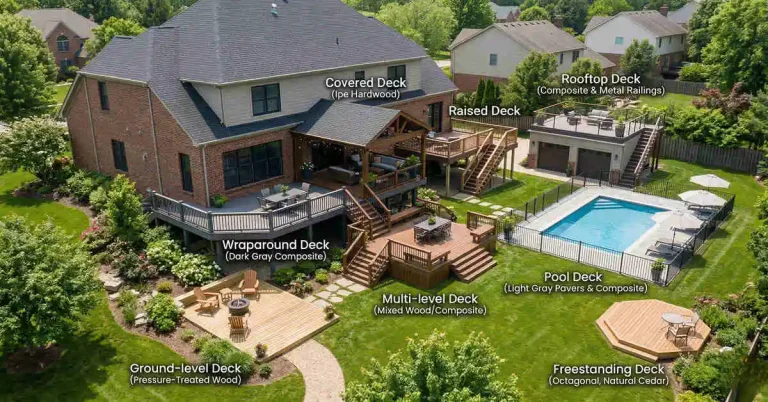
An attached deck connects directly to your home and extends from a back or side door. This deck design makes outdoor space feel like a true extension of your living room or kitchen. Homeowners love attached decks because they create a natural indoor-outdoor flow for dining, grilling, and relaxing.
In Maryland, DC, and Northern Virginia, attached decks are especially popular for adding everyday usability without changing the home’s footprint.
Pros of an attached deck designs:
- Adds strong resale value
- Works well for entertaining
- Creates a natural flow between home and yard
Cons of an attached deck designs:
- May not suit every home design
- Needs solid structural attachment
2. Detached Deck / Floating Deck
A detached deck is a freestanding structure placed anywhere on your property. This deck design turns unused space into a destination that feels intentionally built. Homeowners choose detached decks when they want flexibility or when a direct connection to the house isn’t possible.
They work well for garden areas, firepit setups, and quiet personal retreats away from the main house.
Pros of a detached deck designs:
- Installs quickly and easily
- Fits anywhere on the property
- Creates a peaceful, standalone retreat
Cons of a detached deck designs:
- May settle or shift over time
- Needs occasional ground maintenance
3. Elevated / Second-Story Deck
An elevated deck extends from an upper level and stands on structural posts and beams. This deck design opens up wide views of your property and adds vertical living space. Homeowners with sloped lots or walk-out basements often go this route to maximize outdoor use.
The space underneath can serve as storage, seating, or a shaded hangout area.
Pros of an elevated deck designs:
- Adds height and visual appeal
- Provides shade and storage below
- Expands vertical space and backyard use
Cons of an elevated deck designs:
- Costs more to build and maintain
- Requires regular structural inspection
4. Multi-Level Deck / Tiered Deck
A multi-level deck uses platforms at different heights connected by stairs. This deck design works especially well on sloped or large properties, creating functional zones for different activities. Homeowners love how tiered layouts separate cooking, lounging, and entertaining areas.
It’s one of the most practical types of decks for yards with uneven terrain.
Pros of a multi-level deck designs:
- Works perfectly on sloped lots
- Adds visual variety and function
- Separates areas for multiple activities
Cons of a multi-level deck designs:
- Costs more to design and build
- Can limit accessibility for some users
5. Wraparound Deck
A wraparound deck extends along two or more sides of a home. This deck design multiplies your access points and gives you flexibility to follow the sun or find shade throughout the day. Homeowners enjoy the porch-style lifestyle it creates and the unmatched outdoor flow from room to room.
Pros of a wraparound deck designs:
- Offers all-day usability
- Improves airflow and natural light
- Expands outdoor access and seating
Cons of a wraparound deck designs:
- Needs extra supports and railings
- Requires more materials and maintenance
6. Rooftop Deck
A rooftop deck transforms unused roof space into a private outdoor escape. This deck design builds upward when your lot can’t expand outward. Urban homeowners love rooftop decks for skyline views and total privacy.
In dense DMV neighborhoods, they offer a luxury outdoor experience without sacrificing square footage.
Pros of a rooftop deck designs:
- Increases property value and style
- Makes the most of small or urban lots
- Creates elevated views and entertainment space
Cons of a rooftop deck designs:
- Requires professional waterproofing
- Involves higher permit and engineering costs
7. Pool Deck
A pool deck surrounds your pool with a safe walking and lounging surface. This deck design turns a standard pool into a resort-style backyard retreat. Homeowners choose pool decks for comfort, cooling materials, and slip protection.
The right surface defines the space and improves the overall flow of your backyard layout.
Pros of a pool deck designs:
- Enhances backyard appearance
- Handles water and heat effectively
- Improves safety and comfort around pools
Cons of a pool deck designs:
- Needs cleaning and resealing
- Costs more for quality, heat-safe materials
8. Covered / Screened-in Deck
A covered or screened-in deck adds overhead protection and enclosure. This deck design extends your outdoor comfort into rain, summer heat, and mosquito season. Homeowners rely on these setups to protect furniture and get more daily use out of their outdoor space.
It’s one of the most popular types of decks for year-round living in the DMV climate.
Pros of a screened-in deck designs:
- Reduces wear on furniture
- Protects from weather and insects
- Extends outdoor living year-round
Cons of a screened-in deck designs:
- Costs more to install
- Requires permits for roofing or screens
9. Built-In Feature Deck
A built-in feature deck includes permanent elements like benches, lighting, or planters. This deck design creates a finished, custom look where everything feels intentional. Homeowners prefer this setup because it reduces clutter and improves entertaining flow.
Built-ins also boost curb appeal and overall property value.
Pros of a built-in deck design:
- Boosts overall property appeal
- Keeps design clean and organized
- Maximizes comfort and functionality
Cons of a built-in deck design:
- Costs more to customize
- Limits flexibility for future updates
Choosing the Right Type of Deck Design
Picking a deck design is a practical decision that goes beyond looks. It means thinking about your property, your budget, and how you actually want to use the space.
- Landscape: Is your yard flat, sloped, or multi-leveled?
- Purpose: Is this for gathering, family time, or a personal retreat?
- Privacy: Do you want open views or more seclusion from neighbors?
- Style: Do you want it to match your home’s style?
- Maintenance: Low-maintenance materials or natural materials with periodic upkeep?
- Local Codes: Do you need a permit? Are there zoning rules or HOA limits to follow?
- Budget: Do you have a realistic investment range in mind?
- Climate: Do you want the deck to be built for the heat, rain, and winter wear?
- Enhancements: Do you need seating, shade, or lighting? Do you want to add furniture?
If you’re not sure how to answer some of these, that’s normal. Most homeowners figure out what they really want after a site visit and design consultation. At Blue Collar Scholars, we walk you through the process clearly so you always know what to expect.
Does a Deck Add Value to My Home?
Yes. A well-built deck creates usable outdoor living space and increases your property’s resale value, especially when built with durable materials and a professional finish. It’s one of the most cost-effective upgrades a DMV homeowner can make.
Deck Maintenance
No matter which deck design you choose, regular maintenance keeps it safe and extends its life. Different types of decks require different care, but every deck benefits from the basics.
- Sweep away leaves and debris regularly
- Seal or stain wood decks every few years
- Fix small issues right away to avoid bigger repairs
- Check for loose boards, raised nails, and early signs of rot after each season
- Wash the surface with mild soap or a deck cleaner to prevent stains and mildew
When you build with Blue Collar Scholars, every deck we install comes with a three-year craftsmanship guarantee.
Start Your Deck Upgrade Today!
If you’re in Maryland, D.C., or Virginia and have been thinking about adding a deck, Blue Collar Scholars is ready to help. We have over 15 years of experience building decks, patios, screened porches, and outdoor spaces across the DMV. We know what holds up in this region’s weather and clay soils.
Get your free deck estimate today. Every project is backed by our three-year quality craftsmanship guarantee, so you can relax knowing your deck is built to last.
Deck Designs: Frequently Asked Questions
What deck design is best for a sloped yard?
A multi-level or tiered deck design works best on sloped lots. It uses the grade of the yard to create separate platforms at different heights, turning uneven terrain into a functional and attractive outdoor space.
What are the different types of decks materials?
The most common deck material options include pressure-treated wood, composite, and concrete. Each material differs in durability, appearance, and upkeep, so the best choice depends on your climate, budget, and how much maintenance you want to handle long term.
What is the most low-maintenance deck material?
Composite decking is the easiest option to maintain because it resists moisture, insects, and fading without the need for staining or sealing. It is ideal for homeowners who want a long-lasting deck that keeps its appearance with minimal effort.
What are the most popular deck designs for DMV homeowners?
Attached decks, multi-level decks, and covered or screened-in decks are among the most popular choices in Maryland, D.C., and Virginia. Each deck design suits different yard sizes, home styles, and lifestyle needs.
How do I choose the right deck design for my home?
Start by looking at your home’s layout, your yard’s terrain, and how you plan to use the space on a daily basis. A professional can help you evaluate budget, materials, and functionality to create a deck design that fits both your lifestyle and your property.