

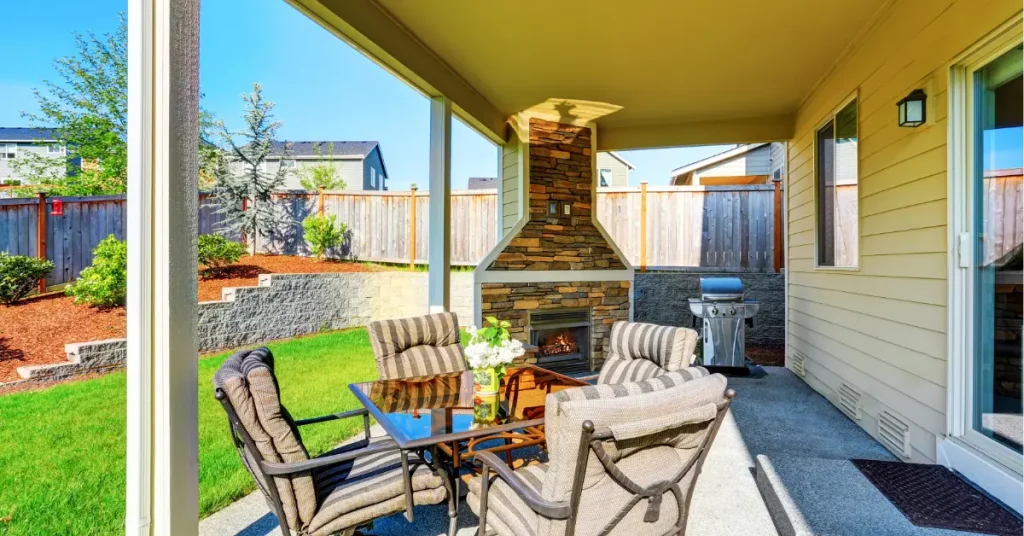
A covered patio with fireplace extends your outdoor living season by 3-4 months in the Maryland, Virginia, and DC climate. This combination provides weather protection plus ambient heating, typically adding 10-20% to home values in affluent DMV neighborhoods like Bethesda, McLean, and Great Falls. Professional installation ensures proper ventilation, local code compliance, and structural integrity – critical factors that protect your investment for decades.
Here’s what we’ve learned after building 200+ covered patio fireplace projects across the DMV region: homeowners who invest in this upgrade rarely regret it. The challenge? Most contractors either oversimplify the planning or overcomplicate the execution. Neither approach serves you well.
At Blue Collar Scholars, we’ve spent 15+ years perfecting covered patio fireplace installations throughout Montgomery County, Maryland, Northern Virginia, and Washington, D.C. We understand the specific permitting requirements in Bethesda versus McLean. We know which materials withstand our humid summers and occasional ice storms. Most importantly, we’ve learned what affluent homeowners actually need versus what generic contractors typically recommend.
Here’s what this guide covers:
- Design approaches that complement DMV architectural styles (colonial, craftsman, contemporary)
- Real cost breakdowns from actual Montgomery County and Fairfax County projects
- Permitting processes specific to Maryland, Virginia, and DC jurisdictions
- Gas versus wood fireplace considerations for covered spaces
- How to maximize your ROI in high-value neighborhoods
Why Add a Covered Patio with Fireplace to Your Home
Let’s address the obvious question first: Is this worth the investment for your Potomac, Bethesda, or McLean property?
After 15+ years serving high-end residential clients, we can tell you this – covered patio fireplaces rank among the top 3 outdoor upgrades that actually increase property values in the DMV market. Not speculation. Real data from local real estate transactions.
The covered structure alone solves Maryland’s rain problem (we average 43 inches annually). The fireplace addresses our transitional seasons – those beautiful spring and fall evenings when temperatures drop but you’re not ready to retreat indoors. Together? You gain 90-120 additional days of outdoor usability compared to an exposed patio.
What our Bethesda and McLean clients consistently report:
Property value increases between 10-20% aren’t uncommon for well-executed outdoor living projects, according to data from the National Association of Home Builders. In high-value neighborhoods, that can translate to significant equity growth. Not every upgrade delivers this kind of return.
Extended season use means actual lifestyle improvement. Our Potomac clients regularly use their covered patio fireplaces from March through November – that’s 9 months of functional outdoor space in a climate that historically limited outdoor entertaining to 5-6 months.
Entertainment capacity matters when your home serves as your primary social venue. Post-COVID, we’ve seen a dramatic shift – affluent homeowners invest in their properties rather than dining out constantly. A professional outdoor living space design creates the kind of environment where you actually want to host.
The psychological benefits surprise people. Having immediate access to an outdoor retreat – weather-protected, comfortably heated – reduces stress. We hear this consistently from our clients in high-pressure careers across Bethesda, McLean, and DC. The fifteen-second walk from your home office to your covered patio fireplace might be your most valuable work-from-home investment.
Curious how a covered patio fireplace would look with your Bethesda or McLean home’s architecture? Schedule a free design consultation to explore custom options for your property.
Popular Covered Patio Fireplace Design Styles for 2025
After completing projects in Great Falls, Arlington, and Chevy Chase, we’ve noticed clear design patterns that work exceptionally well in the DMV region.
Your choice should complement your existing architecture. That 1970s colonial in Bethesda needs a different approach than a contemporary build in Reston. Here’s what actually works.
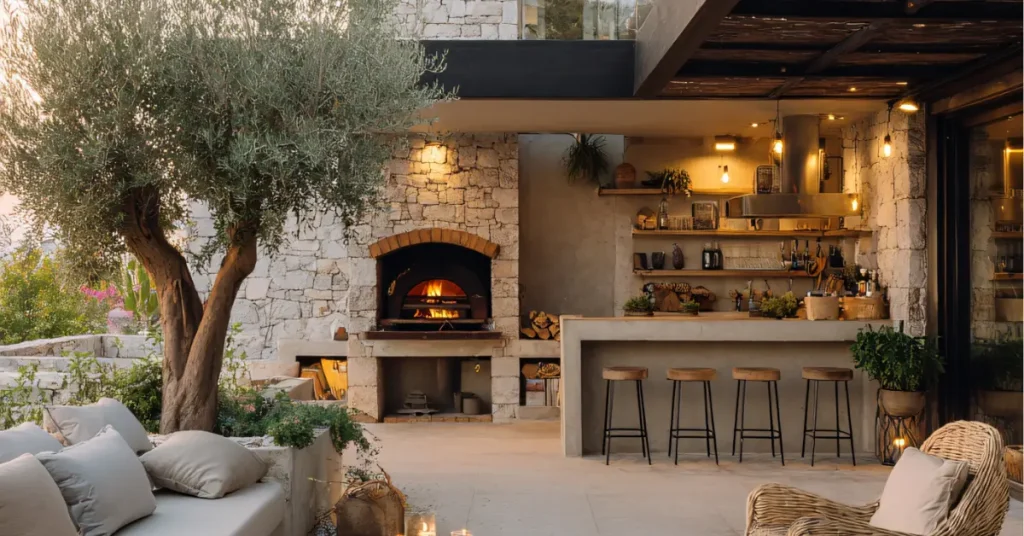
Rustic Retreat Approach
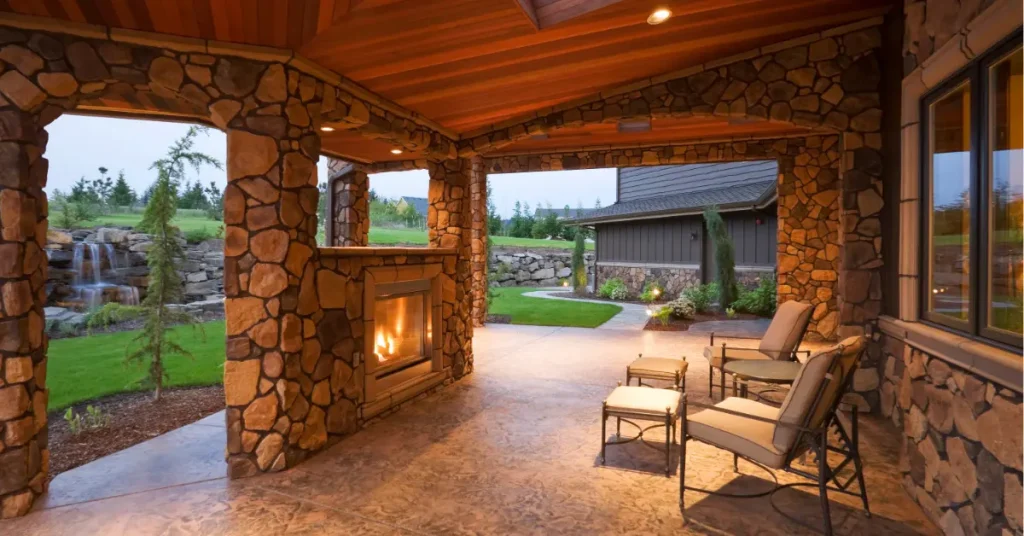
Natural stone veneer creates mountain lodge aesthetics that pair beautifully with colonial and craftsman homes common throughout Montgomery County. Think rough-hewn mantels, cedar beam structures, and stone surrounds in earth tones.
This style works particularly well for properties backing to wooded areas – common in Great Falls and Potomac. The natural materials harmonize with existing landscaping while the substantial construction handles Mid-Atlantic weather extremes.
We typically use locally-quarried stone when possible. Transportation costs from distant suppliers add 15-20% to material budgets – money better spent on quality installation. Cedar beams from regional mills provide authentic character while supporting local businesses.
Rustic covered patio fireplaces require skilled masonry work and premium natural materials, reflecting the craftsmanship these designs demand.
Modern Minimalist Design
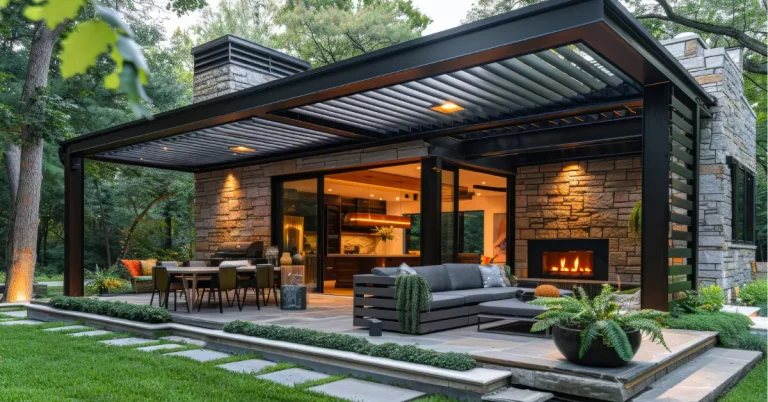
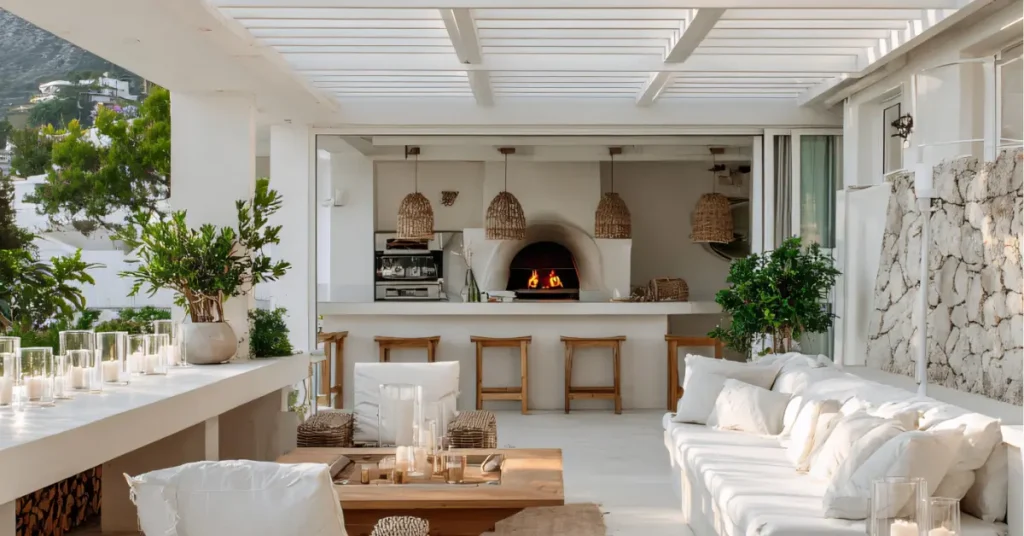
Clean lines define contemporary covered patio fireplaces. Linear gas burners create horizontal focal points. Concrete or stucco finishes in neutral grays and whites. Metal roof structures with crisp edges.
This aesthetic dominates newer construction in Reston, parts of Arlington, and modern renovations throughout Northwest DC. The streamlined approach emphasizes function over ornamentation – perfect for clients who want sophistication without visual clutter.
One practical advantage: modern designs typically cost less than rustic styles due to simpler construction and more affordable materials. Those savings can fund other features like integrated outdoor kitchens or advanced lighting systems.
We’ve completed several stunning modern covered patio fireplaces in McLean and Fairfax where the minimalist aesthetic complements mid-century and contemporary home architectures.
Farmhouse Integration
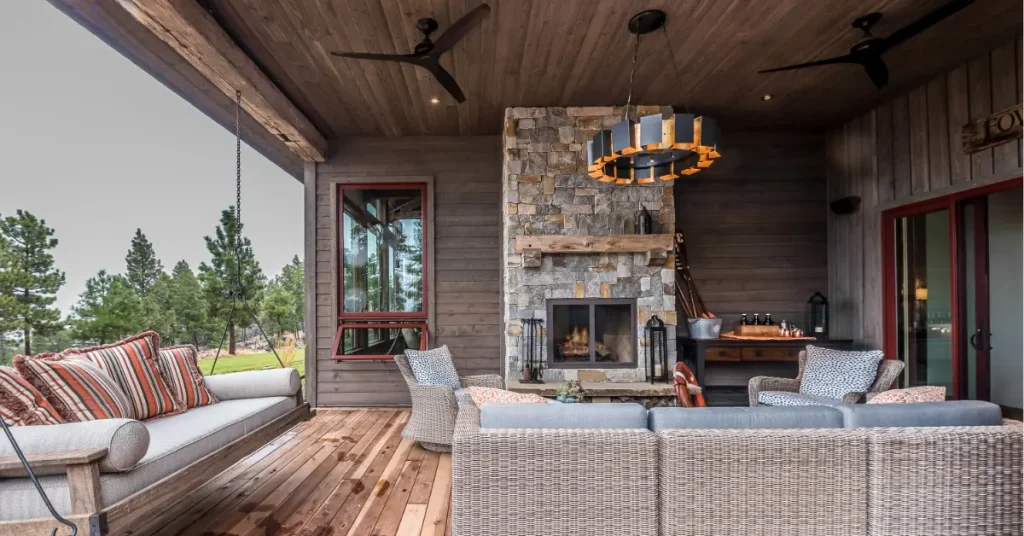
Farmhouse style bridges traditional and contemporary – increasingly popular with younger affluent buyers (30-45 age range) purchasing in established neighborhoods.
Shiplap ceiling treatments overhead. Whitewashed brick fireplaces. Edison bulb lighting fixtures. Comfortable, oversized seating. The approach creates cozy sophistication – polished but livable.
We’ve completed several farmhouse-style covered patios in Columbia and Annapolis where this aesthetic resonates with families seeking that “high-end but not stuffy” atmosphere. The style works beautifully with both colonial and contemporary homes when executed properly.
Cost considerations? Farmhouse covered patio fireplaces typically fall between rustic and modern for complete installations including quality materials and professional craftsmanship.
Choosing Between Gas and Wood Fireplaces for Covered Patios
This decision significantly impacts both your initial investment and long-term experience. Let’s cut through the marketing nonsense and focus on what actually matters for DMV homeowners.
1. Gas Fireplace Reality
Convenience drives gas fireplace popularity in our market. Remote control operation. Precise temperature adjustment. Minimal maintenance. No ash disposal. These factors matter when you’re a two-career household in McLean or a busy professional in Bethesda.
Installation costs for gas units vary based on burner configuration, gas line requirements, and your specific location. Natural gas connections work well if you have existing service. Propane systems offer installation flexibility using external tanks — particularly useful for properties in Great Falls or rural parts of Montgomery County.
One critical consideration: Gas fireplaces require professional installation to meet Montgomery County, Fairfax County, or DC building codes. According to the National Fire Protection Association, enclosed covered spaces need specific ventilation systems to prevent carbon monoxide accumulation. This isn’t optional – it’s life safety.
The ongoing cost is negligible for regular evening use. Propane costs slightly more than natural gas but provides installation flexibility. Compare that to wood costs covered in the next section and the economic advantage becomes clear.
We’ve installed gas fireplaces for clients who travel frequently – they appreciate returning to homes where the outdoor fireplace works instantly without preparation. For screened porch fireplace options, gas units offer similar convenience advantages.
2. Wood-Burning Considerations
Authentic fire experiences favor wood-burning options. Crackling sounds. Aromatic smoke. Dancing flames. Higher heat output. These sensory elements matter to some clients – particularly those with weekend properties or who genuinely enjoy the ritual of fire-building.
Wood fireplace installation includes chimney construction, which must extend above your roof line with specific clearances from combustible materials per IRC (International Residential Code) standards.
Ongoing maintenance includes annual chimney sweeping, ash removal, and firewood storage considerations. You’ll need covered storage for 1-2 cords if you plan regular use.
One complication: Montgomery County has occasional air quality alerts that restrict wood burning. Same with parts of Northern Virginia during code red days. This limits flexibility compared to gas options.
We’ve built beautiful wood-burning covered patio fireplaces for clients in Great Falls and rural Potomac who have adequate property space for wood storage and don’t mind the maintenance ritual. The authentic experience justifies the extra effort for the right homeowner.
Our Professional Recommendation
After 200+ installations, we typically guide clients toward gas fireplaces for covered patios. The convenience factor wins for busy professionals. However, we’ve built plenty of wood-burning systems for clients who prioritize that authentic experience and don’t mind the maintenance.
Your decision should align with how you actually live. Honest assessment: Will you regularly clean ash, stack wood, and plan ahead for fires? Or do you want instant warmth at the touch of a button? Both answers are valid – just be realistic about your lifestyle.
Not sure which fireplace type fits your lifestyle? Let our team help you evaluate your options with a free consultation – no pressure, just honest guidance.
Planning Your Covered Patio with Fireplace Layout
Successful projects require careful spatial planning that balances safety regulations, functional needs, and aesthetic goals. This is where 15+ years of local experience provides real value.
Safety Clearances – The Non-Negotiables
Montgomery County, Fairfax County, and DC building codes specify minimum clearances between fireplaces and combustible materials. These aren’t suggestions – they’re legal requirements that inspectors will flag.
- Wood-burning units typically require 36 inches of side clearance and 48 inches in front. Gas fireplaces may allow reduced clearances based on manufacturer specifications and local code interpretations – but you need documentation.
- Ceiling height becomes critical under covered structures. Most jurisdictions require minimum 10-foot ceiling clearance for wood-burning fireplaces in covered spaces. Gas units offer more flexibility but still need adequate ventilation per manufacturer specs.
We handle this complexity for every project – coordinating with local building departments before breaking ground. Trying to fix clearance issues after construction costs 3-5x more than planning correctly upfront.
Functional Design Considerations
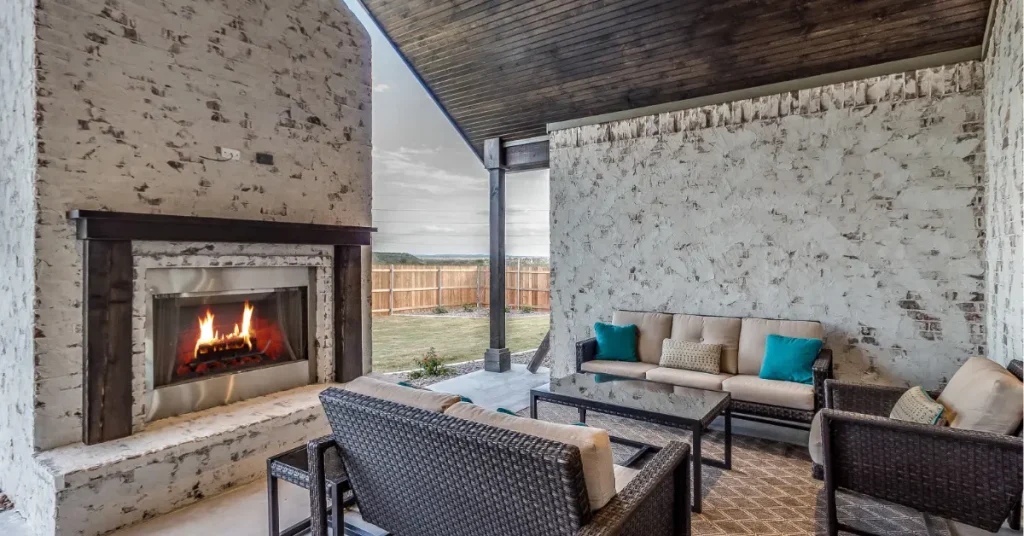
Seating arrangements should position furniture to maximize fireplace enjoyment while maintaining conversation flow. We typically recommend either U-shaped or L-shaped furniture layouts – both create intimate gathering spaces without blocking heat distribution.
Built-in seating works beautifully for covered patios when budget allows. Stone or brick seating walls with cushioned tops provide permanent solutions that don’t require furniture storage during winter months.
The relationship between your covered patio and existing home access points affects daily usability. Direct connections from kitchens or family rooms create seamless indoor-outdoor flow that encourages regular use. We’ve seen well-designed covered patio fireplaces transform from “special occasion” spaces to daily-use retreats simply through better access planning.
Traffic flow matters more than most homeowners realize. You need clear paths between your home, the fireplace area, and any other features like outdoor kitchens or seating zones. Our hardscape design and installation expertise ensures these elements work together cohesively.
What Does a Covered Patio with Fireplace Cost in the DMV
Let’s discuss numbers. Real numbers from actual Montgomery County, Fairfax County, and DC projects – not national averages that don’t reflect our market.
Structure Construction
Covered patio construction in our market depends on size and complexity. A basic 12×16 gable roof with asphalt shingles and standard posts falls toward the lower end. More elaborate designs with tongue-and-groove cedar ceilings, decorative columns, and premium roofing materials require higher investment.
Foundation work requires proper concrete footings and slabs. Maryland, Virginia, and DC building codes require frost-depth footings (typically 30-36 inches in our region) to prevent settling and structural damage from freeze-thaw cycles.
Post locations, beam sizing, and roof pitch all affect costs. We calculate structural requirements based on local snow load and wind requirements – Montgomery County has different specifications than Fairfax County or DC.
Fireplace Installation Investment
Wood-burning fireplace installations include chimney construction in the DMV market. Natural stone veneer surrounds cost more than brick or stucco alternatives. The chimney component represents a significant portion of wood fireplace costs — you’re building a substantial masonry structure that must meet strict safety codes.
Gas fireplace installations vary depending on burner type and gas line requirements. Linear burners create more dramatic visual effects but cost more than traditional log sets. Gas line extensions from your home are a consideration for properties with distant meter locations.
Our typical Bethesda or McLean covered patio with fireplace project includes quality materials, proper permits, professional installation, and our 3-year craftsmanship guarantee.
Additional Project Expenses
Permits and inspections are required for most DMV projects. Montgomery County permit fees differ from Fairfax County and DC — we handle these details for every installation. These costs cover plan review, structural inspections, electrical inspections, and gas inspections if applicable.
Electrical work for lighting, fans, and fireplace controls varies depending on circuit requirements and fixture selections. Outdoor-rated components cost more than indoor equivalents but provide necessary weather resistance. We always use GFCI protection for outdoor circuits per National Electrical Code requirements.
Premium features enhance functionality but increase investment:
- Integrated outdoor kitchens depending on appliances and built-in features
- Ceiling fans with remote controls
- Custom lighting systems with quality LED fixtures and controls
- Retractable motorized screens
These enhancements transform your covered patio with fireplace into a comprehensive outdoor living destination. Whether they’re worth the investment depends on how you plan to use the space.
Want a detailed estimate for your specific property? Our custom outdoor patio installation team provides free consultations with transparent pricing – no surprises, no pressure.
Best Materials for Covered Patio Fireplace Construction
Material selection critically impacts both immediate appearance and long-term performance. Outdoor environments demand materials engineered to withstand temperature variations, moisture exposure, and UV degradation.
After 15+ years building in the DMV region, we’ve learned which materials deliver lasting value and which create maintenance headaches.
Roofing Materials That Perform
Architectural shingles provide traditional appearance with proven 20-30 year lifespan in our climate. We use premium grades rated for Mid-Atlantic weather – standard builder-grade shingles don’t hold up well in our humid summers and occasional ice storms.
Metal roofing offers superior durability and fire resistance – particularly important near fireplace openings. Standing seam metal roofs deliver 40-50 year performance with minimal maintenance. We’ve installed several metal roof covered patios in Great Falls and Potomac where the aesthetic complements contemporary and transitional home styles.
Polycarbonate panels allow natural light transmission while providing weather protection for contemporary designs. These work well for covered patios adjacent to darker home interiors where maintaining brightness matters. Cost runs similar to metal roofing but requires different structural support.
Each roofing material requires appropriate structural support. Metal roofing’s lighter weight allows longer spans between support beams – potentially reducing column requirements and improving sight lines.
Fireplace Surrounds That Last
Natural stone veneer creates luxurious appearances while providing excellent heat resistance. We work with several local stone suppliers who source Pennsylvania bluestone, Virginia fieldstone, and other regional materials that complement DMV architectural styles.
Stone varieties like granite, limestone, and fieldstone withstand temperature extremes without cracking or discoloration. Installation costs run higher than alternatives but the durability and aesthetic impact justify the investment for high-end properties.
Brick offers timeless appeal with reliable performance. Traditional clay brick and concrete masonry units both meet fire safety requirements while complementing various architectural styles.
We’ve built brick fireplace surrounds for numerous colonial and craftsman homes throughout Bethesda and Chevy Chase where the material choice harmonizes with existing home architecture.
Stainless steel components in gas inserts and flue systems resist corrosion from combustion byproducts and weather exposure. Quality stainless steel maintains appearance and functionality for decades with minimal maintenance – critical for covered outdoor applications.
Flooring Options That Perform
The right outdoor patio flooring materials make substantial differences in both immediate comfort and long-term maintenance.
Stamped concrete provides durability and design flexibility while maintaining appropriate fire resistance near fireplace areas. Integral color and pattern options mimic natural stone at lower costs. Our concrete patio foundation work ensures proper base preparation that prevents cracking.
Porcelain pavers offer premium aesthetics with excellent weather resistance. Large-format pavers (24×24 or larger) create contemporary appearances while withstanding freeze-thaw cycles better than natural stone alternatives.
Natural stone like bluestone or flagstone provides authentic beauty with proper installation. These materials require more maintenance than alternatives (periodic sealing) but many clients prefer the aesthetic. Installation costs vary widely based on stone selection and pattern complexity.
Composite decking works well in covered areas away from direct fireplace exposure. Check manufacturer fire ratings and maintain recommended clearances from heat sources. Quality composite materials require minimal maintenance.
Permits and Safety Requirements for Maryland, Virginia & DC
Regulatory compliance ensures your covered patio fireplace meets safety standards and legal requirements. Professional contractors understand local codes and navigate approval processes efficiently – critical for high-value properties where mistakes cost serious money.
Required Permits by Jurisdiction
Montgomery County, Maryland requires separate permits for structural work, gas installations, and electrical systems. Plan review typically takes 2-3 weeks once documents are submitted. We maintain relationships with county plan reviewers that help streamline approvals – our complete submittals rarely face significant delays.
Fairfax County, Virginia enforces similar requirements with additional attention to stormwater management for projects over 2,500 square feet of disturbance. Tree preservation requirements can affect site planning for properties with significant existing trees. Permit processing takes 3-4 weeks typically.
Washington, D.C.’s Department of Consumer and Regulatory Affairs handles permits through the DCRA system. Historic districts require additional approvals from preservation review boards – adding 4-6 weeks to timelines. We’ve navigated dozens of DC projects and understand the specific documentation these reviews require.
HOA approvals add another layer for properties in planned communities. Many Bethesda, Potomac, and McLean neighborhoods have architectural review boards that scrutinize outdoor structure designs. We help clients prepare submittals that address common HOA concerns upfront – architectural compatibility, neighbor impact, and community standards.
Fire Safety Code Compliance
Chimney height requirements mandate at least 2 feet above any roof structure within 10 feet horizontally. This prevents sparks and embers from igniting nearby combustible materials – a serious concern with wood-burning fireplaces.
Clearances from property lines typically require 10-15 feet for wood-burning fireplaces. Gas units may allow reduced distances based on manufacturer specifications and local code interpretations. We verify these requirements for every property before finalizing designs.
According to the National Fire Protection Association standards, enclosed covered spaces need adequate combustion air and exhaust systems. This requires careful coordination between structural design and fireplace specifications – another reason professional installation matters.
Our Permit Management
At Blue Collar Scholars, we handle all permit applications and regulatory compliance for your covered patio with fireplace installation. Our 15+ years serving the DMV region means we understand Montgomery County requirements versus Fairfax County versus DC. We coordinate inspections, address reviewer comments, and ensure your project proceeds smoothly from approval through final inspection.
This expertise saves you weeks of frustration and prevents costly mistakes. We’ve seen DIY permit applications rejected multiple times, delaying projects by months. Our professional approach gets approvals right the first time.
Feeling overwhelmed by permits and regulations? Let our team handle the complexity while you focus on enjoying your new outdoor space.
How to Use Your Covered Patio with Fireplace Year-Round
Maximizing your investment requires thoughtful integration of climate control, lighting, and comfort features. The goal: create spaces that remain inviting regardless of season or weather conditions.
Climate Control Beyond the Fireplace
Your primary fireplace provides substantial warmth, but larger covered areas benefit from supplemental heating. Infrared heaters mounted on posts or ceiling structures deliver targeted warmth without consuming valuable floor space.
Ceiling fans circulate air during summer months while helping distribute heat in cooler weather. Reversible motors allow seasonal adjustment – counterclockwise for cooling effect, clockwise to push warm air downward. We install fans rated for wet locations with lighting integration for dual functionality.
Retractable screens offer insect protection without blocking airflow or views. Motorized versions provide convenience but require more maintenance.
These winter patio heating solutions extend your outdoor season substantially. Our McLean clients regularly use covered patios with proper climate control from March through November – 9 months of functional outdoor living.
Lighting Design That Works
Layered lighting approaches combine ambient, task, and accent fixtures for maximum flexibility. Dimmable LED systems allow mood adjustments from bright entertainment settings to soft evening ambiance.
According to the U.S. Department of Energy, LED fixtures provide 75% energy savings compared to incandescent alternatives while lasting 25x longer. This matters for outdoor applications where fixture access for bulb changes can be challenging.
String lights create casual, festive atmospheres perfect for gatherings. Quality commercial-grade string lights with LED bulbs usually deliver years of reliable service.
Permanent architectural lighting highlights design features while providing functional illumination. We typically install recessed canister lights in ceilings plus accent lighting for fireplace features and architectural details.
Furniture and Accessories That Endure
Weather-resistant sectionals, all-weather rugs, and modular seating create comfortable arrangements that withstand outdoor conditions year-round. We guide clients toward quality outdoor furniture that justifies the investment – cheap furniture looks cheap and fails quickly in outdoor applications.
Quality outdoor sectionals deliver 8-12 years of service with proper care. Sunbrella fabrics resist fading and mildew while remaining comfortable. Aluminum frames with powder-coated finishes handle Mid-Atlantic humidity without rusting.
Storage solutions keep cushions, firewood, and entertainment supplies organized and protected. Built-in cabinets provide convenient access while maintaining clean aesthetics. Weather-proof deck boxes offer less expensive alternatives.
Why Professional Installation Matters for Your Investment
Covered patio fireplace projects involve carpentry, masonry, plumbing (for gas), and electrical work. Professional contractors coordinate these disciplines while ensuring code compliance and quality results.
This complexity matters more for high-value properties where mistakes cost serious money.
Design Expertise That Saves Money
Experienced contractors help you avoid common planning mistakes that affect functionality and safety. We evaluate site conditions, drainage requirements, and structural considerations before finalizing designs. This upfront analysis prevents expensive corrections during construction.
Our team provides realistic timelines and budgets based on actual project requirements – not idealized estimates. After 200+ covered patio fireplace installations, we understand what projects actually cost in the DMV market. This transparency helps you make informed decisions about feature priorities and investment levels.
For example: Clients often request fireplace locations that create code compliance issues or poor heat distribution. We identify these problems during design – when solutions cost nothing instead of thousands.
Construction Quality That Lasts
Proper concrete patio foundation work prevents settling and structural problems that plague DIY projects. We understand Montgomery County, Fairfax County, and DC soil conditions. We know local frost depth requirements. We’ve built on everything from clay soils in Bethesda to rocky terrain in Great Falls.
Professional masonry work creates safe, durable fireplace structures that meet building codes. Proper mortar mixing, flashing installation, and chimney construction require specialized skills and experience. A poorly-built fireplace becomes a safety hazard and liability – not worth any cost savings from cutting corners.
Gas line connections must be performed by licensed plumbers per code requirements. This isn’t negotiable in Montgomery County, Fairfax County, or DC. Improper gas work creates explosion and carbon monoxide risks. We coordinate with licensed professionals for every gas fireplace installation.
Project Management That Delivers
We handle permit applications, schedule inspections, and coordinate trades to keep projects on schedule. This management eliminates the stress and complexity of orchestrating multiple contractors and approval processes.
Our warranty protection provides peace of mind beyond basic workmanship guarantees. We stand behind our covered patio fireplace installations with responsive service if any issues arise. After 15+ years serving the DMV region, we’re not going anywhere – you can count on us for long-term support.
Compare this to general contractors who move between markets or DIY approaches where warranty means nothing. Your investment deserves professional backing.
Transform Your Outdoor Living with Blue Collar Scholars
Your covered patio with fireplace represents more than construction – it’s an investment in your family’s lifestyle and your property’s future value.
After 15+ years creating premium outdoor living spaces throughout Maryland, Virginia, and Washington, D.C., we understand what affluent DMV homeowners expect. Quality materials. Expert craftsmanship. Clear communication. Projects completed on schedule and budget. No surprises. No excuses.
Our comprehensive approach combines design expertise, quality construction, and ongoing support to ensure your investment provides maximum enjoyment and value. From initial consultation through final inspection and beyond, we’re your partners in creating outdoor spaces that enhance both lifestyle and property value.
We’ve served hundreds of families in Bethesda, Potomac, McLean, Great Falls, Arlington, and throughout the greater DMV region. Our clients appreciate our transparent process, skilled craftsmanship, and genuine commitment to their satisfaction.