

Your Bethesda yard shows bare dirt where grass should grow. Seeding failed twice. Erosion washes soil down the slope after every rain. The front lawn embarrasses you when neighbors walk past. Sod installation fixes that in one day. Fresh grass covers the ground. Roots establish within two weeks. The yard looks finished instead of patched together with failed attempts. Germantown split-levels get green lawns that match the neighborhood. Potomac properties gain curb appeal that reflects the house value. The difference between seeded grass that takes months to fill in and installed sod that covers immediately changes how you use your yard.
Sod works where seeding struggles. Maryland clay soil rejects seed in spots. Heavy rain washes new seed away before germination. Steep slopes lose topsoil and seed together. Rockville homeowners fighting erosion need ground cover that holds soil from day one. McLean families wanting to use the yard this season skip the wait.
Professional sod installation handles soil prep, grade correction, and proper placement. The grass arrives healthy. Installation happens quickly. You get a lawn that functions now rather than grass that might grow eventually.
Soil Preparation Determines Success
Ground condition affects how sod roots. Compacted clay prevents water penetration. Existing weeds compete for nutrients. Poor drainage creates standing water that kills new grass. Our contractors test soil before installation. The pH might need correction. Organic matter gets mixed in for better root growth. Damascus yards with heavy clay receive amendments that improve drainage. The surface gets graded to prevent low spots where water pools.
Existing vegetation gets removed completely. Old grass, weeds, and roots come out. Montgomery Village properties with failed lawns need clean slates. Debris gets hauled away. The soil surface gets tilled to six inches deep. This loosens compacted areas and mixes in amendments. Burtonsville split-levels with hard-packed yards gain soil structure that supports root development. Level surfaces let sod pieces lay flat without air pockets underneath.
Fresh Sod Beats Seeding Every Time
Seed takes months to establish. Germination requires consistent moisture, perfect temperatures, and zero foot traffic. Bethesda families can’t use seeded yards for eight weeks minimum. Birds eat seed. Rain washes it into low spots. Weeds grow faster than grass. Sod arrives as mature grass with established root systems. Installation covers the yard in hours. You walk on it in two weeks. The lawn looks complete immediately.
Spring and fall offer ideal installation windows. Cool temperatures help establishment. Adequate rainfall reduces watering needs. Kensington contractors install sod from March through May and September through November. Summer installations work but require more watering. Olney homeowners installing in June water twice daily for three weeks. Winter installations pause when ground freezes. North Potomac properties schedule fall installations that establish before winter dormancy.
Installation Happens in Sections
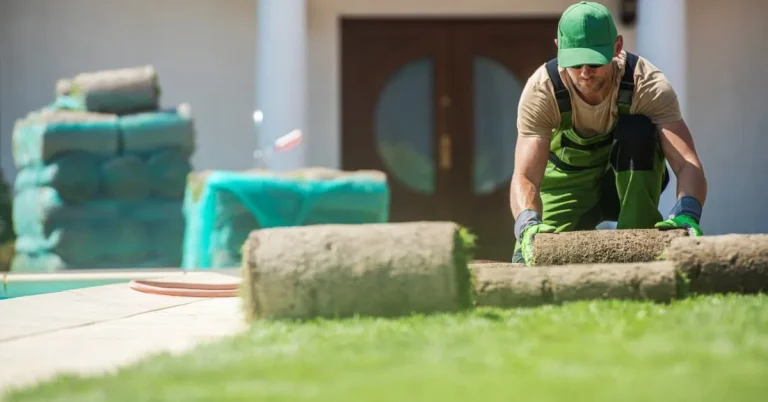
Sod arrives on pallets the morning of installation. Each piece measures roughly two feet by four feet. Fresh sod stays moist and green. Rolls get laid within hours of delivery. Germantown crews start along straight edges like driveways or walkways. The first row creates the baseline. Subsequent rows stagger seams like brickwork. Edges butt tightly together without gaps or overlaps.
Curves and borders get cut to fit. Sharp knives trim sod around trees, beds, and hardscaping. Rockville installations work around existing landscape features. Small pieces go in last to minimize drying. Each section gets tamped down to eliminate air pockets between sod and soil. The roots need direct soil contact. Clarksville contractors roll installed sod with weighted rollers that press grass firmly to prepared ground.
Watering starts immediately after installation. The first soaking reaches six inches deep. This settles sod and provides moisture for root growth. Ashton yards get watered as sections finish rather than waiting for complete installation. Summer heat dries sod quickly. Timing matters more than perfection. Get the grass down and watered before focusing on small details.
Immediate Care Makes or Breaks New Sod
The first two weeks determine success. New sod needs consistent moisture without oversaturation. Bethesda lawns get watered daily for the first week. Early morning watering works best. Midday watering wastes water to evaporation. Evening watering invites disease. Silver Spring homeowners check soil moisture by lifting sod corners. The soil underneath should feel damp but not muddy.
Foot traffic waits until roots establish. Two weeks minimum before walking on new grass. Three weeks before allowing pets or children to play. Damascus families keep the yard off-limits during establishment. The sod needs time to root into prepared soil. Premature traffic pulls grass loose or creates uneven spots. Montgomery Village installations get temporary fencing that guides people around new sod areas.
First mowing happens when grass reaches four inches tall. Usually two to three weeks after installation. Mower blades stay sharp to cut rather than tear new grass. Kensington contractors recommend setting mower height to three inches for the first cut. Removing only the top third of grass height prevents shock. Burtonsville split-levels with new sod avoid scalping that weakens the grass.
Maryland Grasses Handle Local Conditions
Tall fescue dominates Maryland and Virginia lawns. The grass tolerates heat, handles moderate shade, and survives without constant watering. Rockville properties use tall fescue for most situations. Deep roots reach moisture during dry spells. The thick blades resist foot traffic. Bethesda Colonials with partial shade choose fescue over sun-loving varieties that thin out under trees.
Bluegrass mixes add density and color. Kentucky bluegrass spreads through rhizomes that fill bare spots. Olney lawns use bluegrass/fescue blends for durability and self-repair. The bluegrass component recovers from damage by growing laterally. Pure bluegrass requires more water and sun than most Maryland yards provide. Blends balance the benefits with regional reality.
Zoysia works for full-sun areas with low traffic. The warm-season grass stays dormant and brown from November through April. Silver Spring homeowners wanting green year-round choose cool-season options. Zoysia tolerates drought and requires less mowing than fescue. The dense growth resists weeds once established. Damascus properties with sunny front yards sometimes use zoysia where appearance during dormancy doesn’t matter.
Cost Reflects Size and Conditions
Sod installation pricing varies based on yard size, soil condition, and site access. Germantown yards with good existing soil cost less than Clarksville properties needing extensive grading and drainage work. Material, delivery, labor, and soil prep all factor into the total. Extras like topsoil, old sod removal, grading work, and fertilizer add to the base installation cost. The basic installation gives you grass. Everything else costs extra.
Steep Slopes Need Special Handling
Slopes over 15 degrees require pins or staples. Gravity pulls new sod downhill before roots establish. Damascus contractors install sod perpendicular to the slope. Each piece gets pinned at the top edge. Biodegradable stakes hold grass in place for six to eight weeks. By then roots have anchored the sod. Ashton split-levels with sloped front yards use twice as many pins as flat installations.
Erosion control starts before sod arrives. Bethesda properties with steep grades sometimes need terracing. Retaining walls hold soil in sections. Sod installation happens on flatter terraces. The alternative involves heavy erosion during every storm. Silver Spring homeowners fighting slope erosion choose between terracing and accepting continued soil loss. Sod alone doesn’t fix severe grade problems.
Irrigation Systems Help But Aren’t Required
Sprinkler systems maintain established lawns with less effort. Timers handle watering schedules and coverage stays consistent across the yard. Hand watering works fine for smaller yards. However, germantown townhouses with 500 square foot lawns manage with hoses and sprinklers. The effort increases with lawn size. Olney properties with 3,000 square feet of new sod find hand watering tedious during establishment. Rain doesn’t always come when needed. Consistent watering determines whether sod thrives or struggles.
Professional Installation Saves Time and Reduces Failure
DIY sod installation looks simple until you start. Pallets arrive at 6 AM because fresh sod needs same-day installation. Bethesda homeowners realize they ordered too much or too little after delivery. The sod sits heating up on the pallet while you figure out placement. Soil prep took longer than expected. You run out of daylight with half the yard still bare.
Contractors handle logistics. They order correct quantities with extra for waste. Delivery coordinates with crew availability. Rockville installations finish in one day regardless of size. The crew knows placement patterns that prevent seam issues. Cutting tools and rollers come with the team. Kensington families avoid renting equipment or making multiple store trips for supplies.
Experience prevents expensive mistakes. Improper soil prep causes settling and uneven surfaces. Inadequate watering kills sod before roots establish. Poor seam placement creates gaps that fill with weeds. Damascus contractors recognize clay soil that needs amendment versus soil ready for installation. The crew adjusts on site rather than discovering problems after installation fails.
Schedule Installation for Your Property
Bare spots look neglected. Failed seeding wastes time and money. Erosion keeps removing topsoil you can’t get back. Professional sod installation fixes all of it in a day.
Blue Collar Scholars installs sod across Maryland, Northern Virginia, and Washington DC. We handle soil prep, grading, and installation so the grass takes hold and stays put.
Call us to talk through what your yard needs. Schedule a free consultation, and you’ll leave knowing exactly what it takes to get a healthy lawn in the ground.